

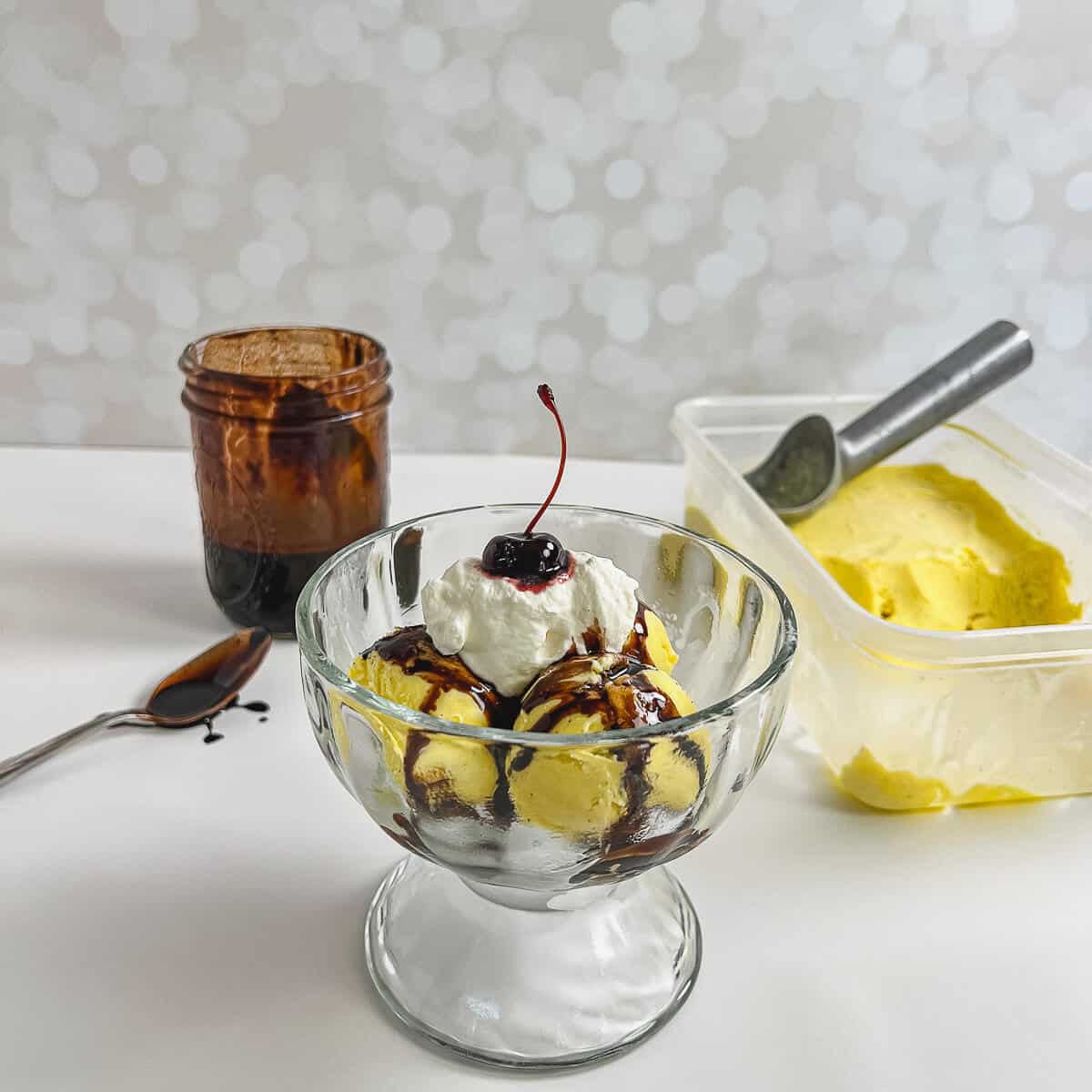
French Vanilla Ice Cream starts with a rich vanilla bean custard base that churns into a smooth, creamy frozen custard with deep vanilla flavor and an irresistibly silky texture. Whether you're making sundaes, milkshakes, or serving it alongside pie, this is the homemade vanilla ice cream recipe you'll come back to again and again!
Jump to:
- Quick Recipe Summary ✨
- Why this recipe works
- What Makes French Vanilla Ice Cream Different?
- Recipe Ingredients
- How to make French Vanilla Ice Cream
- Storage instructions
- Ideas for using vanilla ice cream
- How to make your own vanilla extract
- Frozen custard ice cream troubleshooting
- Questions asked and answered
- More frozen treat and topping recipes to try
- Recipe
- Comments
[June 2022: I've reworked the recipe and updated this post with all new pictures. Enjoy!]
Quick Recipe Summary ✨
French Vanilla Ice Cream (Frozen Custard): A rich homemade vanilla bean ice cream made with a classic egg-yolk custard base for exceptional creaminess and deep vanilla flavor.
Made with real vanilla beans: The vanilla bean seeds and pod infuse the custard with rich vanilla flavor and those beautiful specks throughout every scoop.
A foundational frozen custard recipe: Master the custard technique used in many homemade ice creams and gelatos, making this an excellent recipe for building ice cream-making confidence.
Active Time: About 30 minutes • Chill Time: About 4 hours • Churn Time: About 25 minutes • Total Time: About 5 hours (mostly hands-off!)
Yield: About 1 quart • Freezer-Friendly: Up to 1 month
Difficulty Level: ⭐⭐⭐ Medium. Making a custard requires a little attention, but I'll walk you through tempering the eggs, cooking the custard, and churning the ice cream step-by-step.
👉 Follow the detailed instructions, temperature tips, and troubleshooting guide below to make smooth, creamy homemade French Vanilla Ice Cream with confidence.
SUMMARIZE & SAVE THIS CONTENT ON
Why this recipe works
- Egg yolks create a silky custard base that churns into ice cream with exceptional richness and body
- Steeping the vanilla bean in warm dairy extracts flavor from both the seeds and pod for deeper vanilla character
- A balanced ratio of cream and milk delivers a creamy texture without feeling overly heavy
- Tempering the eggs gently prevents curdling and produces a smooth custard every time
- The custard technique serves as a foundation for countless homemade ice cream variations
Some people think that vanilla ice cream is simply...plain...boring. And it can be, when not made well. Cheap flavorings, preservatives, emulsifiers, these can all bring down the quality of vanilla ice cream.
I'm here to tell you that vanilla can be made better, and you can do it!
For example, I'm a sucker for a great chocolate milkshake, made from ingredients I can pronounce. And I want it rich, thick, and chocolatey. Or how about an over-the-top hot fudge sundae? Yes, please!
Great sundaes and great milkshakes start with great vanilla ice cream, and the best is French Vanilla Ice Cream. It's a vanilla frozen custard flavored with whole vanilla beans.
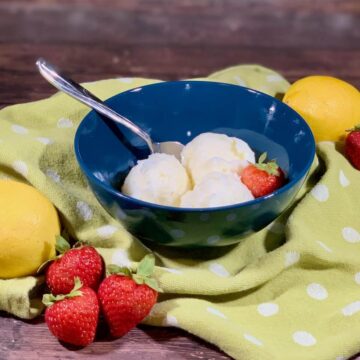
This is the best homemade vanilla ice cream recipe! It produces a frozen custard that's rich and satisfying. Full of flavor, eating a scoop is to enjoy over-the-top vanilla goodness.
Folks, this is anything but boring!
⭐⭐⭐⭐⭐
Vanilla milkshakes are one of my favorite desserts so I can't wait to try this! Thanks for the great tip about re-using the spent beans for vanilla extract, I've always thought that they can be used more than once so its great to know what to do with them 🙂
- Emma
What Makes French Vanilla Ice Cream Different?
French vanilla ice cream is made with an egg-yolk custard base, which gives it a richer flavor, creamier texture, and pale yellow color. Traditional vanilla ice cream (often called Philadelphia-style ice cream) is made without eggs and has a lighter, cleaner flavor.
What's the difference between frozen custard and ice cream?
The difference between ice cream and frozen custard is how the base is made, which effects how rich the final product is. Essentially, there are two ways to make a homemade ice cream recipe.
Method 1: Churn an uncooked base
The first method involves taking a chilled sweetened cream base and...uhm...freezing it. No eggs are needed for this preparation.
That's right, if your ice cream maker is ready (mine needs to be chilled for 15 hours before use), then you can combine milk and cream, flavor and sweeten it as you prefer, and churn away (even adding in mix-ins if you'd like). You'll have ice cream in about 30 minutes. Add in the chilling time required to firm it up, about 2 to 4 hours, for a total time of about 4½ hours.
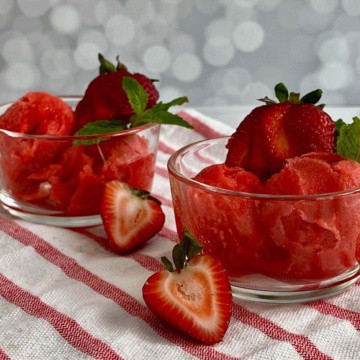
This is how making this Fresh Strawberry Ice Cream is done (it's also how sherbet and sorbet are made, albeit with different bases).
Method 2: Churn a cooked custard base
If you want a richer product, then you'll want to go with the second way, cooking a frozen custard using cream and egg yolks. Start with making a crème anglaise custard (aka vanilla sauce) in the flavor you want, thoroughly chill it (usually overnight), then churn it.
What this technique gives you is a rich custard base, and a richer final product. This method is also how I make my Salted Caramel Swirl Gelato and double chocolate version of Mint Chocolate Chip Gelato.
Either way, after creating a flavored base, you can add all sorts of mix-ins while churning. That's where you can really start getting creative!
Recipe Ingredients
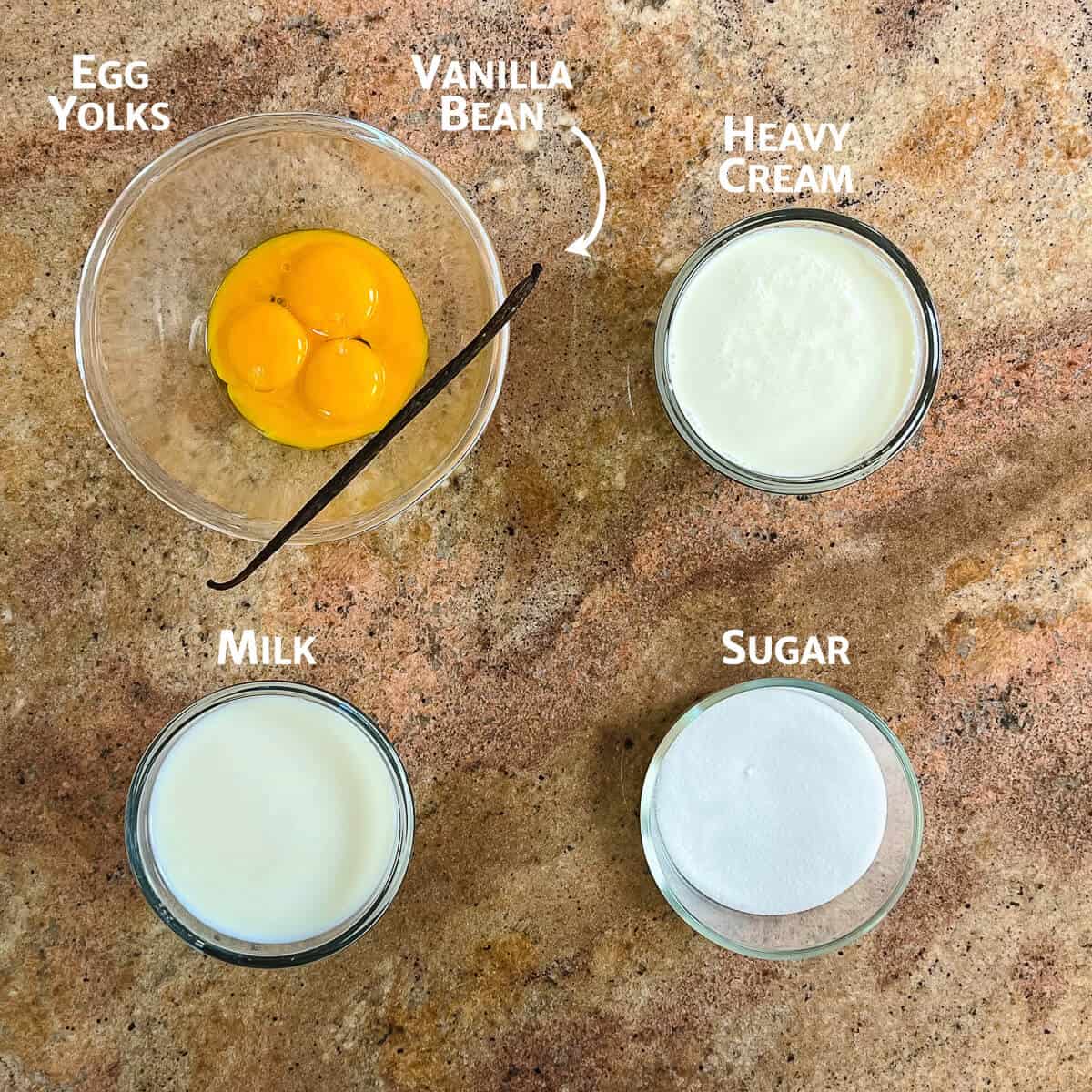
You'll need the following ingredients to make this French vanilla ice cream recipe:
Ingredient Notes
At its core, the ingredients for ice cream are heavy cream, milk, and sugar.
Milk and heavy cream: Depending on the kind of milk you use (and the amount of milk and heavy cream), you can control the overall level of dairy fat in your ice cream. Lower the fat by using non-fat milk, and increase it by using whole milk. You can even use dairy-free milk products. I use 1% milk because it produces ice cream that's rich but doesn't have that "coating your tongue" mouthfeel.
The amount of milk vs. heavy cream can be adjusted to suit your tastes. Ice cream generally has more heavy cream than milk. With a gelato recipe (like in this
Double Chocolate Mint Chip), there is more milk than heavy cream.
Egg yolks: Used to thicken the base into a custard and add richness.
Vanilla: You know how you sometimes see little brown specks in baked goods, custards or frostings? No, those aren't dirt from a careless chef. They're something wonderful that adds a delicious flavor to all they touch: vanilla bean seeds.
I use whole vanilla beans when I want the vanilla flavor to really take center stage, such as in Magic Custard Cake, Pastry Cream, and Crème Brûlée (aka vanilla custard topped with burnt sugar). When the flavor is a supporting actor (like in a chocolate cake or brownies), I'll use vanilla extract or vanilla bean paste (which adds those flecks of vanilla bean seeds along with the flavor).
Using whole vanilla beans can be expensive and messy, but they're oh, so worth the effort. The flavor they impart is rich without being cloying, with none of that artificialness (yes, I've decided that's a word) that you get from inexpensive commercial vanilla extracts.
You can use vanilla extract or vanilla bean paste in a vanilla ice cream recipe if you'd like, just make sure it's the best quality you can find.
Want to know more about the different types of vanilla? See my Types of Vanilla Explained guide for how whole vanilla beans, vanilla extract, vanilla bean paste, and vanilla bean powder differ, when to use each one, and how to substitute them.
See the recipe card for a full list of ingredients and measurements.
How to make French Vanilla Ice Cream
Step 1: Make the custard base
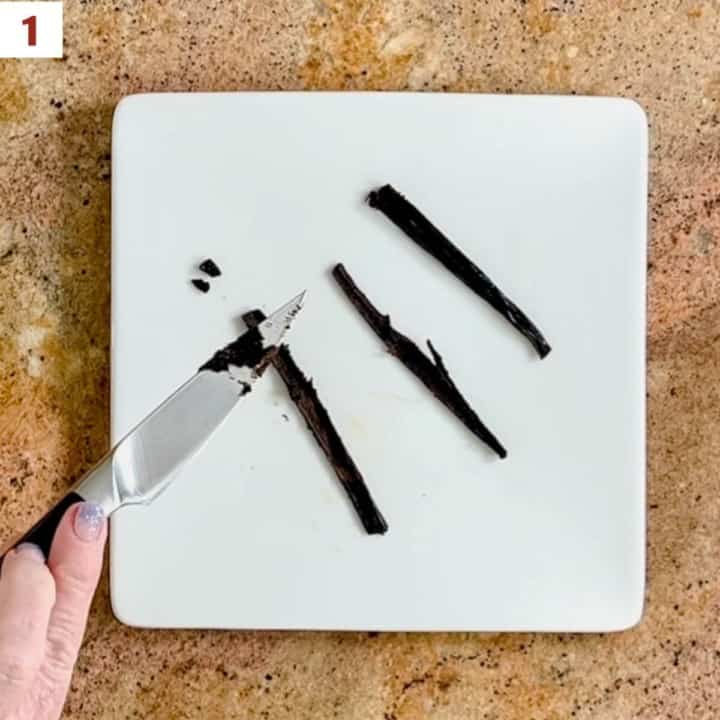
Combine the milk and heavy cream in a 3-quart saucepan. Using the tip of a sharp knife, split the vanilla bean and scrape the seeds into the milk mixture, then add the vanilla bean (photo 1).
Heat the milk mixture over medium heat, stirring occasionally, until small bubbles form and it starts to steam. This takes about 6 to 7 minutes.
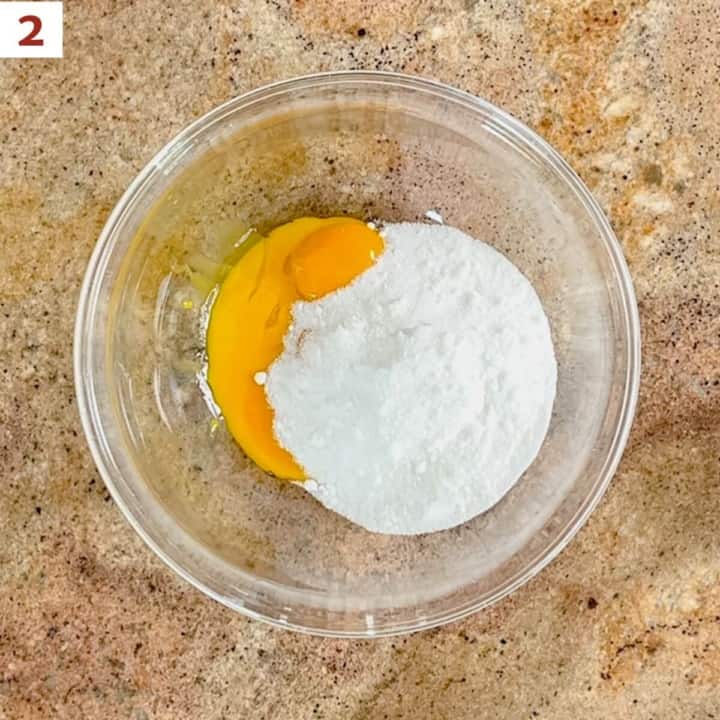
Meanwhile, in a medium bowl, combine the egg yolks and sugar. Whisk until the mixture is smooth and sugar is dissolved (photo 2).
Gently heat the egg mixture by slowly adding ½ cup of the warm milk to the egg mixture while continuously whisking (photo 3). This process is called tempering the eggs.
Add another ½ cup of milk and temper the egg mixture again.
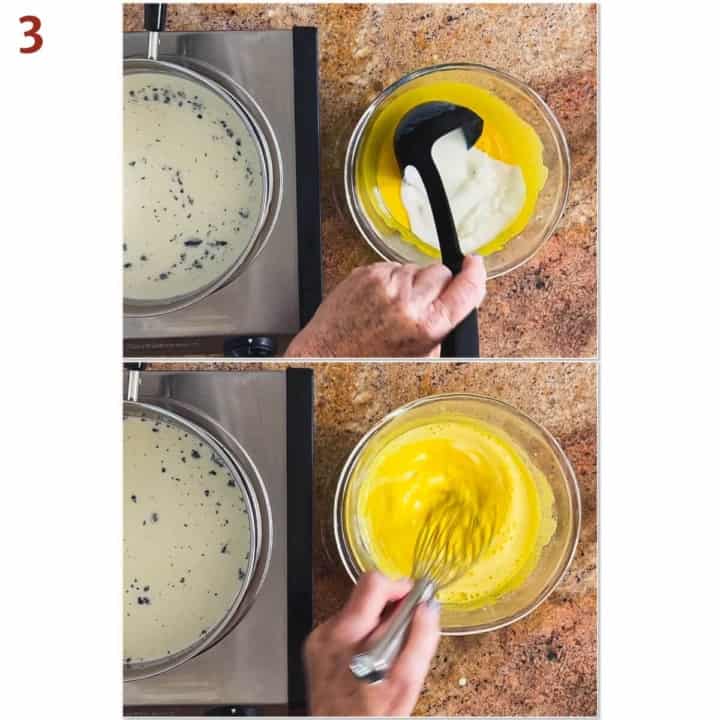
What is egg tempering?
The idea is when you add eggs to a hot liquid, the eggs will immediately curdle, leaving streaks of egg whites in the liquid (which is most unwelcome). What tempering does is it raises the temperature of the eggs slowly by whisking in a little bit of the hot liquid, thereby avoiding the curdling conundrum.
When I first encountered the term "temper the eggs," I had no idea what it meant, but I have since learned it's an important step in making cooked custards and puddings that contain eggs.
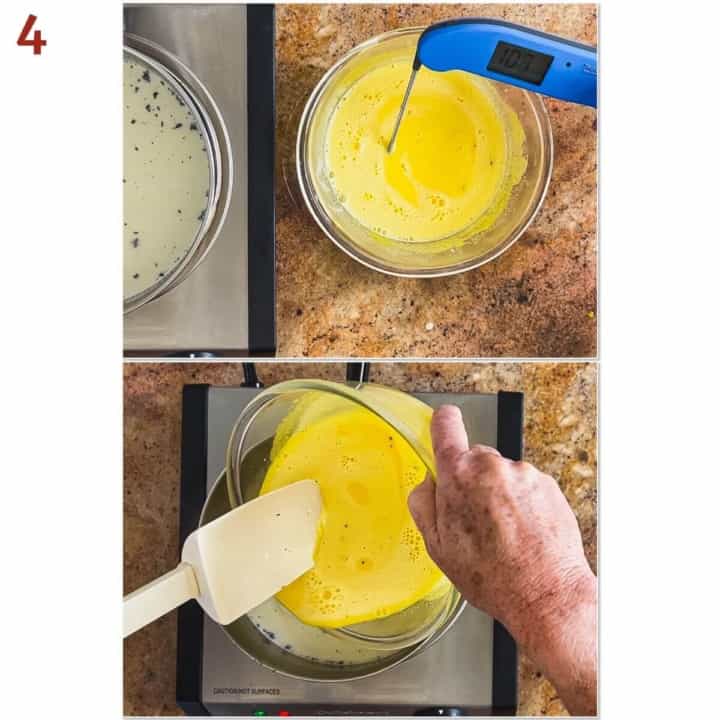
Pour the warmed egg yolk mixture back into the saucepan with the remaining milk (photo 4). Bring the mixture to a simmer over medium heat (don't let it boil).
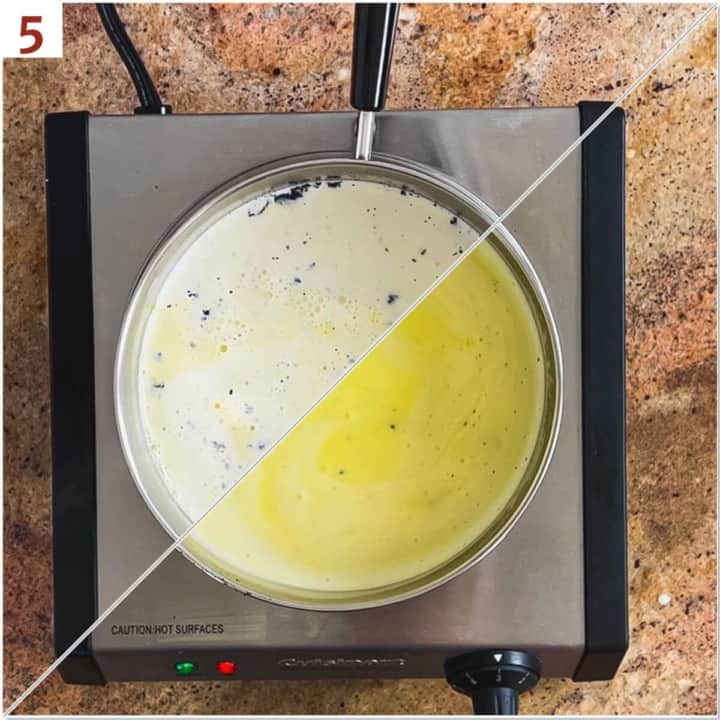
Cook until the custard has thickened, stirring constantly, about 4 to 6 minutes (photo 5).
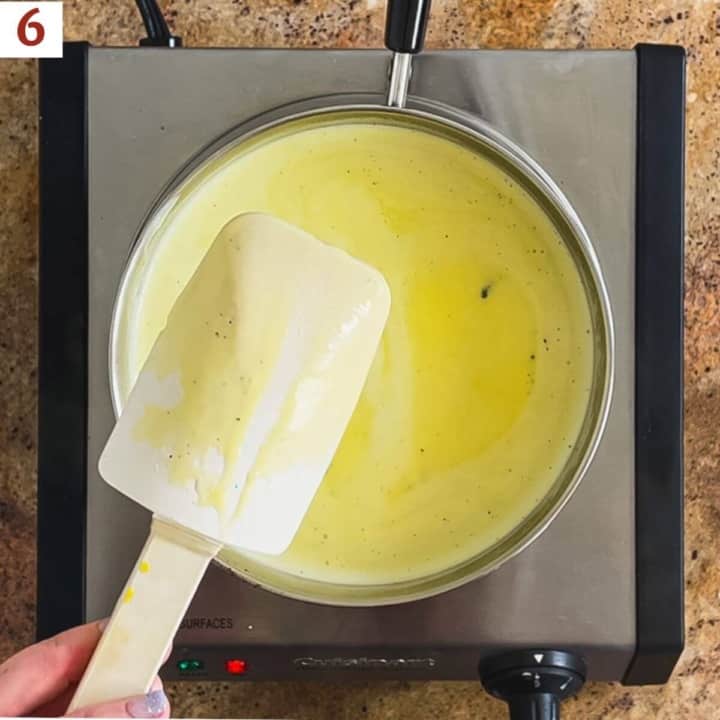
When ready, the custard should coat the back of the spoon and leave a trail when you draw your finger through it (photo 6).
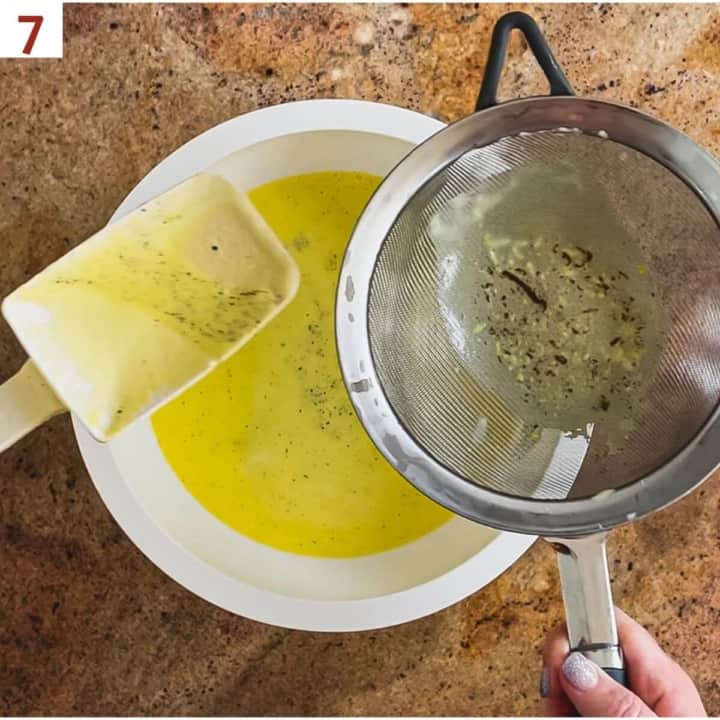
Strain the custard through a fine mesh strainer into a clean bowl, removing the spent vanilla bean (photo 7). If the custard boiled during thickening, straining it out will help remove any curdled bits of egg.
Step 2: Chill the custard base
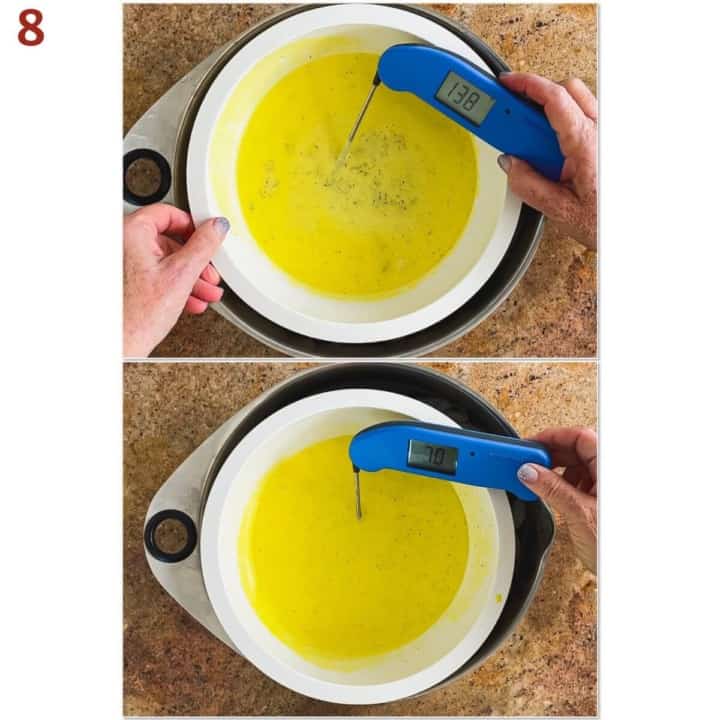
Cool the base using an ice bath (½ ice cubes, ½ water, reaching halfway up the sides of the bowl). Stir the custard occasionally until it's cooled to room temperature. A digital thermometer should read around 70 to 80˚F (photo 8). This will take about 30 minutes.
Place a piece of plastic wrap on the surface of the custard and refrigerate until chilled, at least 4 hours or overnight. Chilled custard can be kept in the refrigerator for several days. For the best results, make sure the base is about 40˚F prior to churning.
Cool the cooked custard quickly
Cooling any hot food before refrigerating it is important, especially cooked custards. You don't want to raise the temperature of the refrigerator's interior as that hot food cools.
For food safety, it's important to cool the cooked custard quickly. Bacteria grow most rapidly in the temperature danger zone between 40°F and 140°F, so reducing the amount of time food spends in that range helps keep it safe to eat. An ice bath is an easy way to cool the custard rapidly before refrigerating it, and it has the added benefit of speeding up the chilling process before churning the ice cream.
Step 3: Churn the ice cream
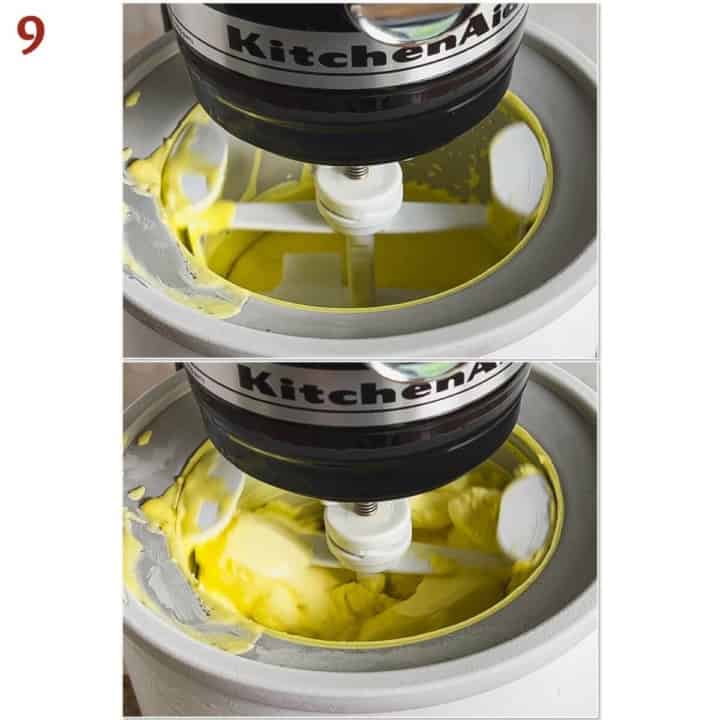
Pour the cold base into an ice cream maker and freeze per the manufacturer's instructions, about 25 to 30 minutes (photo 9).
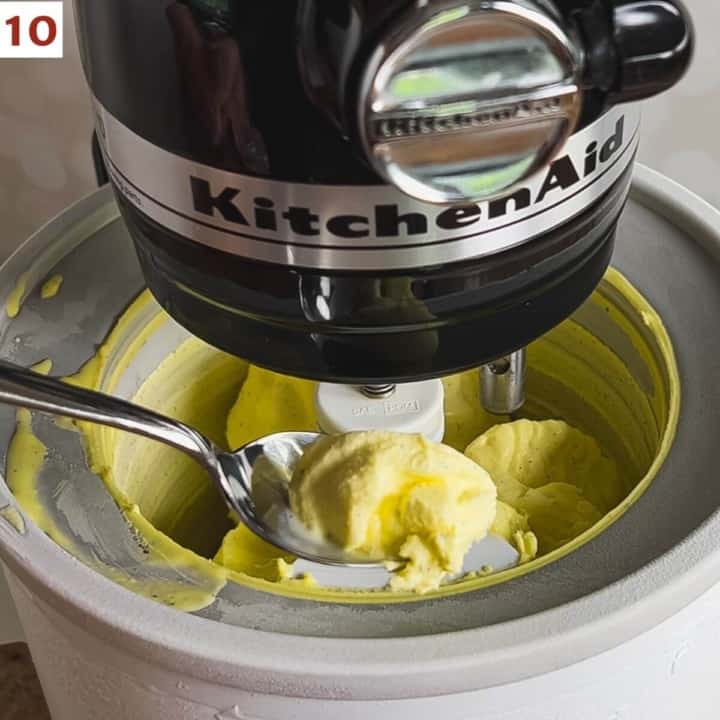
The finished frozen custard will have a soft consistency (photo 10).
Ice cream makers
There are plenty of inexpensive ice cream makers on the market to choose from. The one I'm using is a KitchenAid Ice Cream Maker Attachment for a KitchenAid Stand Mixer - I keep the bowl chilled in the freezer so that I can use it at a moment's notice. Another good option is a Cuisinart Ice Cream Maker. There are other versions available that you don't have to pre-chill, but they are more pricey.
Step 4: Ripen the ice cream
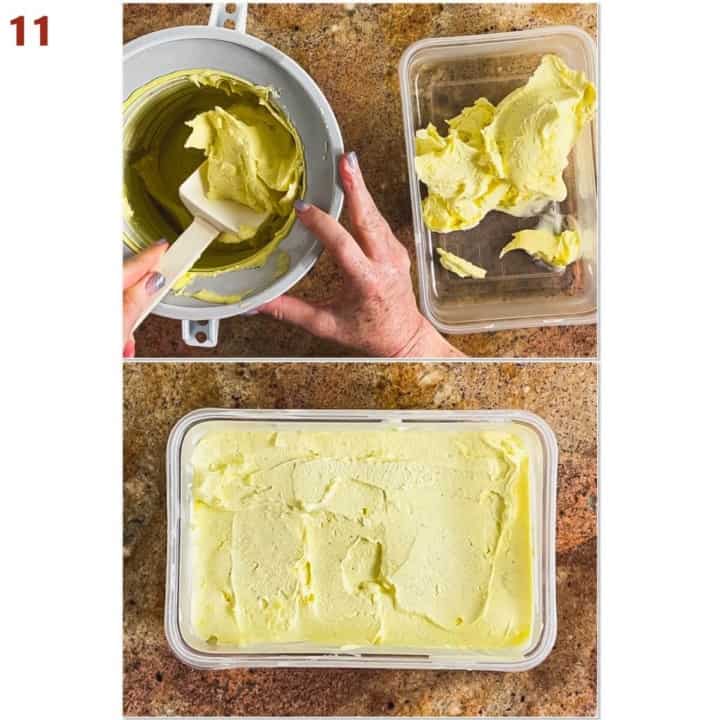
Transfer the ice cream to a freezer-safe container and smooth the top over using a small offset spatula (photo 11). Freeze for 2 to 4 hours to allow the ice cream to firm up, a process called ripening.
Storage instructions
Homemade ice cream will last for up to a month in a plastic freezer container placed in the rear of the freezer. After that, the ice cream may develop ice crystals and lose its creamy texture.
Ideas for using vanilla ice cream
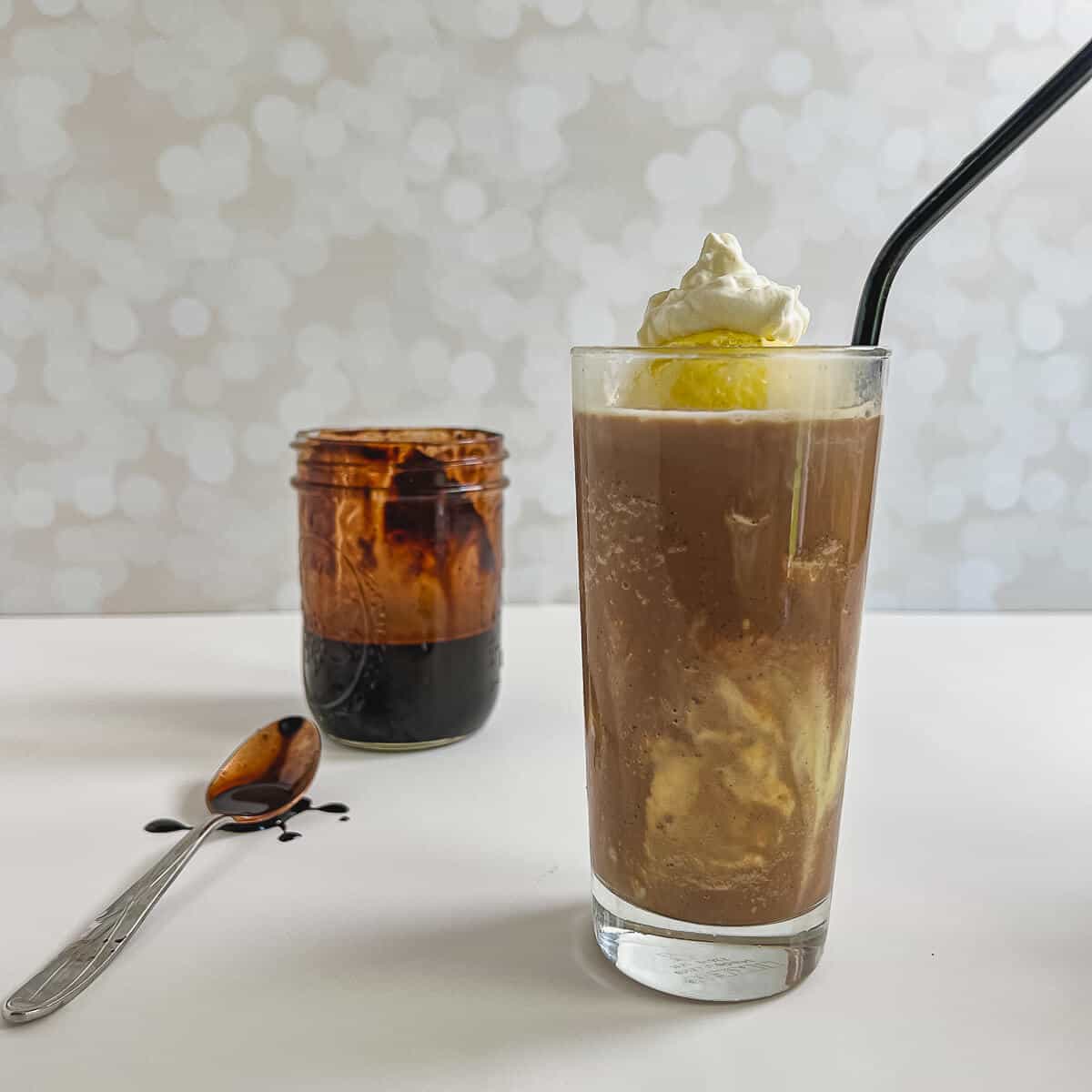
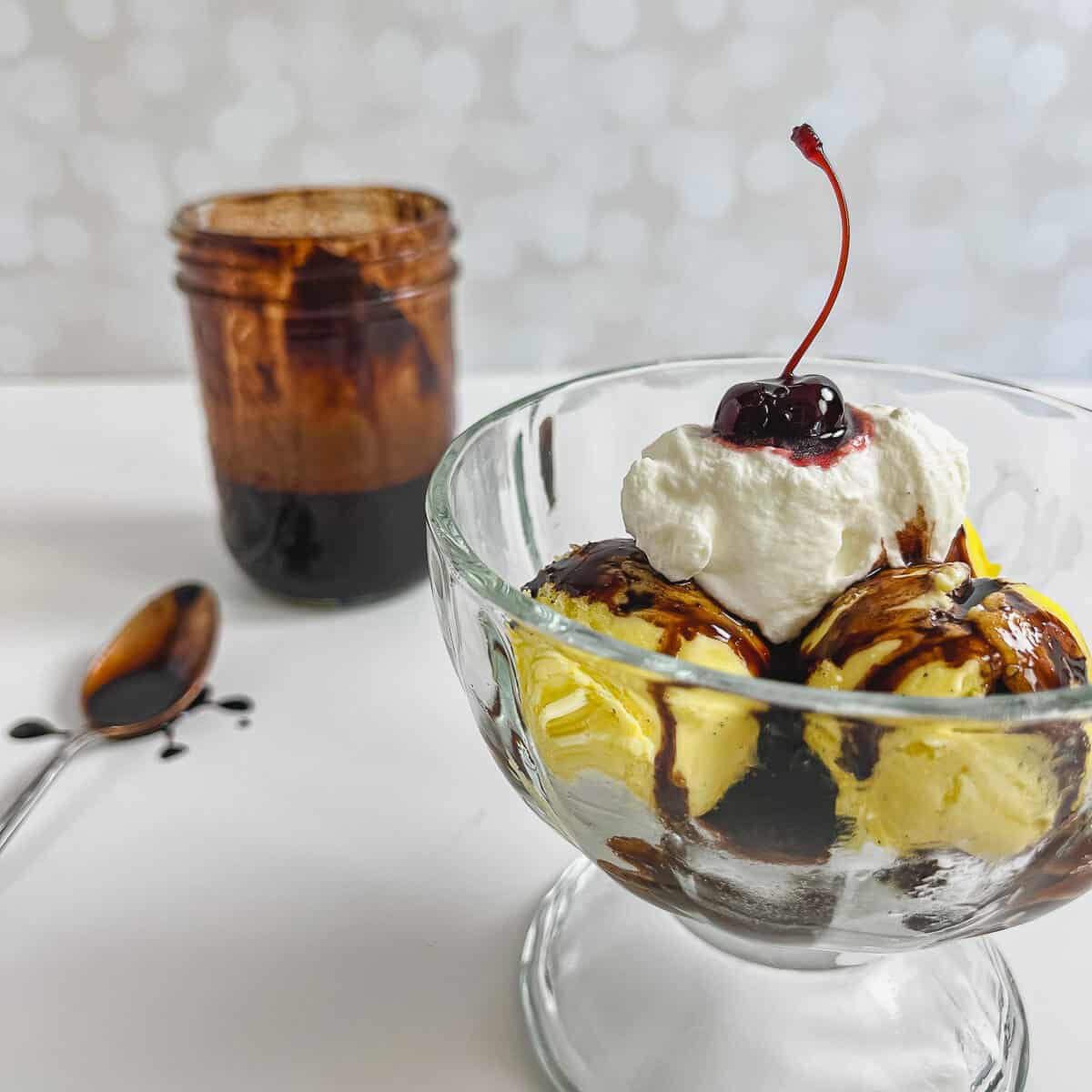
- Make incredible milkshakes: My Dear Husband has been making me the best milkshakes for years, always using milk, vanilla ice cream and chocolate syrup. Made thick and chocolatey with homemade french vanilla ice cream and homemade chocolate syrup, this is the milkshake I always hope for.
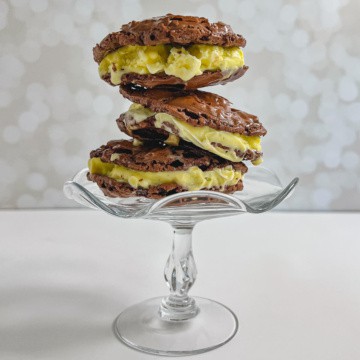
- Make your own ice cream sandwiches: You can sandwich vanilla ice cream using cookies for a fun treat. Try it with double chocolate chip cookies, or or make these gluten-free ice cream sandwiches.
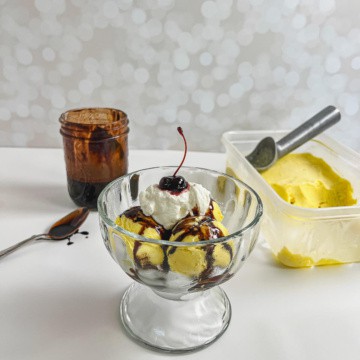
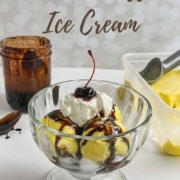
- Use ice cream toppings: Sundaes are also extra special using this ice cream, because there are so many ice cream toppings to choose from. Whether you make it with chocolate syrup, hot fudge sauce, caramel sauce, butterscotch sauce, toffee sauce, homemade pineapple sauce, or something else entirely, you won't go wrong topping homemade french vanilla ice cream.
- As a topping for other desserts: Use this vanilla ice cream for your "a la mode" opportunities. Grilled or baked fruit begs for a scoop of vanilla ice cream. Topping warm baked desserts with a scoop of vanilla is almost a requirement in my house. Here are some quick suggestions of desserts you can serve "a la mode":
How to make your own vanilla extract
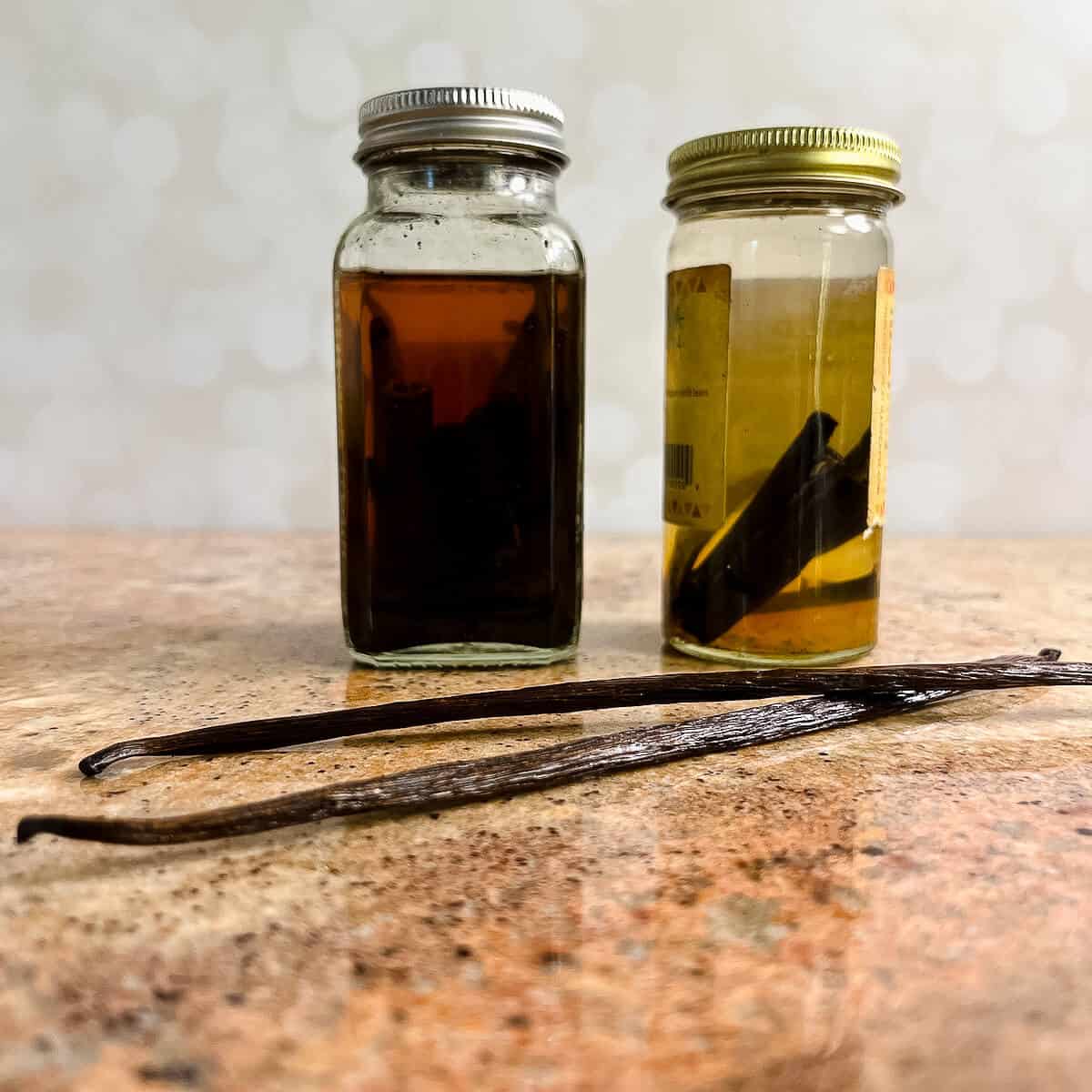
You can, of course, buy good quality vanilla extract, but making your own is so easy! I use empty spice jars for making extract, but you can use clear glass bottles, especially if you want to give your homemade vanilla extract as a gift.
All you do is immerse split vanilla beans in vodka, that is, infuse the vodka with vanilla (just like when making Limoncello liqueur when you infuse vodka with lemon). Store the jar in a cool, dark place and let it sit a couple of weeks, shaking the bottle every few days. The longer the extract sits, the darker it becomes. When the extract has a dark color and smells floral, it's ready to use in your cooking and baking.
And if you're going to be using whole vanilla beans in your cooking and baking, this is a great way to recycle those expensive spent beans. If you've used the vanilla beans to infuse milk or cream, briefly rinse the milk off the steeped bean before before popping it in the jar.
When you need to use the vanilla extract, top off the jar with additional vodka as needed. If the color starts getting too light, it's time to add fresh (or freshly used) vanilla beans to the extract. It's that simple!
Frozen custard ice cream troubleshooting
Here are some issues you might encounter when making French Vanilla Ice Cream:
- My custard curdled: The mixture got too hot while cooking. Strain it through a fine mesh sieve and blend until smooth before chilling.
- My custard won't thicken: It may not have cooked long enough. Continue heating gently, stirring constantly, until it coats the back of a spoon.
- I ended up with scrambled eggs in the custard: The eggs weren't tempered slowly enough. Pour the hot dairy into the yolks gradually while whisking constantly. Strain the custard before chilling to remove any small egg particles and ensure a silky-smooth texture.
- My ice cream is icy instead of creamy: The custard may not have been chilled completely before churning, or the ice cream may have frozen too slowly after churning.
- My ice cream froze too hard: Homemade ice cream often firms up after several hours in the freezer. Let it sit at room temperature for 5 to 10 minutes before scooping.
- My ice cream isn't freezing: It could be that the base isn't cold enough, especially a cooked custard base. If the base is too warm, it slows down the freezing process during churning. For the best results, make sure the base is about 40˚F prior to churning.
- The vanilla flavor seems weak: For the deepest flavor, allow the vanilla bean to steep in the warm dairy mixture and chill the custard overnight before churning.
Questions asked and answered
Here are some questions you might have...
The difference lies with the form the vanilla flavoring takes. Vanilla ice cream is the more general term, and can be flavored using vanilla extract, vanilla paste, or a whole vanilla bean. Vanilla bean ice cream specifically uses whole vanilla beans in its preparation, although other flavorings can be present, especially in commercial brands.
Not necessarily. Vanilla bean ice cream can be made from an uncooked sweetened cream base that has been specifically flavored with vanilla bean seeds. French vanilla ice cream is made from a cooked custard base, that is, a sweetened cream base that has been thickened with egg yolks. French vanilla can be flavored with vanilla in any of its forms - extract, paste, or whole vanilla beans.
French vanilla ice cream gets its pale yellow color from egg yolks in the custard base rather than from the vanilla itself. The richer color is one of the visual differences between French vanilla and yoke-less (aka Philadelphia-style) vanilla ice cream.
Earlier I referred to wanting a milkshake. I grew up in California, and that's what we called the treat made with milk, ice cream, and maybe a flavored syrup. Here in New England, a milkshake doesn't contain ice cream, just the milk and syrup. Add the ice cream, and you've got a frappe (pronounced "frap," not "frappay").
But Google "What is a frappe?", and a myriad of answers pop up. It's an icy, foamy drink! It contains coffee! It doesn't contain coffee! It's pronounced "frappay"! Goodness, it's enough to make my head spin. I'll stick to milkshake, thanks very much. Make mine chocolate, please.
Didn't find the answer you're looking for?
Ask AI to answer for this specific recipe:
Disclaimer: I am not responsible for the quality of AI information

I hope you like this recipe! Let me know if you have any questions, and don't forget to leave a comment and rating. Thanks!
Slainté! L'chaim! Cheers!
- Tammy
More frozen treat and topping recipes to try
Recipe
French Vanilla Ice Cream (Frozen Custard)
Ingredients
- 1½ cups heavy cream
- 1½ cups milk, see Recipe Notes
- 1 whole vanilla bean, split, or 2 teaspoons vanilla extract or vanilla bean paste, see Recipe Notes
- 4 large egg yolks, at room temperature
- ½ cup plus 2 tablespoons granulated sugar
Instructions
- Make the custard base: Combine 1½ cups heavy cream and 1½ cups milk in a 3-quart saucepan. Using the tip of a sharp knife, split 1 whole vanilla bean (if using) and scrape the seeds into the milk mixture, then add the vanilla bean.
- Heat the milk mixture over medium heat, stirring occasionally, until small bubbles form and it starts to steam. This takes about 6 to 7 minutes.
- Meanwhile, in a medium bowl, combine 4 large egg yolks and ½ cup plus 2 tablespoons granulated sugar. Whisk until the mixture is smooth and sugar is dissolved.
- Gently heat the egg mixture by slowly adding ½ cup of the warmed milk mixture to the egg mixture while continuously whisking. Add another ½ cup of the cream and temper the egg mixture again. This process is called tempering the eggs, and its purpose is to prevent the eggs from curdling while the custard cooks.
- Pour the warmed egg yolk mixture back into the saucepan with the remaining milk mixture. Bring the mixture to a simmer over medium heat (don't let it boil). Cook until the custard has thickened, stirring constantly, about 4 to 6 minutes. It should coat the back of the spoon and leave a trail when you draw your finger through it (about 170 °F on a digital thermometer).
- Strain the custard through a fine mesh strainer into a clean bowl, removing the spent vanilla bean. If the custard boiled during thickening, straining it out will help remove any curdled bits of egg. If you are using 2 teaspoons pure vanilla extract or vanilla paste instead of a vanilla bean, stir it in now.
- Cool the base using an ice bath (half ice cubes, half water, reaching halfway up the sides of the bowl). Stir the custard occasionally until it's cooled to room temperature (about 80 °F). This will take about 30 minutes.
- Place a piece of plastic wrap on the surface of the custard and refrigerate until chilled, at least 4 hours or overnight. Chilled custard can be kept in the refrigerator for several days. For the best results, make sure the base is about 40 °F prior to churning.
- Churn the ice cream: Pour the cold base into an ice cream maker and freeze per the manufacturer's instructions, about 25 to 30 minutes. The finished ice cream will have a soft consistency.
- This recipe makes about 1 quart of ice cream.
- Ripen the ice cream: Transfer the ice cream to a freezer-safe container and smooth the top over using a small offset spatula. Freeze for 2 to 4 hours to allow the ice cream to firm up, a process called ripening. Serve and enjoy!
- Storage instructions: Homemade ice cream will last for up to a month in a plastic freezer container placed in the rear of the freezer. After that, the ice cream may develop ice crystals and lose its creamy texture.


Martha says
How is the ice cream so comically yellow? Just asking
Tammy Spencer says
Hi Martha, Yes, I was just as surprised as you the day I made this ice cream. The yellow comes from the egg yolks used in the custard. I’m fortunate that my neighbors raise chickens, and we barter - their eggs for my baked goods. The eggs I used had such intensely yellow yolks that the ice cream shone with the color. Thanks for asking, and happy churning! 🙂
Emma says
Vanilla milkshakes are one of my favorite desserts so I can't wait to try this! Thanks for the great tip about re-using the spent beans for vanilla extract, I've always thought that they can be used more than once so its great to know what to do with them 🙂