

There's something a little magical about watching plain white sugar transform into amber caramel. Finished with cream and butter, this Homemade Caramel Sauce is rich, silky, and endlessly useful for drizzling over ice cream, bread pudding, cheesecake, and just about any dessert that could use a little extra sweetness!
Jump to:
- Quick Recipe Summary ✨
- Why this recipe works
- Why make caramel sauce from scratch?
- Caramel science: the thread stage
- Recipe Ingredients
- Caramel sauce flavoring options
- How to make caramel sauce from scratch
- Step 2: Add the heavy cream, butter, and flavorings
- Storage instructions
- What can go wrong with caramel making
- Uses for caramel sauce
- Questions asked and answered
- More dessert sauce recipes to try
- Recipe
- Comments
[June, 2021: I've reworked the recipe and updated this post with all new pictures. Enjoy!]
Quick Recipe Summary ✨
Homemade Caramel Sauce from Scratch: Learn how to transform sugar, cream, and butter into a rich, silky caramel sauce using classic caramelization techniques.
Learn the art of caramelization: This recipe teaches you how sugar transforms into caramel and how to recognize the visual and temperature cues for success.
No shortcut ingredients: This caramel sauce is made by caramelizing sugar from scratch, creating deeper flavor and better control over sweetness and texture.
Active Time: About 30 minutes • Cooling Time: 1 hour • Total Time: About 1 hour 30 minutes
Difficulty Level: ⭐⭐⭐ Medium. Caramel requires careful attention while the sugar cooks, but once you understand the process, it's a technique you'll use again and again.
Yield: 1 cup caramel sauce • Freezer-friendly: Up to 3 months • Make-ahead: Refrigerate for up to 1 month.
👉 Follow the detailed instructions, caramel-making tips, and troubleshooting guide below to learn how to make smooth, glossy homemade caramel sauce from scratch with confidence.
SUMMARIZE & SAVE THIS CONTENT ON
Why this recipe works
- Made with real caramelized sugar for rich, complex flavor
- A forgiving method helps minimize crystallization issues
- Cream and butter create a silky, pourable sauce
- Step-by-step guidance helps you make caramel with confidence
Why make caramel sauce from scratch?
- The flavor is richer and more complex: Caramelizing sugar develops deep buttery, toffee-like notes that shortcut methods can't fully replicate.
- You control the sweetness and texture: Homemade caramel can be cooked lighter or darker for different flavor profiles and adjusted to be thick, thin, or anywhere in between.
- It's made with simple ingredients: Sugar, cream, and butter are all you need to create a silky caramel sauce without preservatives or stabilizers.
- It's easy to customize: Add vanilla, flaky salt, bourbon, whiskey, or other flavorings to create a caramel sauce that's uniquely yours.
- Once you understand the process, it's surprisingly approachable: Making caramel may seem intimidating at first, but a few simple techniques help make it much easier than you might expect.
Making caramel feels a bit like kitchen alchemy. With a little patience and a watchful eye, plain white sugar transforms into a rich amber caramel with deep toffee-like flavor.
Don't let the process intimidate you. Once you understand a few simple techniques and learn what visual cues to watch for, homemade caramel sauce becomes surprisingly approachable.
And the reward is a silky dessert sauce that's far more flavorful than most store-bought versions.
Don't be shy about making this homemade caramel sauce from scratch. You'll be glad you did!
Caramel science: the thread stage
[Side note: You don't have to be a science nerd like me. If you want to get to making caramel sauce, just skip this section.]
Then there is the sugar science of candy making for caramel sauce. If baking is temperamental (pitfalls from inaccurately measured ingredients to overheated or underheated ovens), working with sugar is downright ornery. When you're boiling sugar for candy, like for Tahini Halva, a few degrees can make a huge difference. Patience is definitely needed for success.
There are six stages in candy making, and they're based on temperature: thread, soft-ball, firm-ball, hard-ball, soft-crack, and hard-crack. (Boy, there are so many asides I could make about these names!)
Caramel sauce is cooked to the thread stage of candy making (230° to 234°F), keeping it fluid and pourable. In comparison, the caramel filling used for Millionaire's Shortbread recipe is cooked to soft-ball stage (235° to 240°F), when the sugar syrup will have some cohesion, but it will keep the candy soft (think fudge).
I have a whole discussion about soft-ball stage candy in my Southern Pecan Pralines recipe if you want to learn more. Here's also a deeper look into caramel temperatures if you're so inclined.
Recipe Ingredients
You only need a few ingredients to make a caramel sauce recipe:
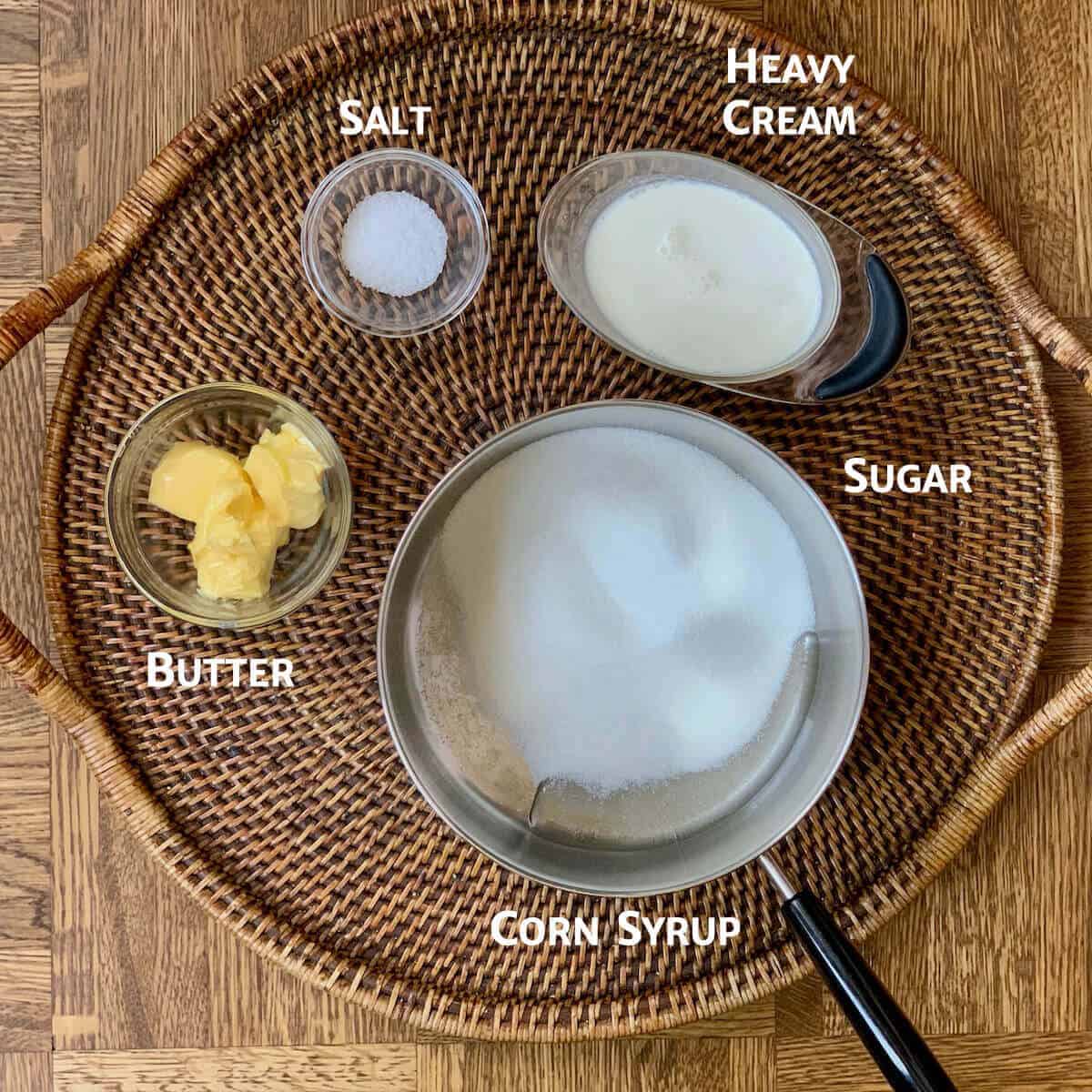
Ingredient Notes
Sugar: The essence of caramel is sugar that has been melted and browned. It's very easy to burn the sugar as it melts, so it's important to keep a watchful eye on it.
Heavy cream: Loosens the caramel and adds its creamy rich flavor to the sauce.
Water (not shown) and corn syrup: Used to stabilize the sugar as it melts and caramelizes. Both aren't strictly necessary, but recommended. You can also use honey, agave syrup, or golden syrup instead of the corn syrup. See the FAQs for more information.
You can substitute honey, golden syrup, or agave syrup in place of the corn syrup for this recipe. Since we're using such a small amount, they won't noticeably change the flavor of the finished product.
Flavorings: Salt, vanilla (either vanilla extract, vanilla bean paste, or a whole vanilla bean), or spirits like whiskey or bourbon can be added as different flavoring options.
See the recipe card for a full list of ingredients and measurements.
Caramel sauce flavoring options
A homemade caramel topping is rich and flavorful, without the chemicals and preservatives found in the commercial stuff, and there are lots of flavoring options to spruce up your caramel topping. Here are a few ideas to get you started:
- Salted Caramel Sauce: Add 1 teaspoon salt with the butter.
- Vanilla Caramel Sauce: Add 1 teaspoon vanilla extract, vanilla bean paste, or scrape the seeds from half of a whole vanilla bean along with the butter.
- Salted Vanilla Caramel Sauce: You guessed it - add both the salt and vanilla with the butter.
- Whiskey Caramel Sauce: Adding 1 to 2 tablespoons of your favorite whiskey or bourbon at the end will give your caramel topping a boozy kick. Or, use whiskey, bourbon, or wine as a base to get a more concentrated flavor of the spirit.
How to make caramel sauce from scratch
Step 1: Caramelize the sugar
Combine the sugar, water, and corn syrup together in a 2-quart saucepan, and heat to boiling over medium heat (photo 1).
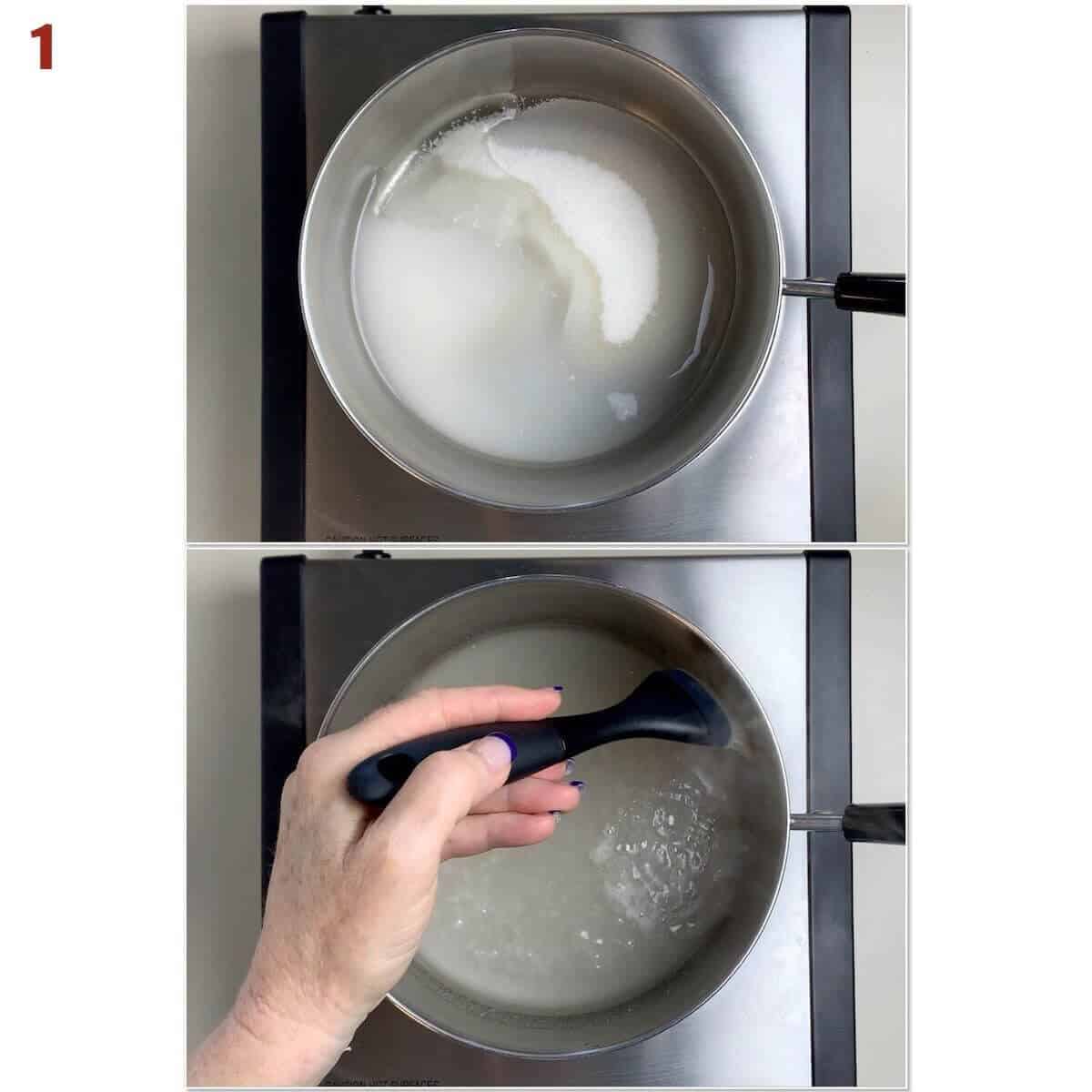
How to avoid the sugar crystallizing
DO NOT STIR the sugar mixture while you're caramelizing the sugar! You don't want to introduce any impurities that can cause the mixture to crystallize (that is, seize up and harden). Instead, washing down the sides of the pan with a wet pastry brush helps to minimize that risk.
After the mixture comes to a boil, cook until the sugar caramelizes to a deep amber color, similar to a copper penny. It will take about 10 to 12 minutes (photo 2).
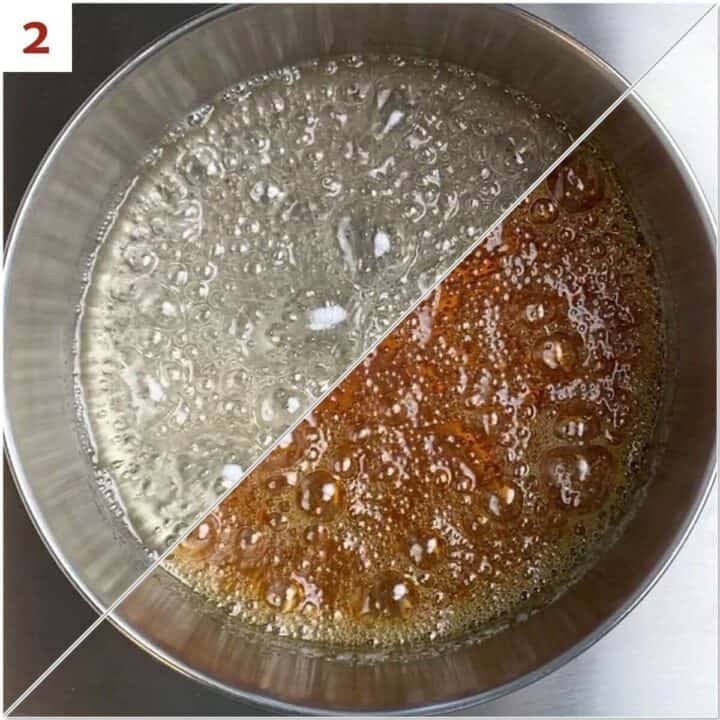
Look and listen for clues when the caramel is done
You need to be focused when caramelizing sugar - it can go from light amber to a black mess very quickly at the end, so keep an eye on it and remove from heat as soon as the desired color is reached.
In addition, listen to the sugar as it boils. As sugar caramelizes, it goes from noisy bubbling to quieter, thicker boiling. That sound shift is your cue that it's almost ready.
Step 2: Add the heavy cream, butter, and flavorings
Once a deep amber color is reached, remove from heat and SLOWLY add the heavy cream. The mixture will boil up, so stir continuously to keep the mixture from bubbling over.
Be sure to keep your face and hands away as best as you can to avoid steam burns.
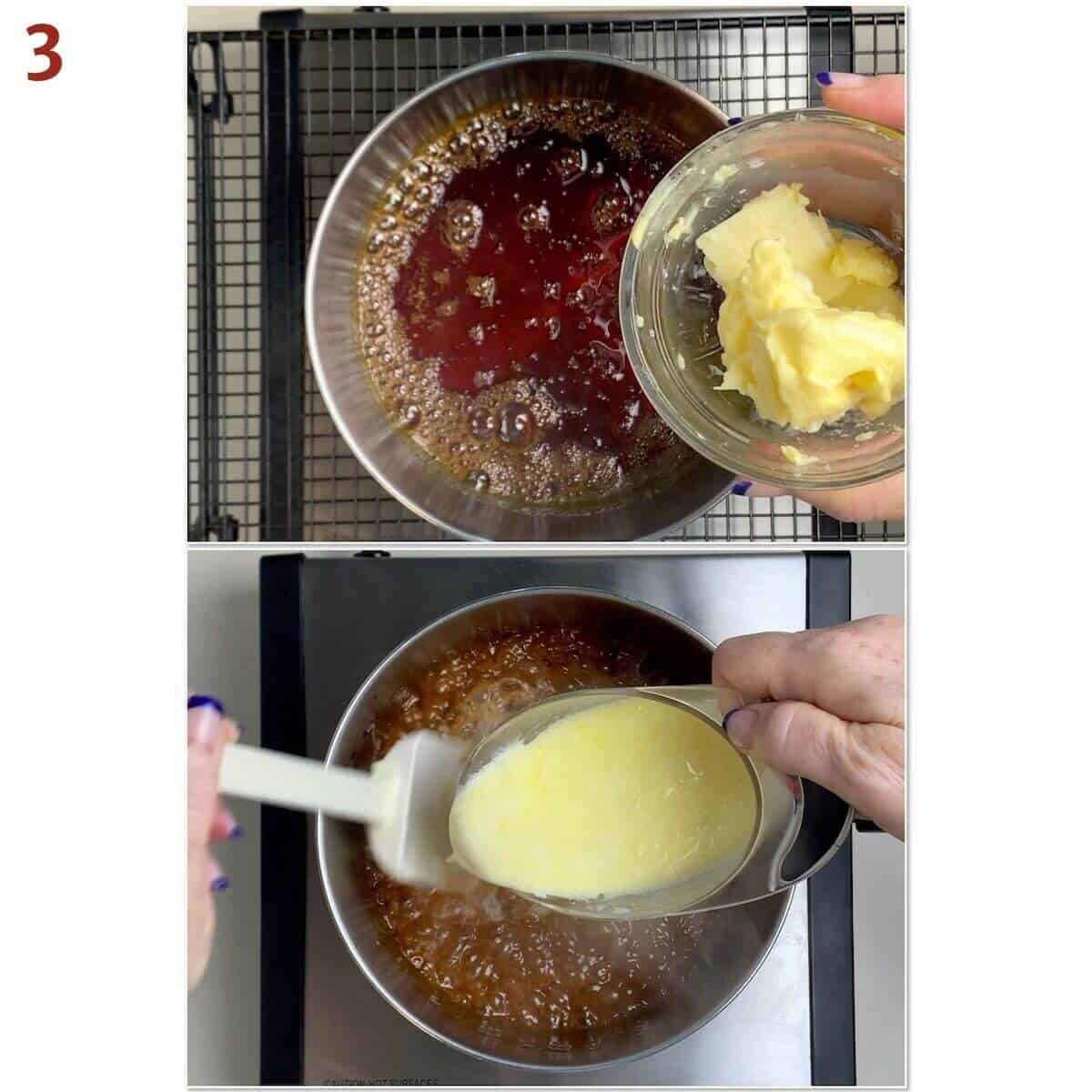
Stir until combined, then return to heat and add the butter and any desired flavorings (photo 3).
Step 3: Cook to thicken the caramel
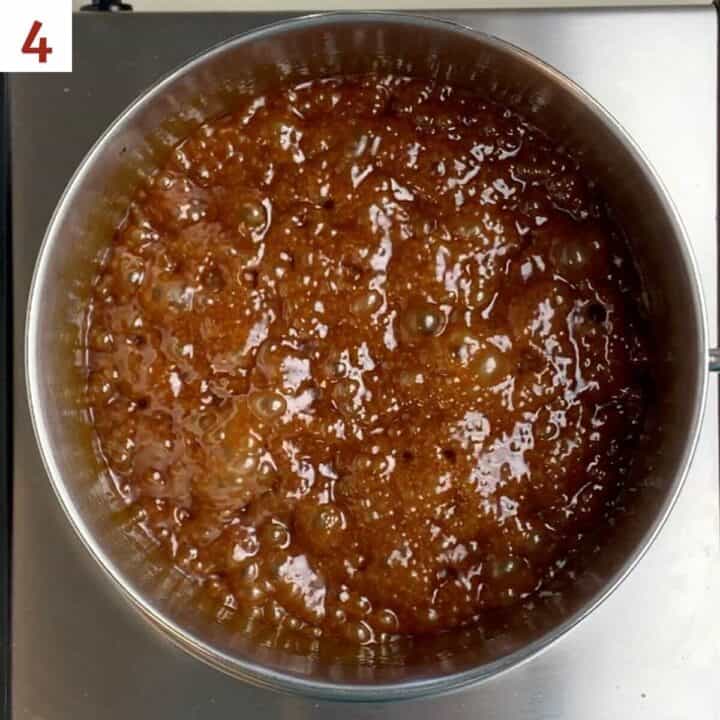
Keep boiling the caramel, stirring occasionally to keep the mixture from bubbling over, until a digital thermometer or a candy thermometer registers about 230°F (the thread stage of candy making), about 1 to 2 minutes more (photo 4).
Keep an eye on the caramel as it cooks
Don't get distracted - the caramel can burn at the bottom of the pan and ruin it if it's not stirred, especially towards the end of the cooking process.
Step 4: Cool to room temperature
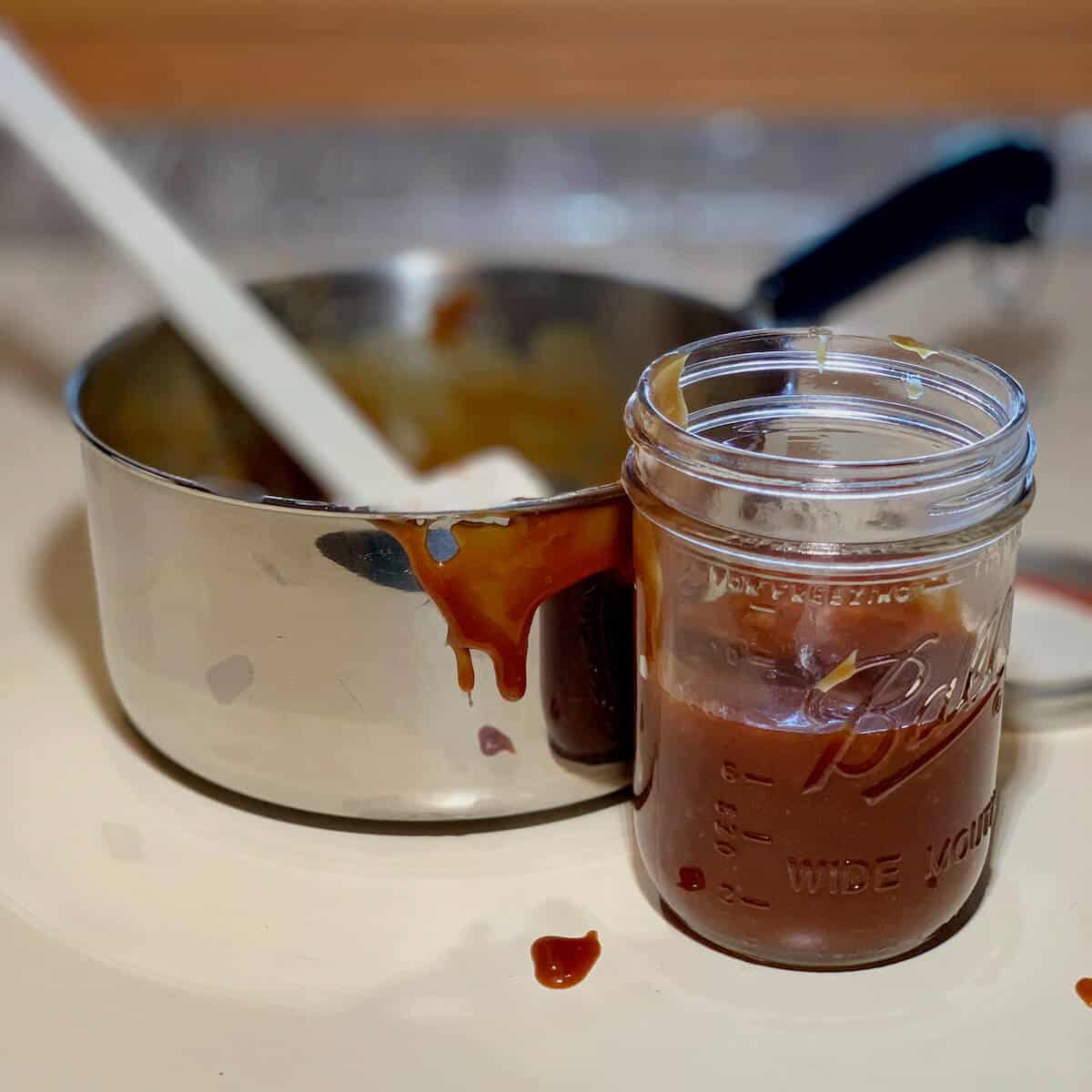
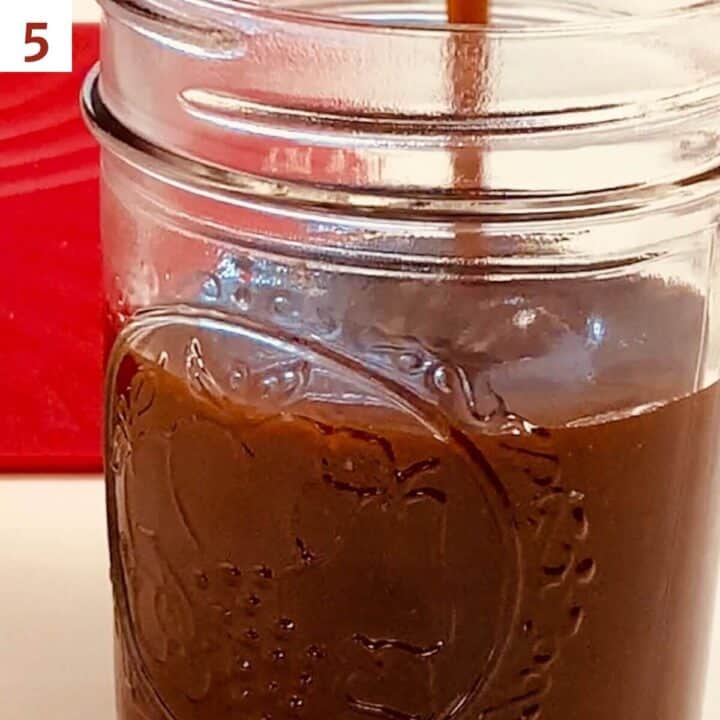
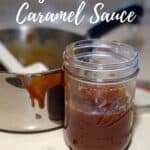
Pour the caramel into a storage container with a tight-fitting lid (like a canning jar), and cool to room temperature before using or covering (photo 5). It will thicken as it cools.
Storage instructions
Store the caramel for up to 1 month in the refrigerator, sealed tightly in the jar. When you want to serve it, reheat it gently in the microwave (20 second increments at 40% powder) or on the stove over low heat until it has reached your desired consistency.
What can go wrong with caramel making
There are three possible pitfalls when making a homemade caramel sauce recipe:
The sugar seizes up while it's melting
If the sugar crystallizes during the melting stage, some impurity got into the mixture. That's why it's important not to stir the mixture, instead wash down the sides of the pot with a pastry brush dipped in water.
Fix the sugar by adding some water with 1 to 2 tablespoons corn syrup to soften the sugar crystals, then cook the mixture again until it's reached the correct color.
The sugar gets too dark while caramelizing
Believe me, I've been there, getting distracted by life while caramelizing sugar. When that happens, there's no fixing it. You'll have to start over.
The caramel cooks for too long or not enough time
Cooking the caramel requires a bit of patience. The magic temperature is 230°F (the thread stage that's below the soft ball stage). This is the point in making caramel where the final product will be runny enough to pour (but not too runny), rather than chewy caramel candy.
Having a digital or candy thermometer really helps, or you can use the drop-of-caramel-in-a-glass-of-water method and check the texture. Personally, I prefer the precision of thermometers, but you do you.
If you've undercooked the caramel topping, return it to the heat and cook until it's the right temperature. If you've over-cooked the caramel, there's not a whole lot you can do to fix the problem. Enjoy the candy you've made and try again.
Uses for caramel sauce
Caramel sauce is perfect for...
- Drizzling onto tarts (like an Apple Galette), cakes, cookies, or muffins
- Mixing into gelato for a caramel swirl
- Pouring onto bread pudding or ice cream
- Use as a topping for butterscotch pudding
- Use it to make caramel apple dip
- Sharing the caramel goodness with family and friends. It makes a great hostess gift!
- Spooning directly into mouth (did I say that out loud?)
Questions asked and answered
Here are some questions you might have...
Adding water to the sugar while it's caramelizing (called a "wet caramel") helps to keep the sugar from burning. If you leave it out, the sugar will turn amber faster, but you have to be super diligent, swirling the sugar in the pan to melt it evenly.
When granulated sugar is being melted to brown, the risk is that impurities can be introduced that will make the sugar crystallize (when the sugar molecules clump together). That's why we don't stir the sugar as it's melting.
Corn syrup is an invert sugar, made by breaking down table sugar (sucrose) into its simpler components. This creates a product with a structure opposite that of the original sugar. It retains moisture better and crystallizes less easily, thus stabilizing the granulated sugar as it caramelizes.
If the leftover caramel has hardened in the pot, add enough water to cover it and and bring it to a boil. The boiling water will melt the remaining caramel, and you can then wash it away.
For the best balance of sweetness and caramel flavor, cook the sugar until it reaches a deep amber color, similar to a copper penny. If it's too light, the flavor will be mild. Too dark and it can become bitter.
Didn't find the answer you're looking for?
Ask AI to answer for this specific recipe:
Disclaimer: I am not responsible for the quality of AI information

I hope you like this recipe! Let me know if you have any questions, and don't forget to leave a comment and rating. Thanks!
Slainté! L'chaim! Cheers!
- Tammy
More dessert sauce recipes to try
Recipe
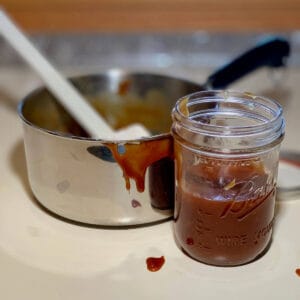
Homemade Caramel Sauce from Scratch
Equipment
- 2-quart heavy saucepan
Ingredients
- 1 cup granulated sugar
- ¼ cup water, optional, see Recipe Notes
- 1 tablespoon light corn syrup, optional, see Recipe Notes
- ¾ cup heavy cream, warmed to 110 °F
- ¼ cup unsalted butter
- flavorings, optional, see Recipe Notes
Instructions
- In a 2-quart heavy saucepan, stir together 1 cup granulated sugar, ¼ cup water, and 1 tablespoon light corn syrup (if using) until the mixture looks like wet sand. Bring the mixture to boil over medium heat and cook until the caramel has a deep amber color, about 8 to 10 minutes.DO NOT STIR the mixture during this process, but wash down sides of saucepan with a wet pastry brush dipped in cold water to minimize the risk of the mixture crystallizing. Watch it carefully as the caramel will turn dark very quickly at the end - you can also listen as the bubbling will quiet as the amber color is reached.
- While the sugar is boiling, heat the heavy cream until warm, about 110 °F on a digital thermometer.
- Once the sugr has reached a deep amber color, remove the saucepan from the heat and SLOWLY add the warmed ¾ cup heavy cream. The mixture will boil up, so stir continuously to keep the mixture from bubbling over (keep your face and hands away to avoid steam burns). Stir until combined, then return the saucepan to the heat and add ¼ cup unsalted butter and any flavorings.
- Attach a digital or candy thermometer to the side of the pan (but not touching the bottom). Bring the caramel back to a boil and cook, stirring occasionally to keep the mixture from bubbling over, until it registers 230 °F, about 1 to 2 minutes more. Remove the caramel from the heat.
- Pour the caramel into a storage container with a tight-fitting lid (like a canning jar), and cool to room temperature before using or covering. It will thicken as it cools.
- Storage instructions: Store the caramel for up to 1 month in the refrigerator, sealed tightly in the jar. When you want to serve it, reheat it gently in the microwave (20 second increments at 40% powder) or on the stove over low heat until it has reached your desired consistency.
Notes
- Salted Caramel Sauce: Add 1 teaspoon salt with the butter.
- Vanilla Caramel Sauce: Add 1 teaspoon vanilla extract, vanilla bean paste, or scrape the seeds from half of a whole vanilla bean along with the butter.
- Salted Vanilla Caramel Sauce: You guessed it - add both the salt and vanilla with the butter.
- Whiskey Caramel Sauce: Adding 1 to 2 tablespoons of your favorite whiskey or bourbon at the end will give your caramel sauce a boozy kick. Or, use whiskey, bourbon, or wine as a base to get a more concentrated flavor of the spirit.



Sandy says
Where is the recipe? There is no link to the recipe when you click on recipe card
Tammy Spencer says
Hi Sandy, That's so strange! I don't know what happened, but I fixed the issue and the recipe card is now there. Thanks for bringing it to my attention, and happy saucing! 😉
Sandy says
Thank you! Your directions and tips look easy to follow and very informative. Can't wait to try it!