

Rich, buttery, and silky smooth, this homemade Butterscotch Sauce comes together in about 10 minutes with just a handful of pantry ingredients. Perfect drizzled over ice cream, or spooned onto baked desserts, it's so much better than store bought sauce!
Jump to:
Quick Recipe Summary ✨
Homemade Butterscotch Sauce: A rich, buttery dessert sauce made with brown sugar, butter, and cream for classic butterscotch flavor that's perfect for ice cream, pies, cakes, and more.
Quick and easy: Just a handful of pantry ingredients and about 10 minutes on the stove create a silky smooth topping that tastes far better than anything from a bottle.
Customizable: Make it thicker for an ice cream topping, thinner for drizzling, or add a splash of bourbon for extra depth and warmth.
Active Time: About 10 minutes • Cooling Time: About 30 minutes • Total Time: About 40 minutes
Difficulty Level: ⭐ Easy. If you can stir ingredients in a saucepan, you can make this sauce. A thermometer helps fine-tune the texture, but it's not strictly required.
Yield: 16 tablespoons • Make-ahead: Keeps well refrigerated for up to 1 month.
👉 Follow the detailed instructions and troubleshooting tips below to make smooth, rich homemade butterscotch sauce with the perfect consistency for drizzling, dipping, or spooning over ice cream.
SUMMARIZE & SAVE THIS CONTENT ON
Why this recipe works
- Brown sugar provides the molasses notes that give butterscotch its signature flavor.
- Cooking the sauce to different temperatures lets you control whether it's a drizzle or a thick ice cream topping.
- No candy-making or caramelizing sugar required, making it much more approachable than caramel sauce.
- A touch of vanilla and salt balances the sweetness and deepens the buttery flavor.
- The sauce reheats beautifully, so a batch can be enjoyed all month long.
When you think about ice cream toppings, what comes to mind? The usuals are hot fudge sauce or caramel sauce, right?
If you look on grocers' shelves near the ice cream, you might see those, plus maybe a bottle of butterscotch ice cream topping next to the maraschino cherries.
If you've only had bottled butterscotch topping, homemade butterscotch sauce is a pleasant surprise. The flavor is richer, butterier, and more balanced than anything from a jar.
Homemade butterscotch sauce is a rich dessert topping made from butter, brown sugar, cream, and vanilla. Its signature flavor comes from the buttery molasses notes in brown sugar.
This easy recipe can be cooked thinner for drizzling or thicker for sundaes and desserts. It's perfect for ice cream, pies and tarts, cheesecake, bread pudding, coffee drinks, and more.
With so many ways to use butterscotch sauce, it's time to move beyond hot fudge and caramel. This quick and easy sauce is on the menu!
Butterscotch sauce vs caramel sauce
While made in similar ways (by cooking sugar), caramel starts with melting granulated white sugar until it has browned and...uhm...caramelized.
Butterscotch uses brown sugar, eliminating the need for the caramelization step. Plus, the molasses in brown sugar adds another flavor dimension to the sauce.
What about butterscotch sauce vs toffee sauce?
Again, these sauces are made almost the same. The difference is that toffee sauce (the sauce that's poured over Sticky Toffee Pudding) has the addition of golden syrup and is cooked for less time. This gives toffee sauce a consistency of runny honey, and the flavor has that honey undertone as well.
Recipe Ingredients
You'll need the following ingredients to make this butterscotch sauce recipe:
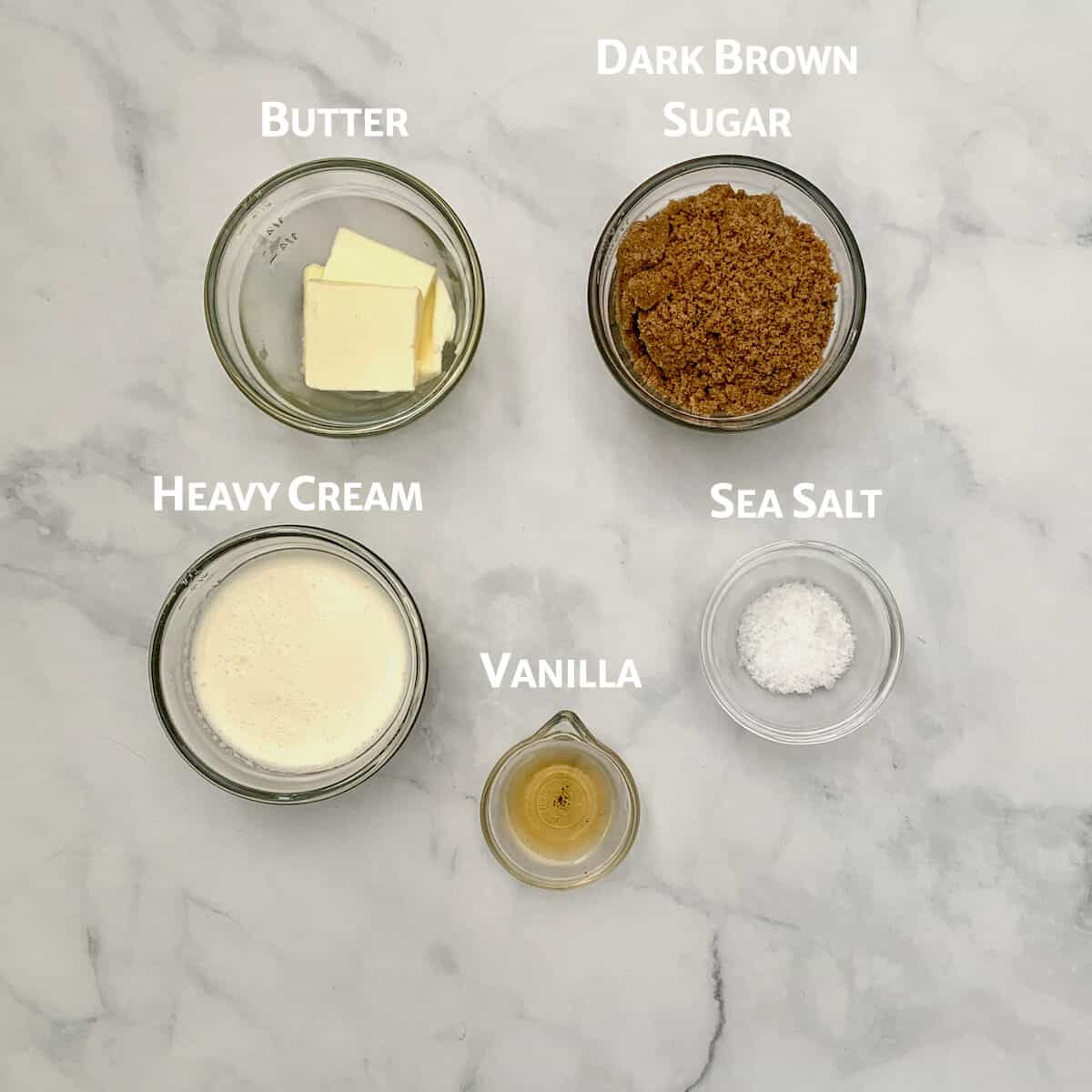
Ingredient Notes
Brown sugar: A very commonly used sugar in cookies, brownies, and blondies, brown sugar has a distinctive brown color due to the presence of molasses. Compared to white sugar, brown sugar has a richer flavor and a higher moisture content.
Using dark brown sugar will give the butterscotch sauce a deeper, more molasses flavor, but you can also use light brown sugar for a mellower flavor if you'd prefer.
Flavorings: Use vanilla extract and sea salt to round out the flavor. Kosher salt can be used instead if you'd prefer. Sea salt flakes are large, so if you're going to substitute kosher salt, use ¼ teaspoon, or to taste.
For a boozy kick, you can also add 1 to 2 tablespoons of bourbon or your favorite liqueur with the vanilla. With bourbon, the sauce will have a stronger, spicier component.
See the recipe card for a full list of ingredients and measurements.
How to make butterscotch sauce
Making a butterscotch sauce recipe is really easy. It's mostly just dump and boil.
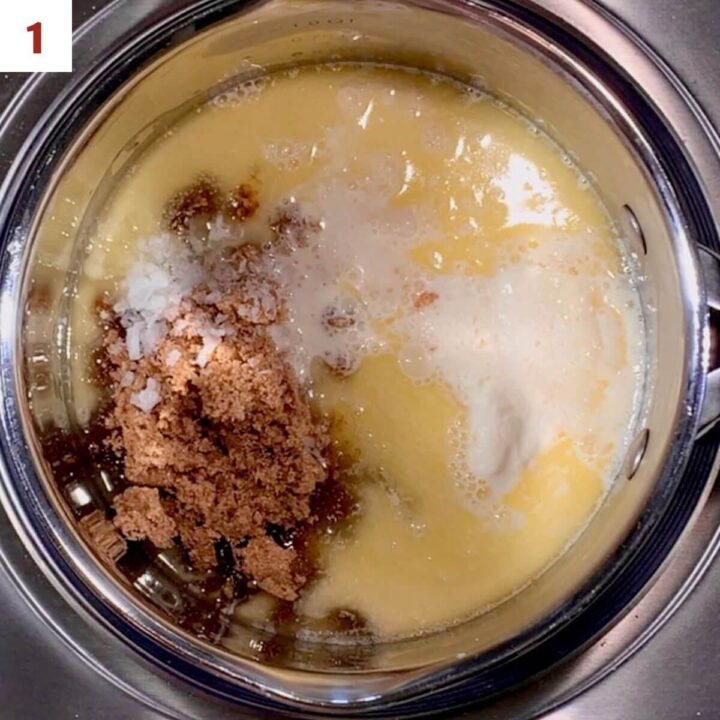
Step 1: Combine the ingredients
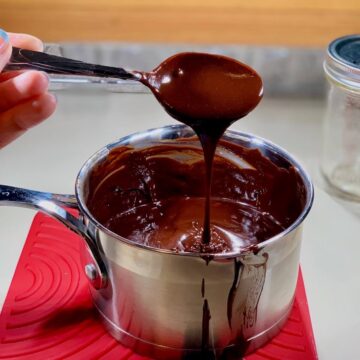
After melting the butter, stir in the brown sugar, heavy cream, and salt until the sugar has melted and the mixture is smooth (photo 1).
Step 2: Cook the sauce
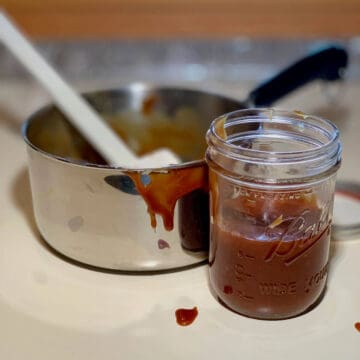
As you bring the mixture to a boil, you can decide how thick you'd like the finished butterscotch topping to be (photo 2).
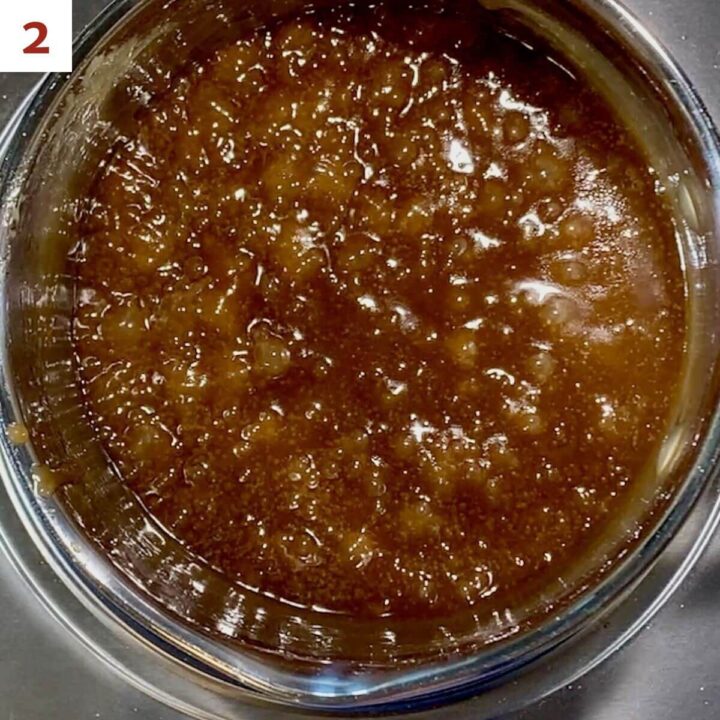
Boil the sauce to your desired consistency
A shorter cooking time, say 4 to 5 minutes (or to 227°F on a digital thermometer), will make the consistency loose and pourable, like chocolate syrup. Cooking it longer, maybe 6 to 7 minutes (or to 238°F), will make the consistency thicker, more like the aforementioned caramel sauce.
Step 3: Add the flavorings
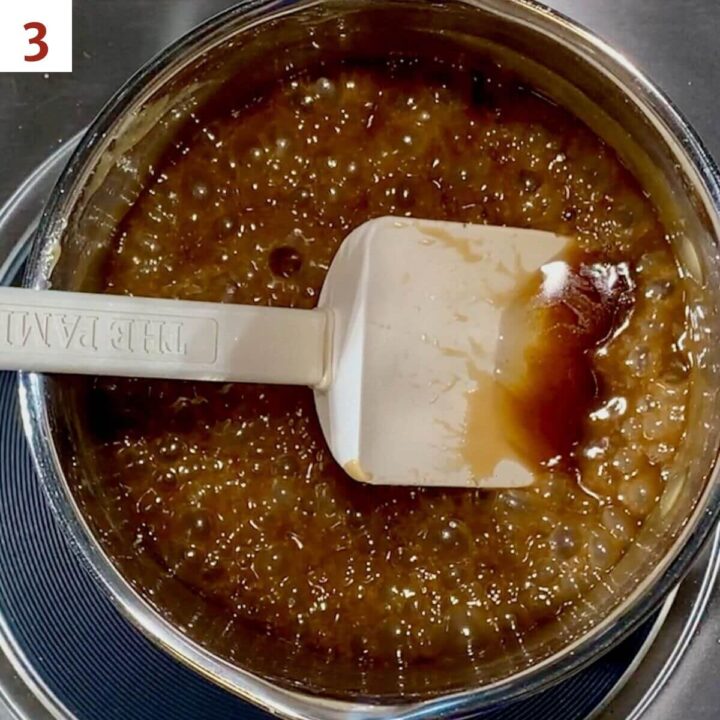
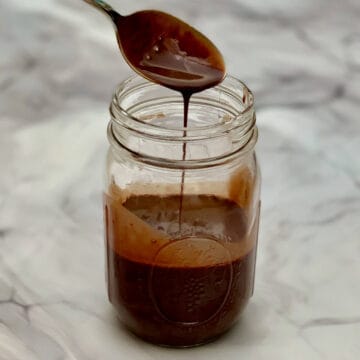
After the mixture has reached your desired consistency, remove it from the heat and stir in the vanilla extract and bourbon, if using (photo 3).
Step 4: Cool and store
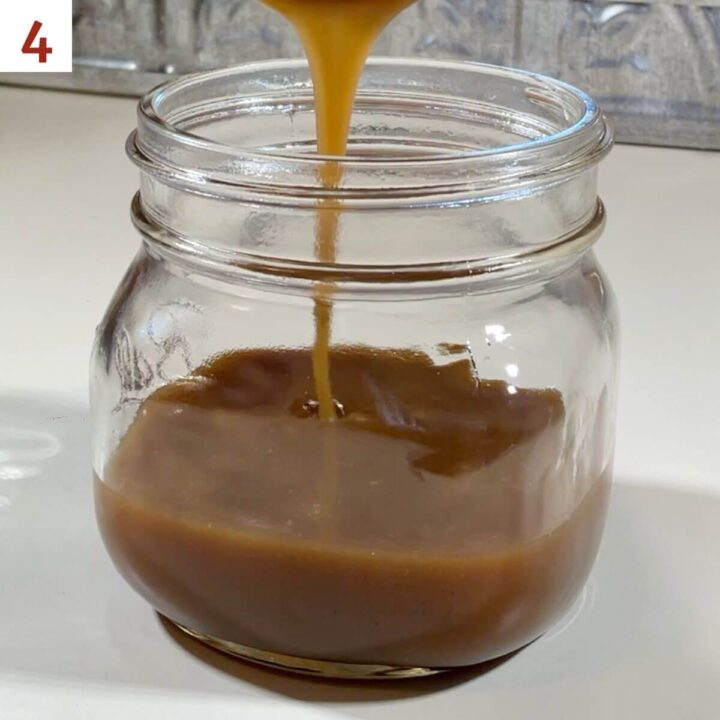
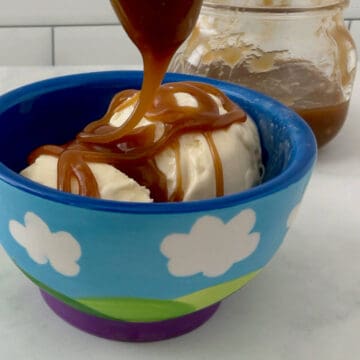
A clean mason jar is perfect for storage. Just pour the sauce into the jar and allow it to cool (photo 4).
Storage and reheating instructions
Storage Instructions: Store the butterscotch syrup, tightly covered, in the refrigerator for up to 2 weeks.
Reheating Instructions: If the sauce separates after it's been cooled, warm it gently in the microwave (20 second increments at 40% powder) and stir until it's smooth again.
Troubleshooting guide
Here are some issues you might encounter when making butterscotch sauce:
- My sauce is too thin: Continue simmering for another minute or two. The sauce also thickens noticeably as it cools.
- My sauce is too thick: Stir in a tablespoon or two of warm cream while reheating. Next time, cook to a slightly lower temperature.
- My sauce looks grainy: The brown sugar may not have fully dissolved. Warm gently while stirring until smooth.
- My sauce tastes too sweet: Add an extra pinch of salt to balance the flavor. Dark brown sugar also adds more molasses complexity.
- My refrigerated sauce is hard: That's normal. Just warm it gently in the microwave or on the stovetop until pourable again.
- My sauce separated: Reheat gently over low heat while whisking. Avoid boiling vigorously during reheating.
Ways to use butterscotch sauce
There are many ways you can use butterscotch sauce. Here are but a few ideas:
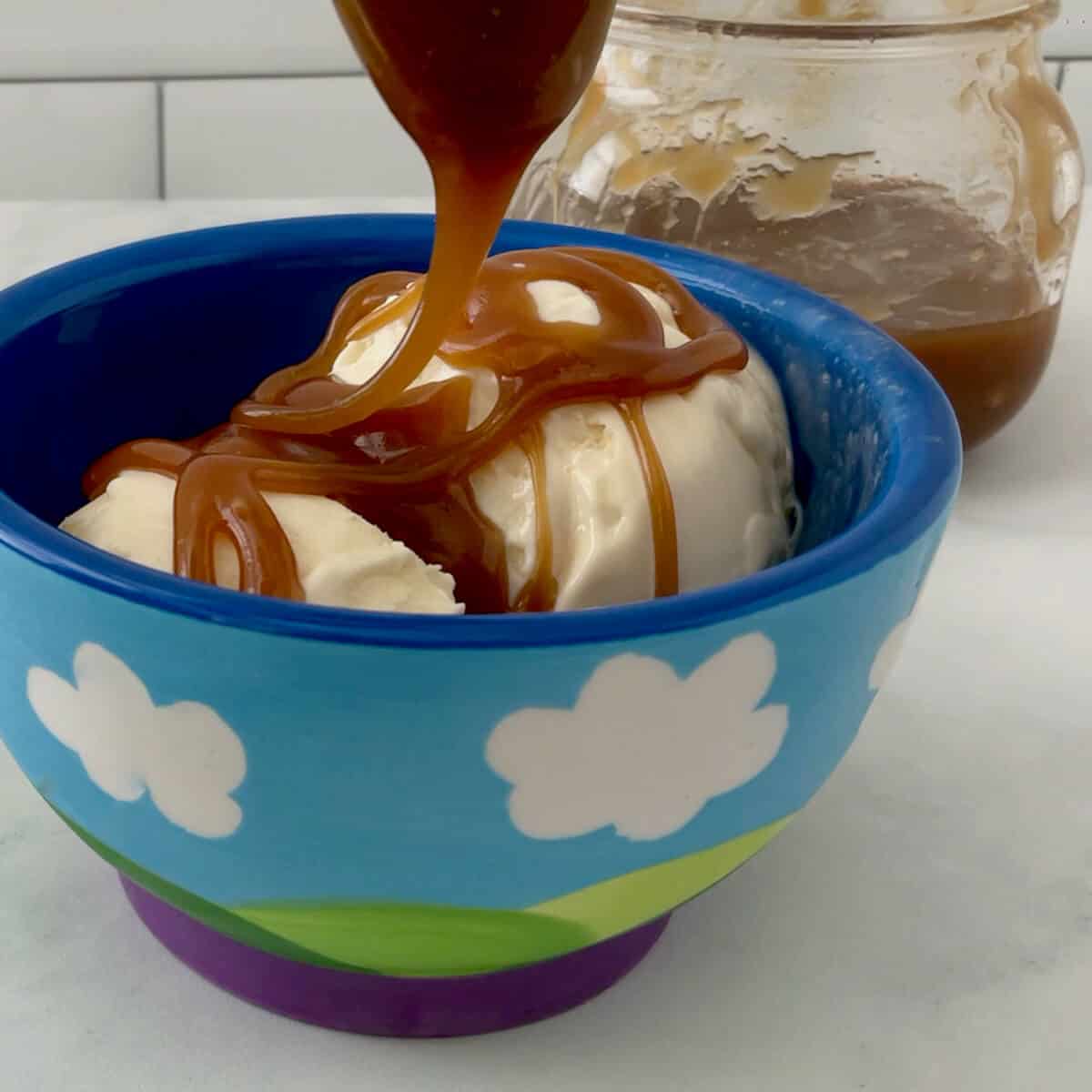
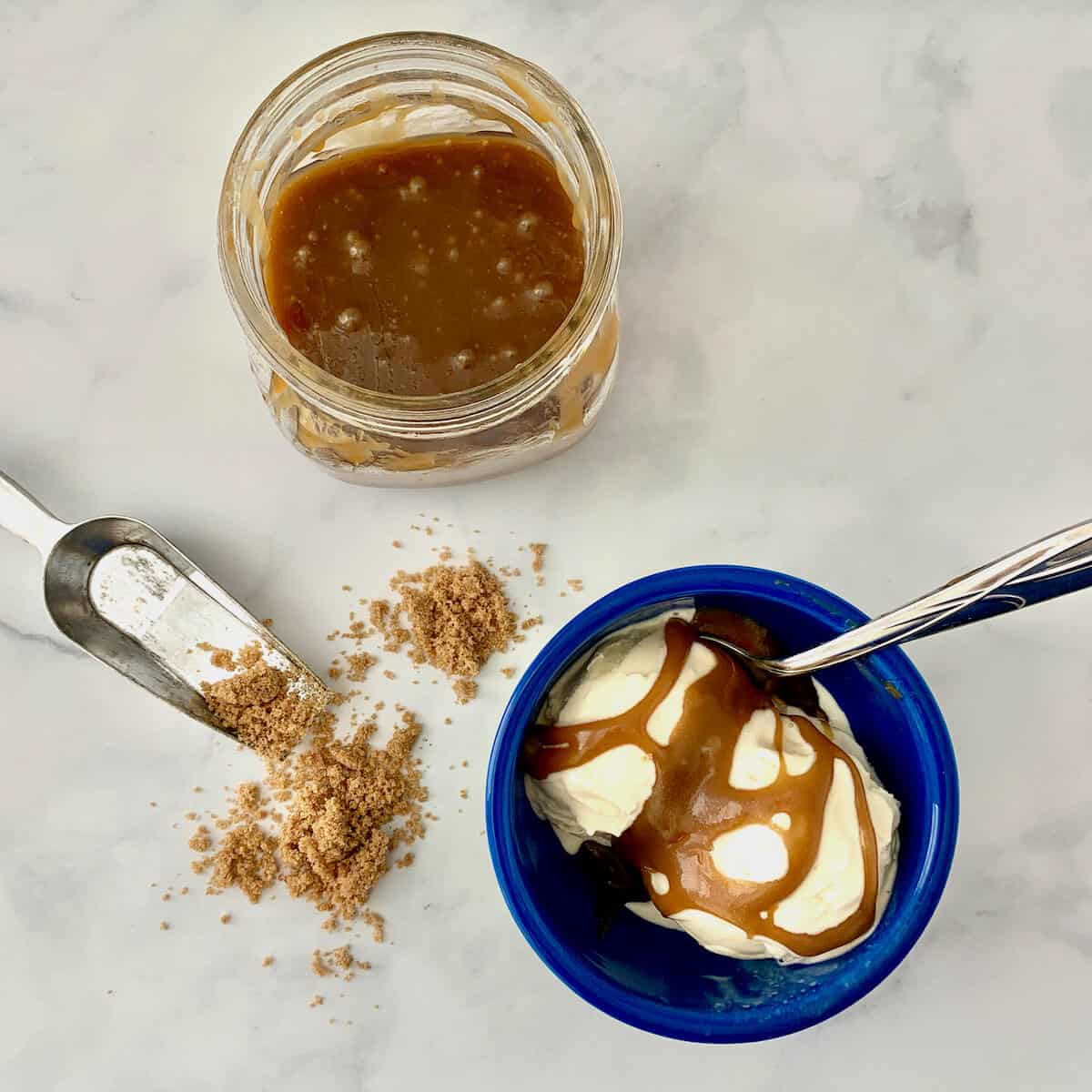
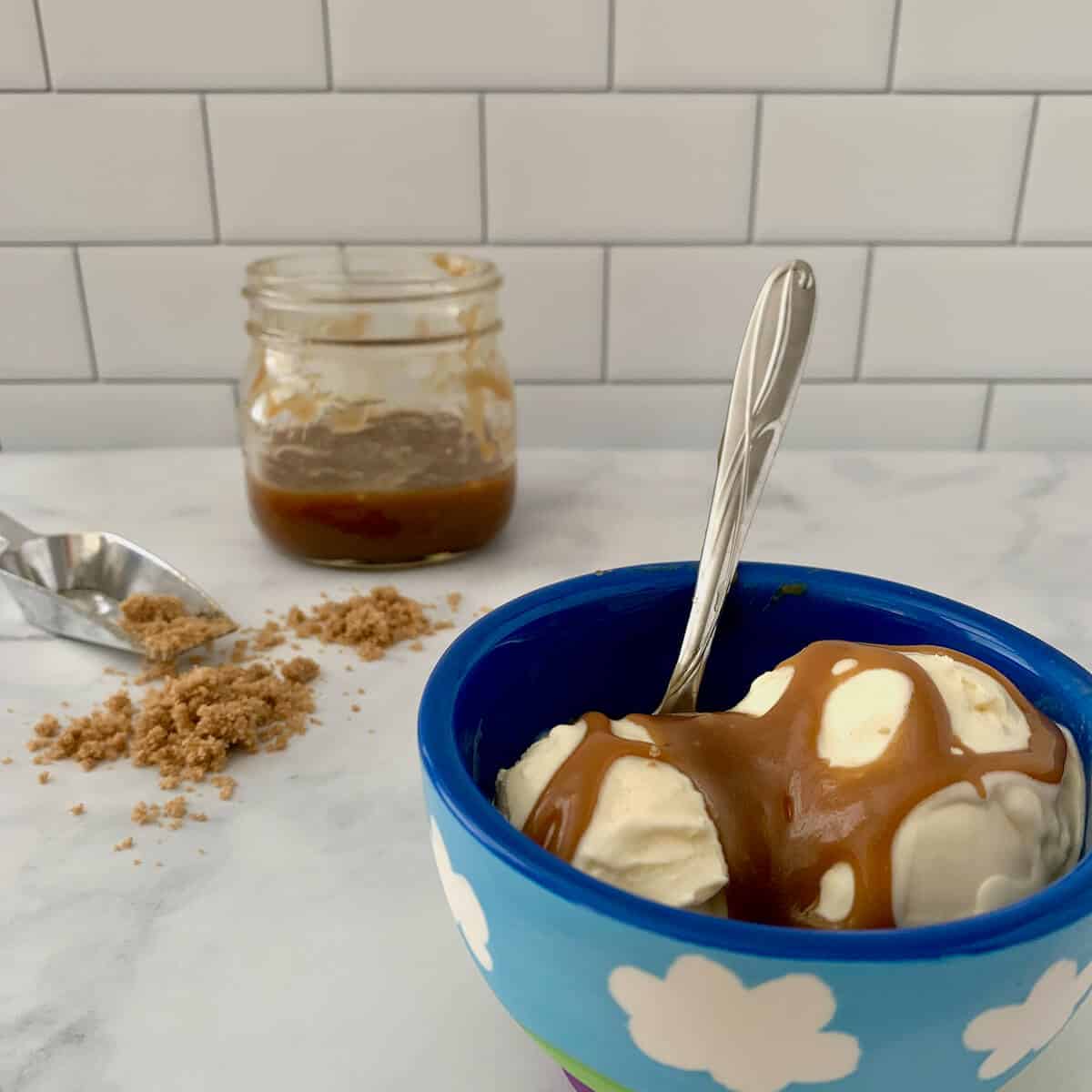
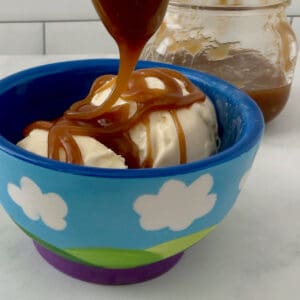
- Ice cream topping: What's pictured here was boiled for 7 minutes (238°F) for that thicker consistency. When the warmed sauce is poured on vanilla ice cream, the texture is that of a very soft caramel candy.
- Pies and tarts: A bourbon-spiked thinner butterscotch topping is also delicious drizzled on fruit pies, galettes, or crisps (like an Apple Galette or Apple Crisp).
- Bread pudding: Pour it onto bread pudding for an extra-special treatment.
- Whipped cream add-in: Mix butterscotch syrup into whipped cream for hot chocolate or to use to make your own Butterbeer (yes, like from Harry Potter)!
- Gift giving: You can even wrap a ribbon around the jar and give this homemade butterscotch sauce as a gift!
Questions asked and answered
Here are some questions that you might have...
Yes, but the sauce will be thinner and less rich. For the best flavor and texture, heavy cream is recommended.
Absolutely. Light brown sugar produces a milder flavor, while dark brown sugar gives a deeper molasses note and more traditional butterscotch character.
Butterscotch sauce is thicker and richer because it contains butter and cream. Butterscotch syrup is generally thinner and designed for mixing into coffee drinks, milkshakes, or cocktails.
While it should be a straightforward question, like why is it called shortbread, there are actually several theories as to where the name comes from. The "butter" part might be obvious (it has butter in it, after all). However, it's the "scotch" part that has people wondering.
As discussed in The Tasting Table, that suffix can be attributed to the sugar being scorched, it's alleged country of origin (Scotland), or it's use in making candy that's cleanly cut when warm ("scotch" = "to cut").
Whatever the real source of the name, it's safe to say that butterscotch doesn't contain scotch whisky, unless of course you decide to flavor your butterscotch sauce with it!
Didn't find the answer you're looking for?
Ask AI to answer for this specific recipe:
Disclaimer: I am not responsible for the quality of AI information

I hope you like this recipe! Let me know if you have any questions, and don't forget to leave a comment and rating. Thanks!
Slainté! L'chaim! Cheers!
- Tammy
More dessert sauce recipes to try
Recipe
Butterscotch Sauce
Equipment
- 1-quart saucepan
Ingredients
- 4 tablespoons unsalted butter
- ½ cup dark brown sugar, packed, see Recipe Notes
- ½ cup heavy cream
- ½ teaspoon sea salt flakes, see Recipe Notes
- 1 teaspoon pure vanilla extract
- 1 to 2 tablespoons bourbon, or your favorite liqueur (optional), see Recipe Notes
Instructions
- In a small heavy bottomed saucepan, melt 4 tablespoons unsalted butter over medium heat.
- Add ½ cup dark brown sugar, ½ cup heavy cream, and ½ teaspoon sea salt flakes, stirring until the mixture is combined and the sugar has melted.
- Bring the mixture to a boil, stirring constantly. For a thinner sauce, cook for 4 to 5 minutes to a temperature of 227 °F on a digital thermometer. For a thicker sauce, cook for 6 to 7 minutes to 238 °F. Any longer than that and the sauce will be too thick.
- Remove the pan from the heat and stir in 1 teaspoon pure vanilla extract and 1 to 2 tablespoons bourbon, if using.
- Transfer the sauce to a jar and allow to cool to room temperature. It will thicken further upon standing.
- Storage Instructions: Seal the jar and store the Butterscotch Sauce in the refrigerator for up to 2 weeks.
- Reheating Instructions: If the sauce separates after it's been cooled, warm it gently in the microwave (20 second increments at 40% powder) and stir until it's smooth again.



Comments
No Comments