

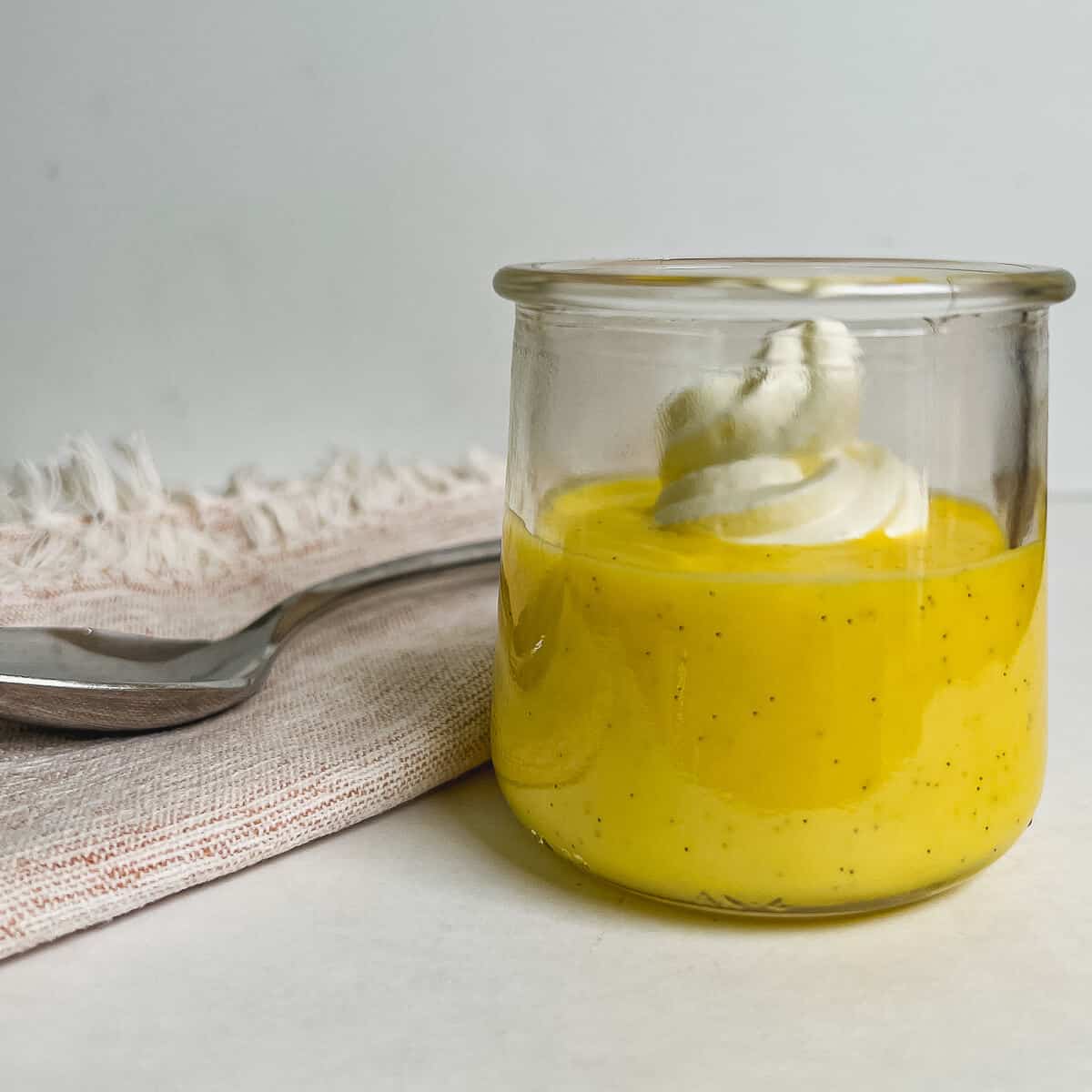
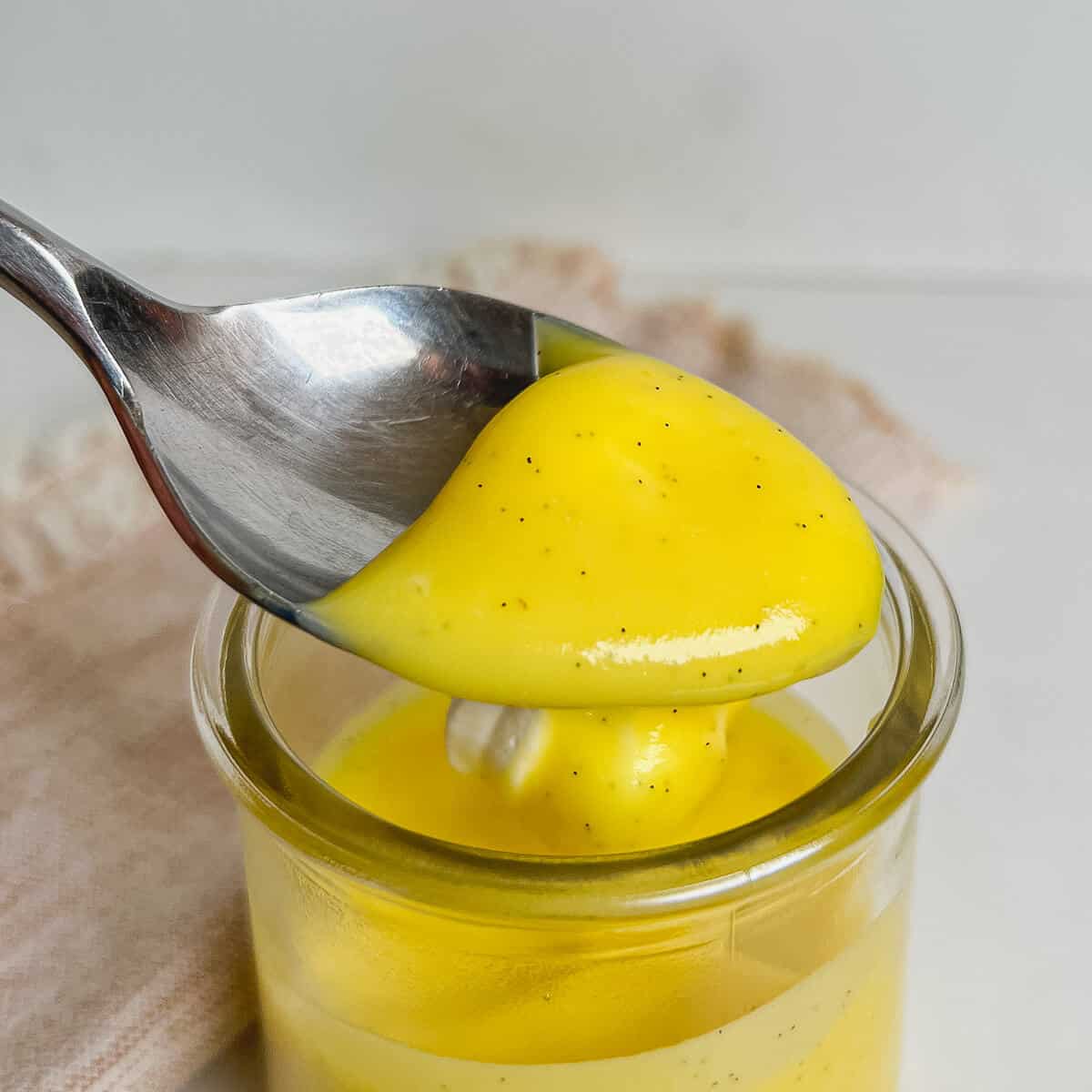
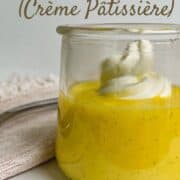
Pastry cream (Crème Pâtissière, or "creme pat") is a thick, creamy French vanilla custard made with milk, egg yolks, sugar, and cornstarch that's surprisingly easy to make. It's sturdy enough for filling éclairs, cream puffs, cakes, and fruit tarts, or just grab a spoon and enjoy it as a rich vanilla pudding!
Jump to:
Quick Recipe Summary ✨
Classic Pastry Cream (Crème Pâtissière): A rich, silky French vanilla custard that's thick enough for filling cakes, éclairs, cream puffs, and fruit tarts.
Simple ingredients, classic technique: Made from milk, egg yolks, sugar, cornstarch, and vanilla, with step-by-step instructions for tempering, thickening, and chilling the custard.
Active Time: 18 minutes • Chill Time: 1 hour • Total Time: About 1 hour 20 minutes
Difficulty Level: ⭐⭐ Easy to Moderate. The technique is straightforward, but you'll need to whisk continuously while tempering and thickening the custard.
Yield: About 2 cups • Refrigerator: Up to 5 days • Make-ahead: Yes, prepare up to 5 days ahead
👉 Follow the detailed instructions and troubleshooting tips below to make smooth, creamy pastry cream for your favorite cakes, pastries, and tarts.
SUMMARIZE & SAVE THIS CONTENT ON
Why this recipe works
- Cornstarch thickens without a floury aftertaste and keeps the pastry cream gluten-free
- Tempering helps prevent curdling for a smooth, creamy custard
- Straining catches any cooked egg bits for a silky finish
- Vanilla beans add rich flavor, but vanilla extract or vanilla bean paste work well, too
There are certain classic preparations that sound impressive, and French pastry cream (aka Crème Pâtissière, or "creme pat", for short) falls in that category to me.
Making creme pat at home might seem daunting, but once you've mastered the technique, you'll have a delicious and versatile custard you can use in all sorts of ways.
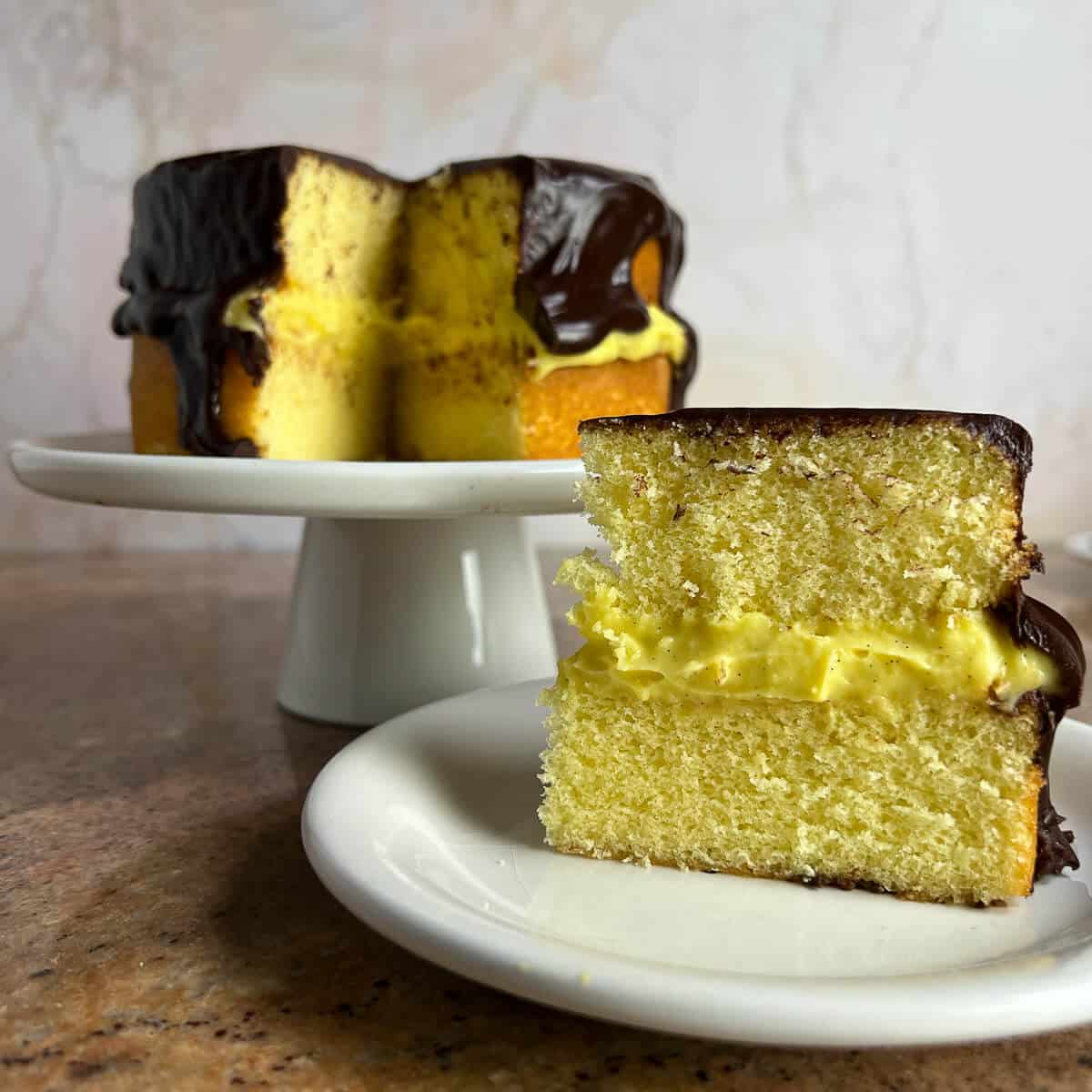
It's the creamy center that holds our cakes and pastries together (I'm looking at you, Boston Cream Pie!), and éclairs and cream puffs wouldn't be the same without it.
Best of all, pastry cream is easier to make than its fancy French name might suggest. Use it to make a world of rich desserts, or enjoy a quiet indulgence straight from the spoon.
I'm all in for that!
⭐⭐⭐⭐⭐
Using the actual vanilla bean is such an upgrade! Totally worth the extra faff of scraping all the seeds and everything! I made your Italian meringue macarons and had all these leftover egg yolks so I decided to make some pastry cream and I almost ate too much of it plain to have any left!
- Ella
What is Crème Pâtissière (Pastry Cream)?
Crème Pâtissière is a thick French cooked custard made with milk, egg yolks, sugar, and starch, and is commonly flavored with vanilla. It's in the same family as ice cream and Crème Brûlée.
Unlike a pourable custard sauce (Crème Anglaise), pastry cream is cooked until thick enough to hold its shape, making it suitable for use as a pastry and cake filling.
Pastry cream vs. custard: what's the difference?
Different types of custard are distinguished by how they're thickened and what is added after cooking, giving each one a different texture and use.
Here's how pastry cream compares to other common custards and pastry creams:
| Type | How it's thickened | Texture | Common use |
| Pastry Cream (Crème Pâtissière) | Egg yolks + starch | Thick, spoonable and pipeable | Pastry, tart, and cake filling |
| Crème Anglaise | Egg yolks | Thin and pourable | Dessert sauce |
| Vanilla Pudding | Cornstarch (no eggs) | Soft and creamy | Served as pudding |
| Diplomat Cream (Crème Diplomate) | Pastry cream + whipped cream + gelatin | Lighter and fluffy | Pastry and cake filling |
| Mousseline Cream (Crème Mousseline) | Pastry cream + whipped butter | Rich, light, and sturdy | Pastries and cakes |
Recipe Ingredients
You'll need the following ingredients to make this pastry cream recipe:
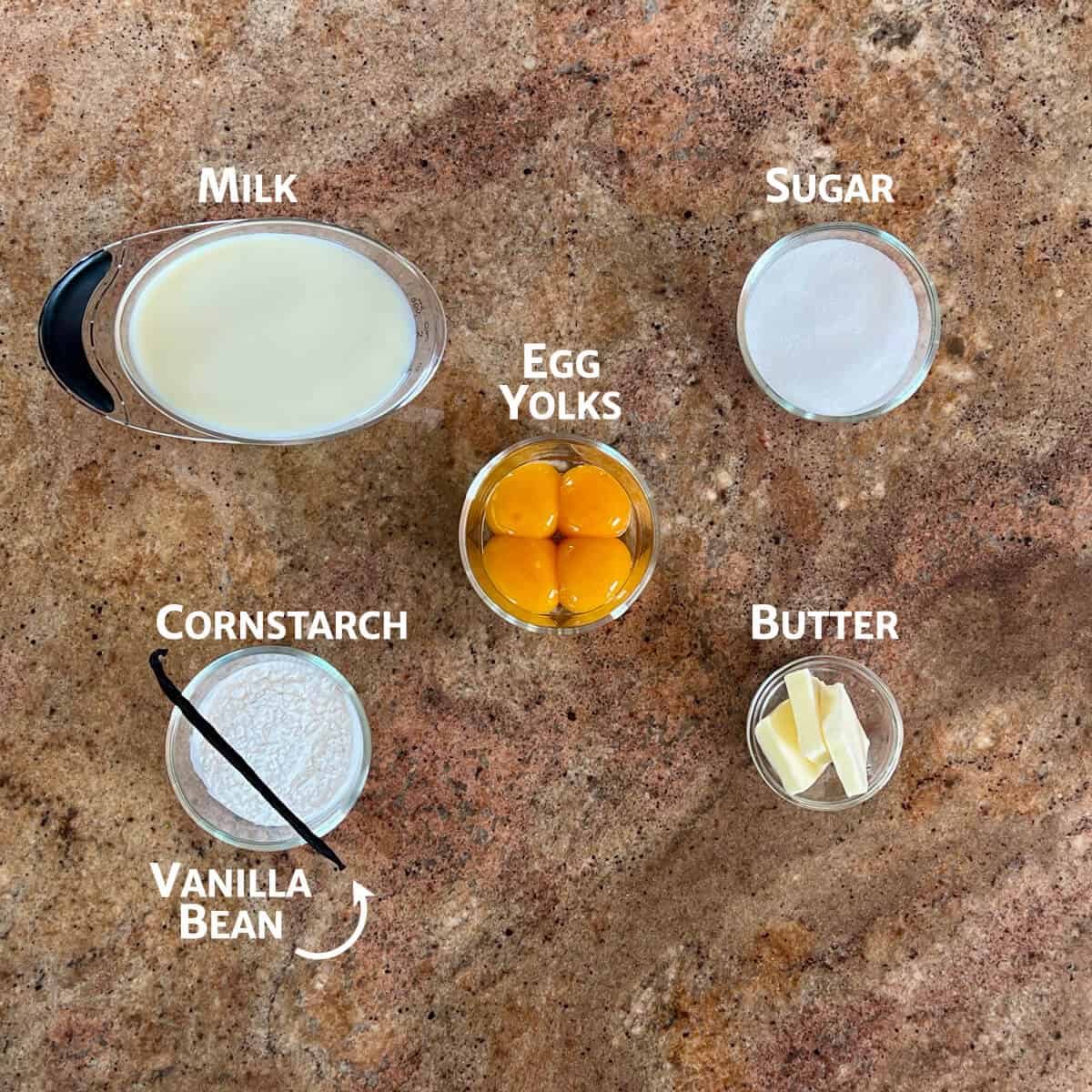
Ingredient Notes
Only 6 basic ingredients are needed to make pastry cream:
Milk: Provides the basis for the dairy custard. If you want an even richer product, you can substitute up to ½ cup of heavy cream for some of the milk.
Egg yolks: Provides richness, flavor, and structure.
Sugar: Besides a lovely sweetness, sugar helps modulate the thickening process so the yolks can cook without scrambling. You can reduce the amount of sugar by up to a half if you want less sweetness.
Thickener: Cornstarch picks up the job of thickening from the yolks, taking it beyond a Crème Anglaise custard sauce to that of a sturdier filling with body. While some recipes include or exclusively use flour, cornstarch does the job without masking the taste of the finished product. Plus, using cornstarch makes this a gluten-free recipe.
Flavoring: Here we're using whole vanilla beans to flavor the creme pat, but you can substitute vanilla extract or vanilla bean paste if you prefer.
Want to know more about the different types of vanilla? See my Types of Vanilla Explained guide for how whole vanilla beans, vanilla extract, vanilla bean paste, and vanilla bean powder differ, when to use each one, and how to substitute them.
Butter: Although not strictly necessary for a classic French Crème Pâtissière recipe, butter adds shine and flavor.
See the recipe card for a full list of ingredients and measurements.
How to make pastry cream
Step 1: Make the yolk mixture
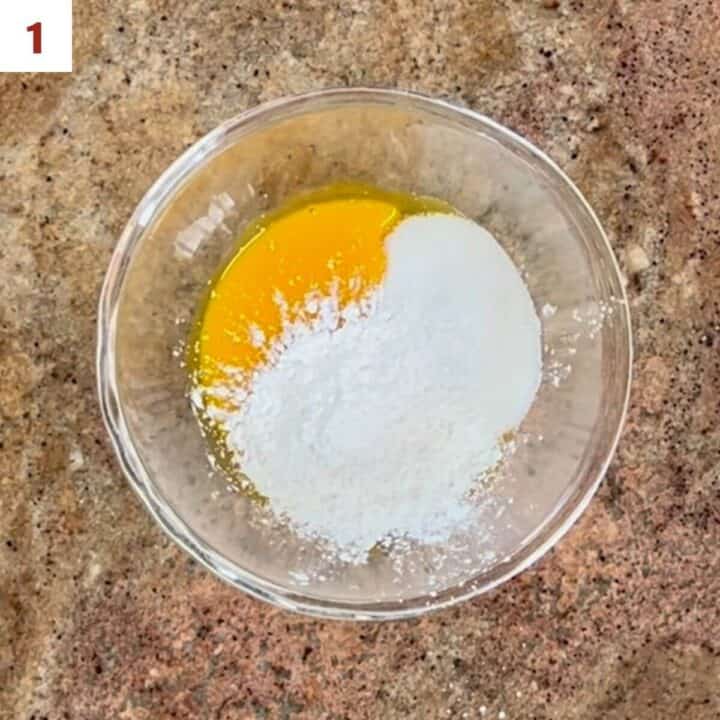
In a small bowl, whisk the egg yolks briefly. Add the cornstarch and half of the sugar and whisk to combine (photo 1). Set aside.
Step 2: Heat the milk mixture
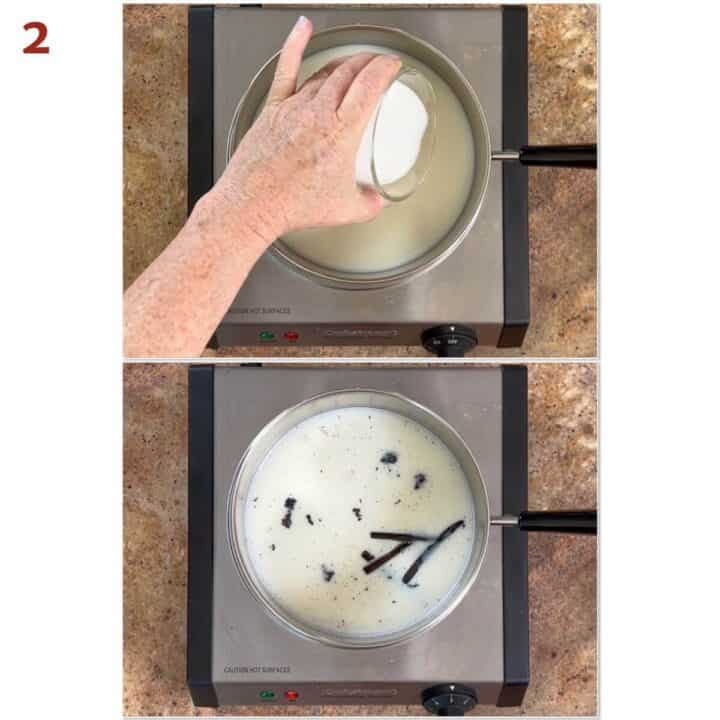
Whisk the milk and the remaining sugar together in a medium saucepan. Using the tip of a sharp knife, split the vanilla bean and scrape the seeds into the milk mixture (if using), then add the vanilla bean pods (photo 2).
Heat the milk mixture over medium heat, stirring occasionally, until small bubbles form and it starts to steam, about 3 to 5 minutes.
Step 3: Cook the custard
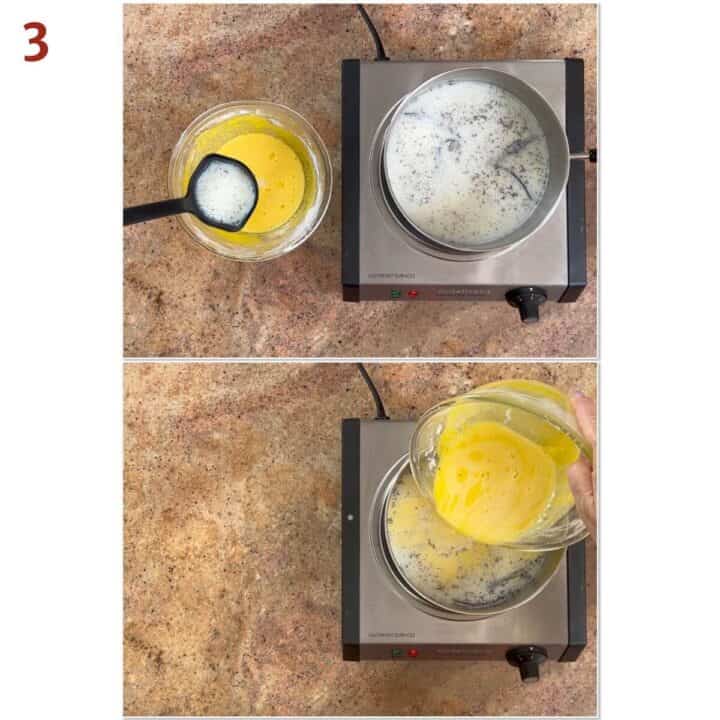
Gently heat the yolk mixture by slowly adding ¼ cup of the warmed milk mixture to the yolk mixture while continuously whisking. Add another ¼ cup of the milk and whisk again. This process is called tempering the eggs.
Add the yolk mixture to the saucepan and cook, whisking constantly, until the custard is bubbling and thickened, and the whisk leaves visible trails that don't immediately disappear (photo 3).
What is egg tempering?
The idea is when you add eggs to a hot liquid, the eggs will immediately curdle, leaving streaks of egg whites in the liquid (which is most unwelcome). What tempering does is it raises the temperature of the eggs slowly by whisking in a little bit of the hot liquid, thereby avoiding the curdling conundrum.
When I first encountered the term "temper the eggs," I had no idea what it meant, but I have since learned it's an important step in making cooked custards and puddings that contain eggs.
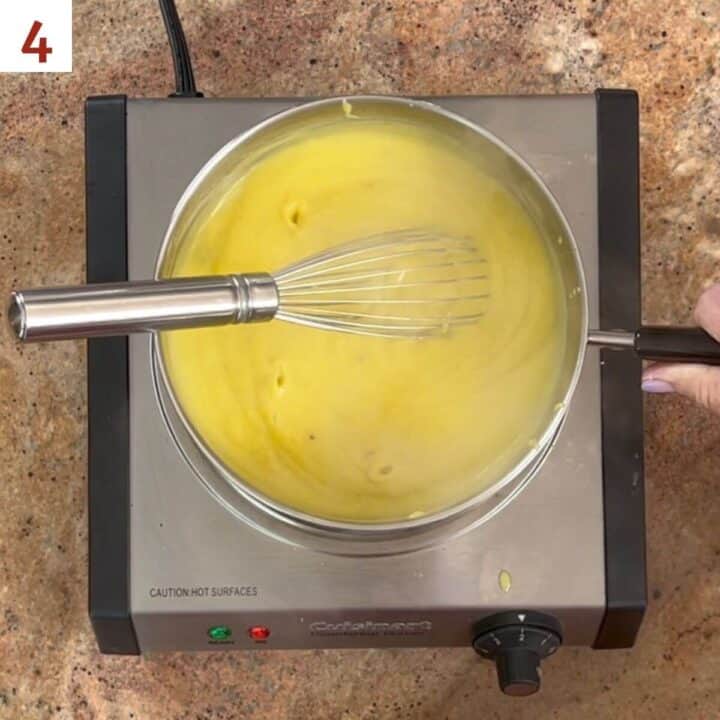
Allow the custard to boil approximately 1 minute longer, stirring constantly. Don't overcook the custard to avoid curdling the eggs (photo 4).
Step 4: Strain the custard
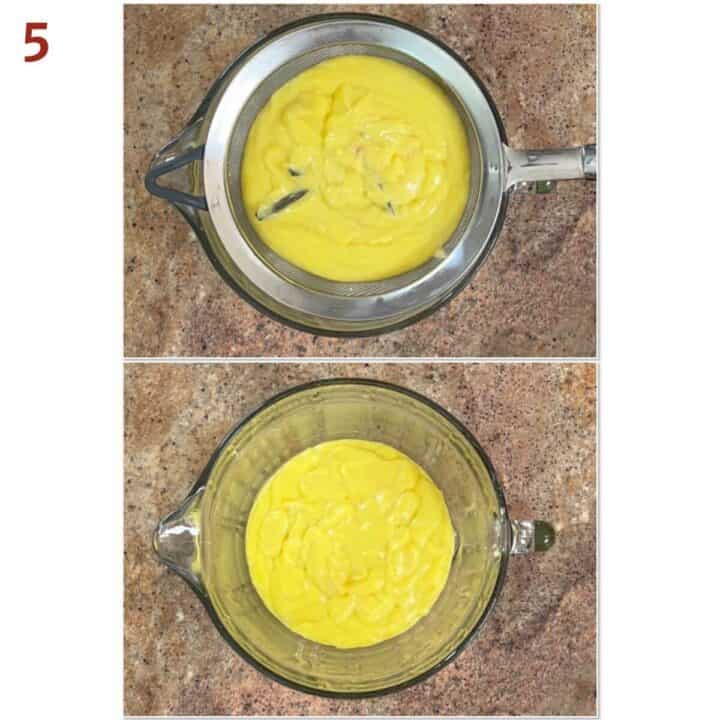
Remove the custard from the heat and strain through a fine mesh strainer into a clean bowl, removing the spent vanilla bean (photo 5).
Straining the finished pastry cream removes the vanilla bean and catches any small bits of cooked egg, leaving the custard silky smooth.
If you are using vanilla extract or vanilla bean paste instead of a vanilla bean, stir it in now along with the butter, if using. Stir until the butter melts, but don't over-mix, as this will thin the custard.
Reuse the vanilla bean
Don't toss that spent vanilla bean! Instead, rinse the bean then place it in a jar and cover with vodka to make your own vanilla extract.
Step 5: Chill the custard
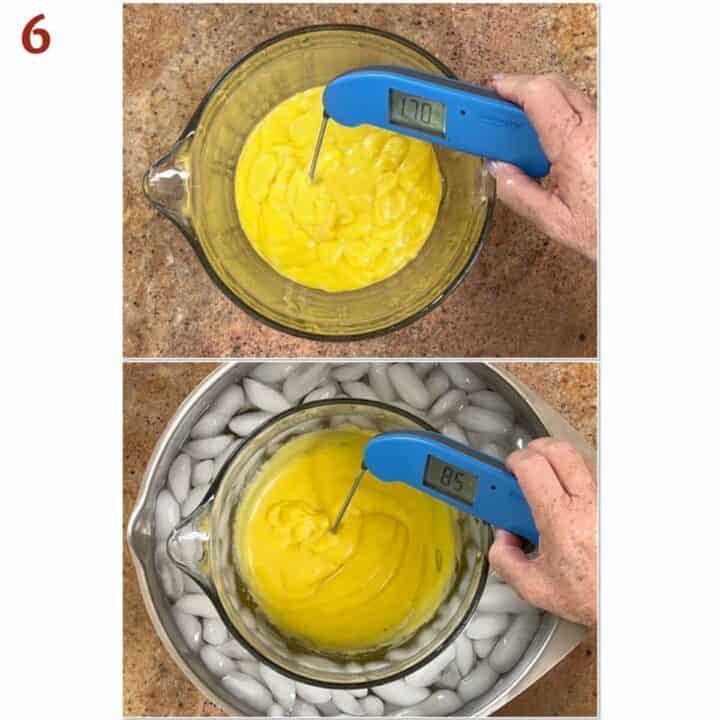
Cool the custard using an ice bath (½ ice cubes and ½ water), reaching halfway up the sides of the bowl (photo 6). Stir occasionally until it's cooled to room temperature (a digital thermometer should read about 80 to 85 °F).
Once cooled, place a piece of plastic wrap on the surface of the custard and refrigerate it in an airtight container. Chill until completely cold and set before using as a pastry or cake filling.
Why use an ice bath
An ice bath helps the custard cool more quickly before refrigeration, so it spends less time at warmer temperatures where bacteria can grow.
Storage information
Pastry cream can be kept in the refrigerator in an airtight container with plastic wrap pressed onto the surface, for up to 5 days. If it starts to separate, just stir it until it's smooth.
Yield Notes
This crème pâtissière recipe makes about 2 cups, enough to fill a full-sized Boston Cream Pie or a 10-inch fruit tart.
Troubleshooting tips
Here are some issues you might encounter when making pastry cream:
- Pastry cream is too thin: Make sure it comes to a bubbling boil, then cook for the full minute while whisking. The cornstarch needs enough heat to fully thicken.
- It's lumpy or has bits of cooked egg: The eggs probably got too hot during tempering or cooking. Immediately strain the warm custard through a fine-mesh strainer.
- It's too thick after chilling: Pastry cream firms considerably in the refrigerator. Whisk it briefly until smooth before using; if necessary, whisk in a very small amount of milk.
- A skin formed on top: Press plastic wrap directly against the surface before chilling so air can't reach the custard.
- It separated in the refrigerator: Give it a good whisk to bring the custard back together.
- It tastes starchy: It likely wasn't cooked long enough after thickening. Once it bubbles, continue cooking and whisking for about 1 minute.
Uses for pastry cream
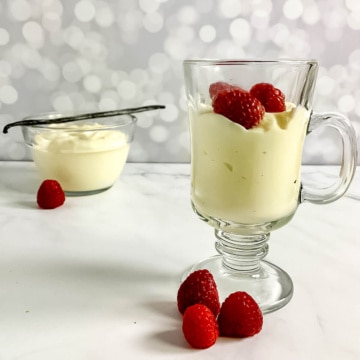
Pastry cream is commonly used as a filling for cakes and pastries, as a base for fruit tarts, and in layered desserts like trifles. It can even be served on its own as a rich vanilla pudding.
- As a filling for layer cakes and pastries: Creme pat features prominently in Boston Cream Pie, in cream puffs (choux cream), and in éclairs
- As the base for fruit tarts: Fill a baked shortcrust pastry with creme pat and top with your choice of fresh sliced fruits
- As the pudding in compound desserts: Use creme pat instead of boxed pudding in a No Bake Chocolate Eclair Cake and in trifles,
- On its own as a rich gluten-free pudding.
Questions asked and answered
Here are some questions you might have...
Pressing plastic wrap directly against the surface keeps air from reaching the custard, which prevents a rubbery skin from forming as the pastry cream cools.
This creme pat recipe, made with cornstarch, should not be frozen because the cornstarch breaks down when thawed, ruining the texture.
Didn't find the answer you're looking for?
Ask AI to answer for this specific recipe:
Disclaimer: I am not responsible for the quality of AI information

I hope you like this recipe! Let me know if you have any questions, and don't forget to leave a comment and rating. Thanks!
Slainté! L'chaim! Cheers!
- Tammy
Recipe
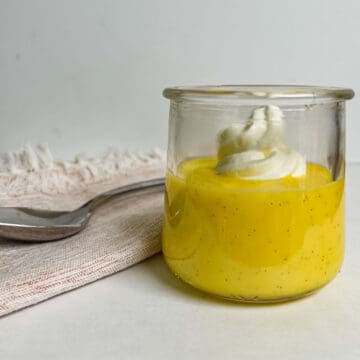
Easy Pastry Cream (Crème Pâtissière)
Ingredients
- 4 large egg yolks, at room temperature
- ⅔ cup granulated sugar, divided, see Recipe Notes
- 3 tablespoons cornstarch
- 2 cups milk, see Recipe Notes
- 1 whole vanilla bean, split, or 1 teaspoon pure vanilla extract or vanilla bean paste, see Recipe Notes
- 3 tablespoons unsalted butter, optional
Instructions
- In a small bowl, whisk 4 large egg yolks briefly. Add ⅓ cup granulated sugar and 3 tablespoons cornstarch and whisk to combine. Set aside.
- Whisk 2 cups milk and the remaining ⅓ cup granulated sugar together in a medium saucepan. Using the tip of a sharp knife, split 1 whole vanilla bean and scrape the seeds into the milk mixture (if using), then add the vanilla bean pods.
- Heat the milk mixture over medium heat, stirring occasionally, until small bubbles form and it starts to steam, about 3 to 5 minutes.
- Gently heat the yolk mixture by slowly adding ¼ cup of the warmed milk mixture to the yolk mixture while continuously whisking. Add another ¼ cup of the milk and whisk again. This process is called tempering the eggs, and its purpose is to prevent the yolks from curdling while the custard cooks.
- Add the yolk mixture to the saucepan and cook, whisking constantly, until the custard is bubbling and thickened, and the whisk leaves visible trails that don't immediately disappear.Allow the custard to boil approximately 1 minute longer, stirring constantly. Don't overcook the custard to avoid curdling the eggs.
- Remove the custard from the heat and strain it through a fine mesh strainer into a clean bowl, removing the spent vanilla bean. If the custard boiled during thickening, straining it out will help remove any curdled bits of egg.
- If you are using 1 teaspoon pure vanilla extract or vanilla bean paste instead of a vanilla bean, stir it in now along with 3 tablespoons unsalted butter, if using. Stir until the butter melts, but don't over-mix, as this will thin the custard.
- Cool the custard using an ice bath (half ice cubes mixed with half water), reaching halfway up the sides of the bowl. Stir until it's cooled to room temperature (a digital thermometer should read about 80 °F to 85 °F).
- Once cooled, place a piece of plastic wrap on the surface of the custard and chill until completely cold and set before using as a pastry or cake filling.
- Storage information: Pastry cream can be kept in the refrigerator in an airtight container with plastic wrap pressed onto the surface, for up to 5 days. If tit starts to separate, just stir it until it's smooth.This pastry cream should not be frozen because the cornstarch will break down during thawing, ruining the texture.
- This recipe makes about 2 cups (615 grams) of pastry cream, enough to fill a full-sized Boston Cream Pie or a 10-inch fruit tart.


Ella says
Using the actual vanilla bean is such an upgrade! Totally worth the extra faff of scraping all the seeds and everything! I made your Italian meringue macarons and had all these leftover egg yolks so I decided to make some pastry cream and I almost ate too much of it plain to have any left!
Tammy Spencer says
Love this! Save a spoonful for me