

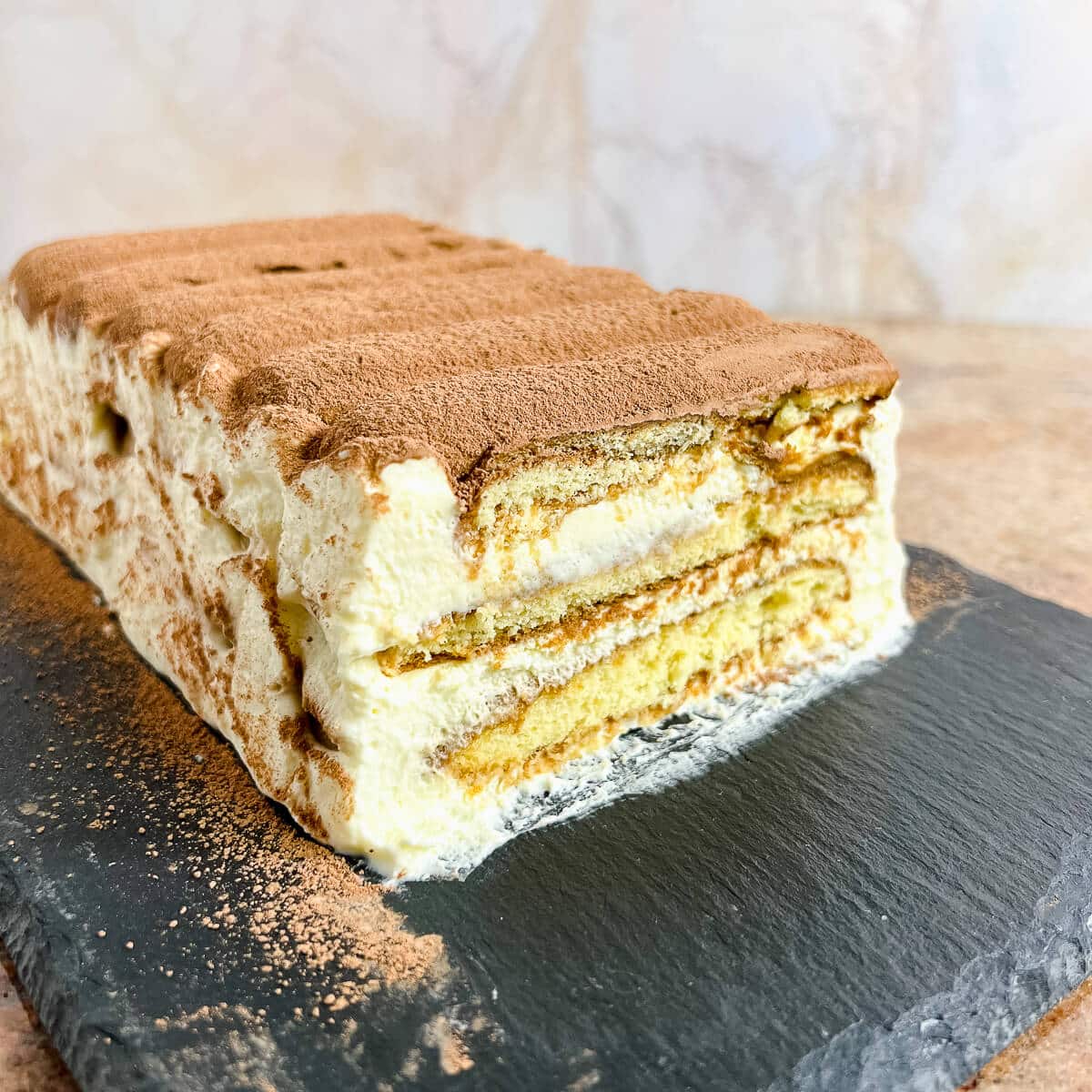
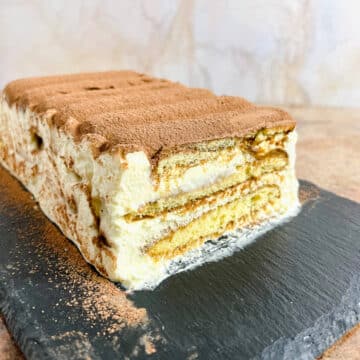
Classic tiramisu is already a showstopper, but this No-Bake Tiramisu Loaf is even easier to slice and serve. Layers of creamy mascarpone filling and espresso-soaked ladyfingers chill into beautiful slices finished with a dusting of cocoa. Whether you're entertaining or simply craving tiramisu, this elegant make-ahead dessert looks bakery-worthy without ever turning on the oven!
Jump to:
Quick Recipe Summary ✨
No-Bake Tiramisu Loaf: A classic Italian tiramisu layered in a loaf pan instead of a baking dish, making it easy to unmold, slice, and serve with beautiful defined layers.
Classic flavor, elegant presentation: Creamy mascarpone filling, espresso-soaked ladyfingers, and a dusting of cocoa powder create all the familiar tiramisu flavors in a loaf that's perfect for slicing.
Cooked egg yolks for peace of mind: The sabayon gently cooks the egg yolks while creating an airy, silky mascarpone filling with rich flavor and smooth texture.
Perfect make-ahead dessert: Since it needs several hours to chill anyway, it's an ideal dessert to prepare the day before entertaining.
Active Time: About 40 minutes • Chill Time: 6 hours or overnight • Total Time: About 6½ hours (mostly hands-off!)
Difficulty Level: ⭐⭐⭐ Medium. Several simple components come together into an elegant dessert, with step-by-step photos to guide you.
Yield: 8 slices • Freezer-friendly: Up to 3 months • Make-ahead: Best made 1 day ahead.
👉 Follow the detailed instructions, layering tips, and troubleshooting guide below for a beautifully sliced tiramisu loaf every time.
SUMMARIZE & SAVE THIS CONTENT ON
Why this recipe works
- Beautiful slices every time thanks to the loaf pan shape and overnight chill
- The cooked sabayon creates a rich mascarpone filling without using raw eggs
- Quick espresso dips soften the ladyfingers without turning them mushy.
- Individual layers are easy to build because the ladyfingers fit naturally across the loaf pan
- Since it's made ahead, dessert is completely finished before guests arrive
When you want an elegant dessert, and don't want to turn on the oven, a no-bake tiramisu is the answer!
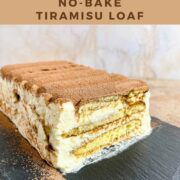
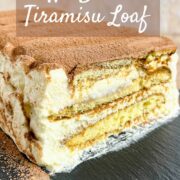
Normally, a classic Italian tiramisu is presented in a baking pan and served in squares. A tiramisu loaf is assembled in a loaf pan instead. Once chilled and unmolded, it slices into beautiful layered pieces while delivering the same flavors you expect from traditional tiramisu.
This tiramisu loaf cake is a creamy, dreamy, treat. The espresso-soaked ladyfingers form the framework of the layers, but the real star is the sweet mascarpone cream. The cocoa powder sprinkled on top adds a hint of rich chocolate tartness (and dryness, if you inhale it by accident!), adding a counterpoint to all that sweetness.
When the components for the mascarpone cream are made in a few easy stages, the tiramisu itself comes together quite easily. And layering the ladyfingers in the loaf pan is easy - no cutting them to fit.
Perfect for any time of year (especially summer!), I highly recommend you make a tiramisu loaf when you want to impress and delight your guests. Valentine's Day, Mother's Day, Father's Day, Christmas dinner, or just a special celebration will all be enhanced by this delicious dessert!
If you want an easy, finger-friendly version of tiramisu, try my No-Bake Tiramisu Truffles. All the flavor of the classic Italian dessert wrapped in a decadent chocolate shell, and you don't need a spoon.
⭐⭐⭐⭐⭐
Normally I'm not a fan of tiramisu, but after a recent visit to Italy where I had some amazing tiramisu, I thought I'd give this a try and wow! This did not disappoint! The texture was perfect and the flavour was perfectly balanced. I think we actually enjoyed this version even more than the "original recipe" we had in Italy!!
- Ella
What is a Tiramisu Loaf?
Despite the name, tiramisu loaf (aka tiramisu loaf cake) isn't actually bread. It's classic tiramisu assembled in a loaf pan instead of a square or rectangular baking dish. The "loaf" simply refers to its shape.
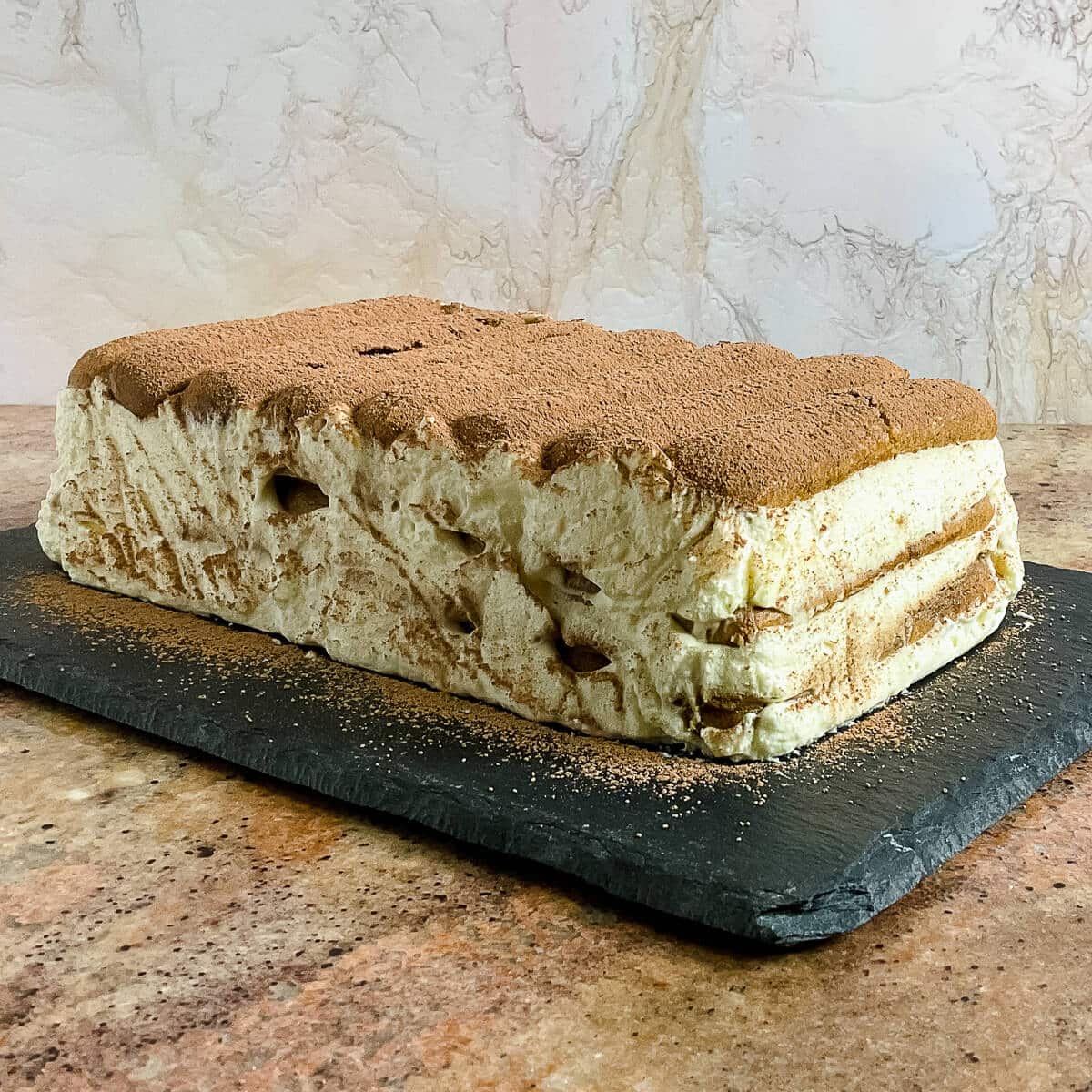
Other than the serving dish used to assemble the tiramisu, both versions use the same ingredients. For the tiramisu loaf, espresso-soaked ladyfingers and mascarpone cream are layered into a loaf pan. After chilling, the loaf is inverted onto a serving platter, dusted generously with cocoa powder, and voilà - the tiramisu is ready to slice and serve.
Tiramisu loaf vs traditional tiramisu
Here's a quick look at the difference between the 2 presentations:
| Tiramisu Loaf | Traditional Tiramisu |
| Assembled in a loaf pan | Usually assembled in a square or rectangular baking dish |
| Inverted before serving | Served directly from the pan |
| Easy to slice into neat pieces | Scooped or cut into portions |
| Great for smaller gatherings | Better for larger groups |
Recipe Ingredients
You'll need the following ingredients to make this tiramisu recipe:
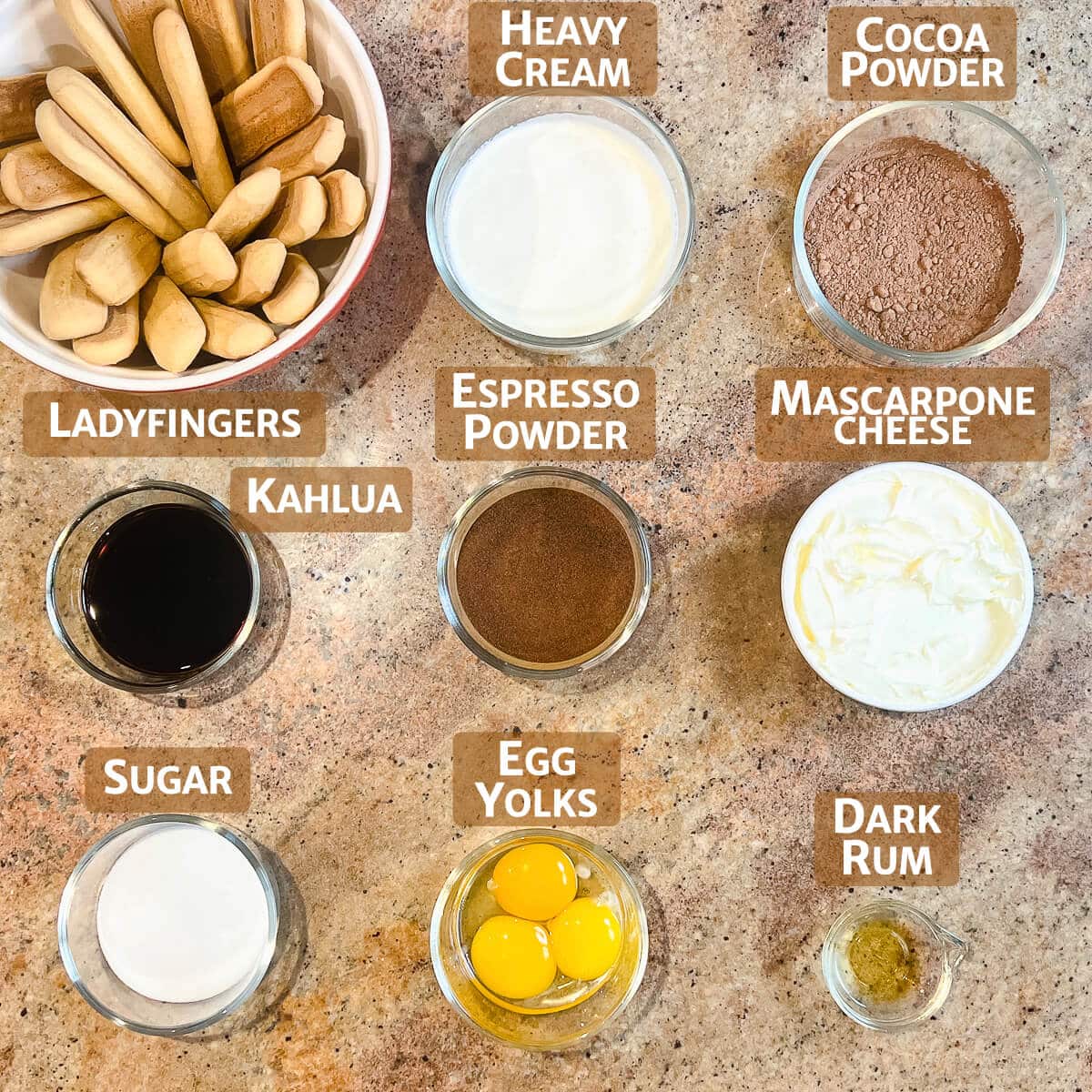
Ingredient Notes
Ladyfingers: A classic ingredient for tiramisu, ladyfingers (aka savoiardi or sponge fingers) are long, thick sponge cookies, with a texture that lies between sponge cake and biscotti.
For this tiramisu recipe, use the crunchy kind of ladyfingers (not the soft ones). They'll soak up the espresso dip well, yet will help keep the overall structure of the dessert. In the US these usually come in a pacakge of 24, which is the perfect amount for this recipe.
Mascarpone cheese: Another classic ingredient, mascarpone is a silky, spreadable Italian cheese similar to American cream cheese (without the tangy flavor). See below for possible mascarpone substitutions.
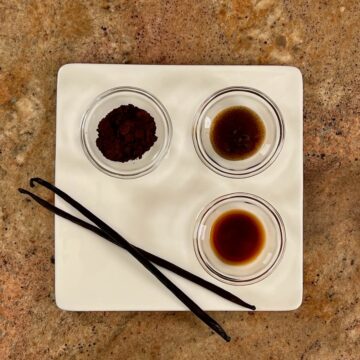
Espresso powder: Mixed with water, espresso powder makes for a very strong liquid used to flavor and soften the ladyfingers. You can also use 1¼ cups strongly brewed espresso or very strong black coffee instead.
Egg yolks: For the mascarpone cream, egg yolks and sugar are whipped together while heating over a double boiler, similar to how you cook the egg yolks in hollandaise sauce (except using sugar instead of butter). The result is a light, thick mixture known as sabayon.
Ok, technically sabayon (or zabaglione, in Italian) also includes a sweet wine. But the cooked base is the same method used in this tiramisu recipe, so I'm going to go ahead and call the cooked-egg-yolk-and-sugar-mixture a sabayon anyway.
The point is that if you make the non-alcoholic version, this use of egg yolks is pregnancy-friendly because the egg yolks are cooked, not raw.
Kahlua: This coffee liqueur gives the tiramisu a boozy kick. Grand Marnier or dark rum can also be used in the espresso dip.
For a kid- and pregnancy-friendly tiramisu, you can make an alcohol-free version of tiramisu (actually, that's how it's traditionally prepared in Italy). Just omit the Kahlua (or dark rum or Grand Marnier) in the espresso dip and replace the dark rum in the mascarpone cream with milk.
See the recipe card for a full list of ingredients and measurements.
Substitutions for mascarpone
Mascarpone cheese may not be easy to find, and might also be pricey. While not perfect substitutes, cream cheese and crème fraîche can be doctored up to replace the mascarpone cheese in this tiramisu recipe. Here are two options to try [Source: Real Simple]:
- Cream cheese: The best alternative to mascarpone is to mix together 12 ounces (336 grams or 1½ blocks) cream cheese (at room temperature), ¼ cup (60 grams) heavy whipping cream, and ¼ cup (60 grams) sour cream.
- Crème fraîche: Mix 8 ounces (227 grams) of crème fraîche with ¼ cup (50 grams) of granulated sugar.
Both of these hacks cut down on the tanginess of the cream cheese and crème fraîche in order to mimic the sweet creaminess of mascarpone.
How to make tiramisu loaf
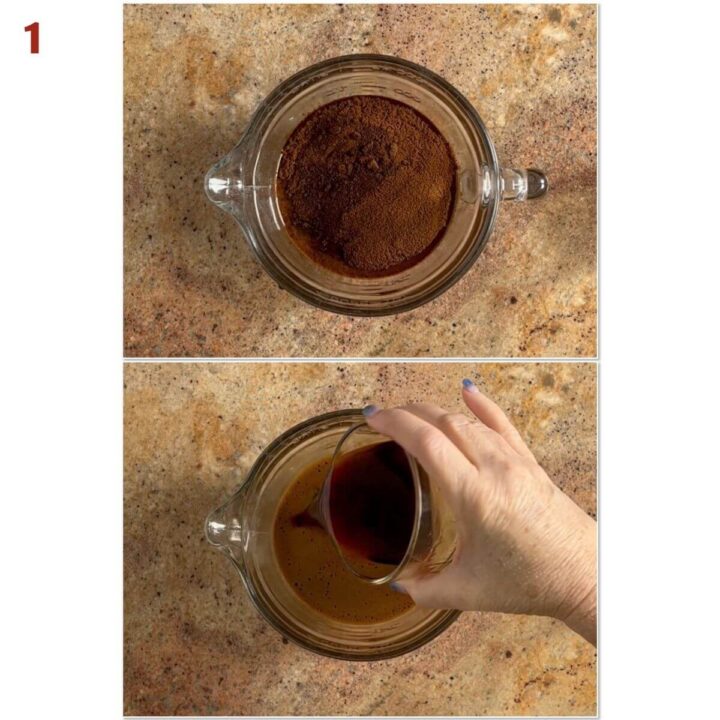
Step 1: Make the espresso dip
Stir the espresso powder into the hot water, then allow to cool to room temperature. Once cooled, stir in the Kahlua, dark rum, Grand Marnier, or milk (photo 1).
Pour the dipping mixture into a 9-inch pie pan and set aside.
Step 2: Make the mascarpone cream
Mascarpone cream consists of 3 elements: sabayon (a cooked egg yolk and sugar mixture), spiked whipped mascarpone cheese, and whipped cream.
Element 1: Sabayon
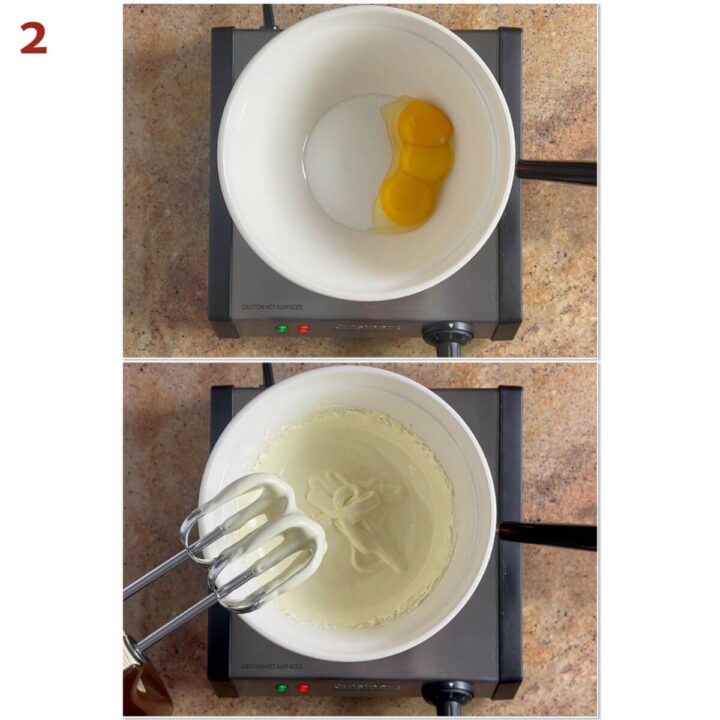
Pour 2-inches of water into a saucepan (or bottom of a double boiler) and bring to a simmer over medium-low heat.
Using a heat-proof bowl making sure the bottom of the bowl isn't touching the water (or use the top of the double boiler), beat the sugar and egg yolks with a hand mixer on medium-high.
When the mixture is pale yellow, has tripled in volume, and falls back in thick ribbons when the beaters are lifted, the sabayon is ready, about 5 to 7 minutes (photo 2).
Remove the bowl from the heat and whisk the sabayon for a few minutes off the heat to help it cool down, then set aside to cool further.
Element 2: Whipped mascarpone
In a large bowl, beat together the mascarpone and the dark rum just until smooth.
Add the warm sabayon to the mascarpone mixture and beat until just combined (photo 3).
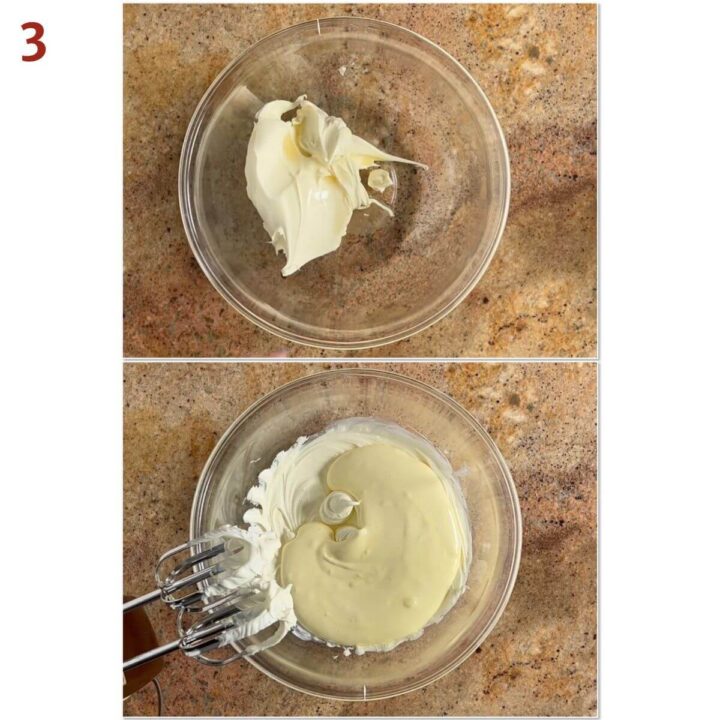
Don't over-whip the mascarpone
Beat the mixture just until it's smooth. Over-whipping can cause the mixture to curdle.
Element 3: Whipped cream
In a separate bowl and using clean beaters, beat the chilled heavy cream starting on low speed, then increasing to medium speed, just until stiff peaks form (photo 4).
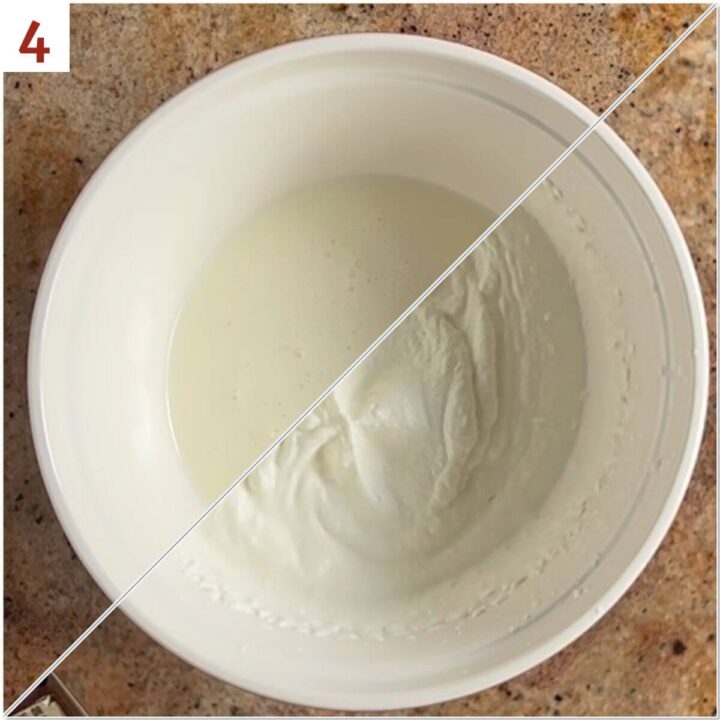
Start whipping on a low speed
Beating heavy cream slowly will help it remain more stable without turning watery.
Fold the whipped cream into the mascarpone mixture, half at a time (photo 5).
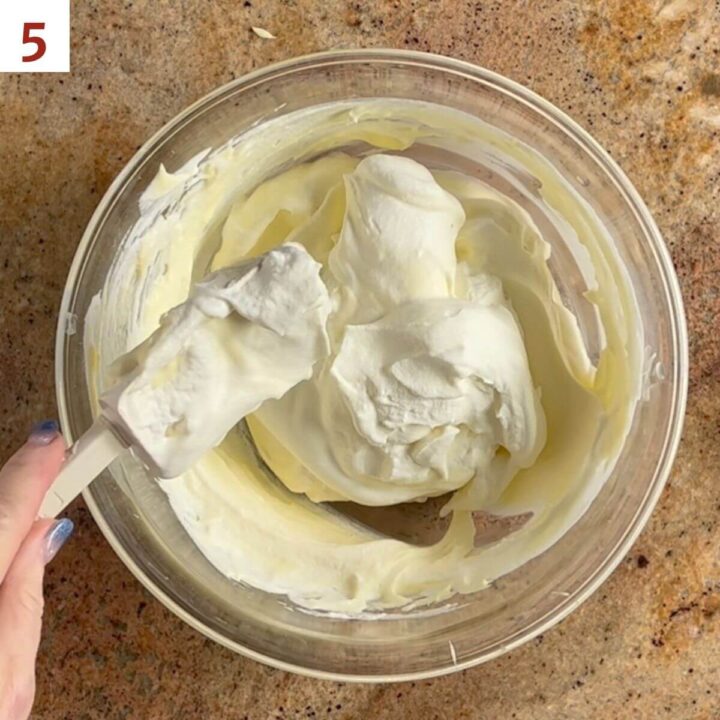
Fold in the whipped cream gently
Treat the whipped cream gently (fold, don't stir it in), and don't over-mix so the whipped cream stays fluffy.
Step 3: Assemble the tiramisu loaf
Lightly spray a standard loaf pan with canola oil spray, then line with plastic wrap, leaving plenty of overhang to wrap around the tiramisu later.
For the first layer, take 8 ladyfingers and, one at a time, quickly dip each side into the espresso mixture just long enough for it to soften, 1 to 2 seconds per side. Place them in the prepared pan as you go (photo 6).
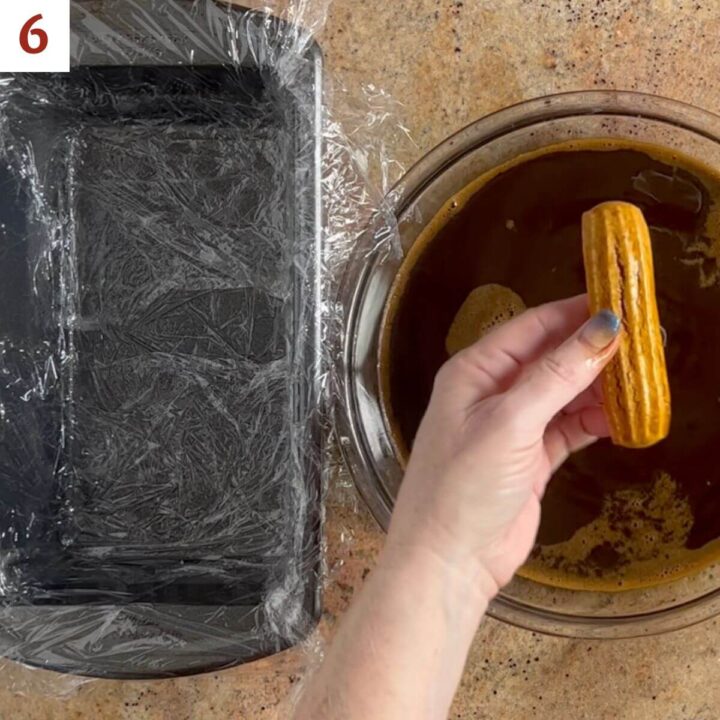
Dip the ladyfingers quickly
You want the ladyfingers wet but not soggy, so don't dawdle!
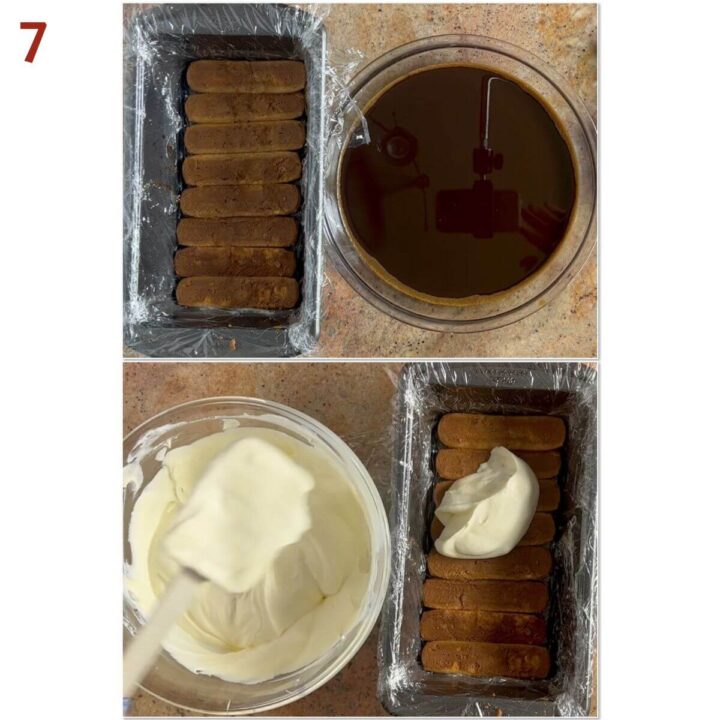
Lay the 8 dipped ladyfingers face down across the bottom of the prepared pan so that they are parallel to the short side of the pan, crowding them together if necessary.
Spread ⅓ of the mascarpone cream over them, smoothing the cream out with a small offset spatula (photo 7).
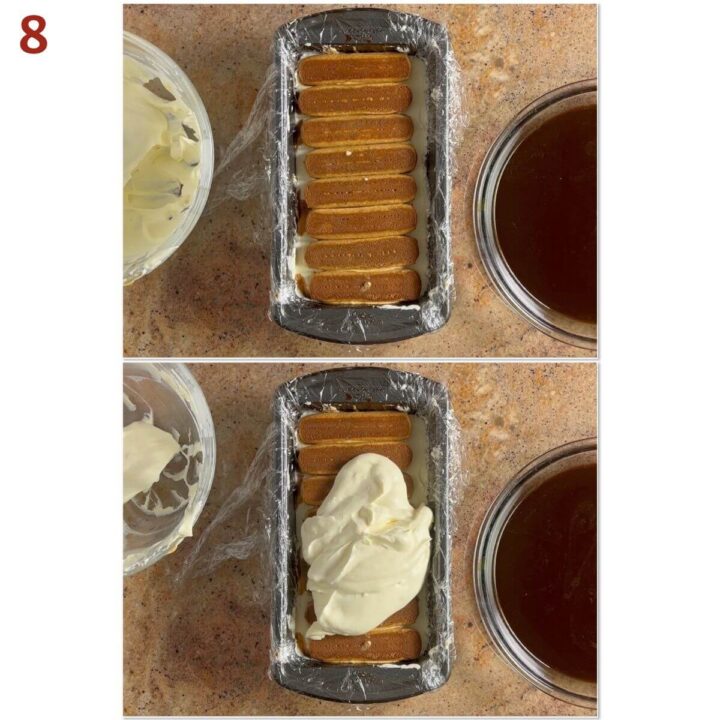
Lay the next layer of 8 dipped ladyfingers on top of the cream, then spread half the remaining cream over them. Repeat for one more layer (photo 8).
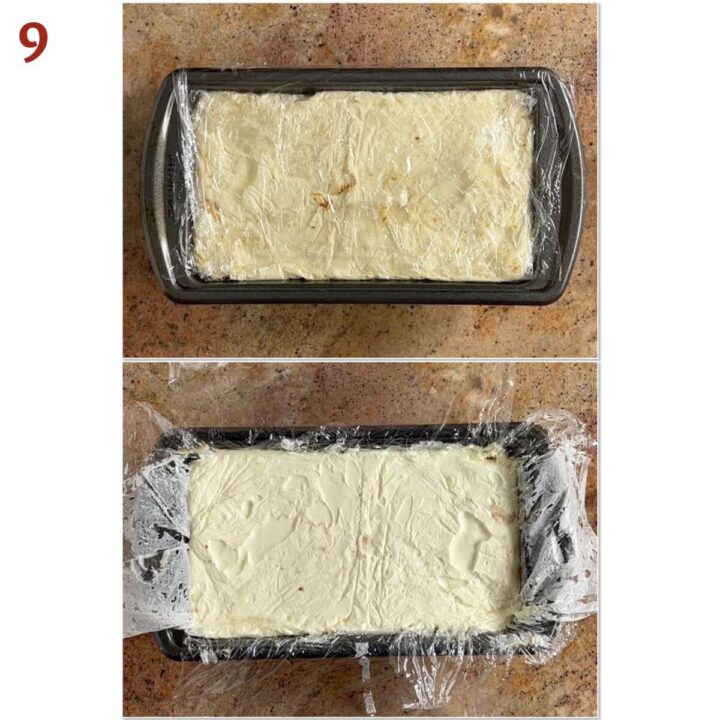
Cover the pan with the overhanging plastic wrap and chill the tiramisu for at least 6 hours or overnight. You want the layers to be fully set (photo 9).
Step 4: Prepare the tiramisu for serving
Remove the tiramisu from the refrigerator and unwrap the plastic wrap from the top.
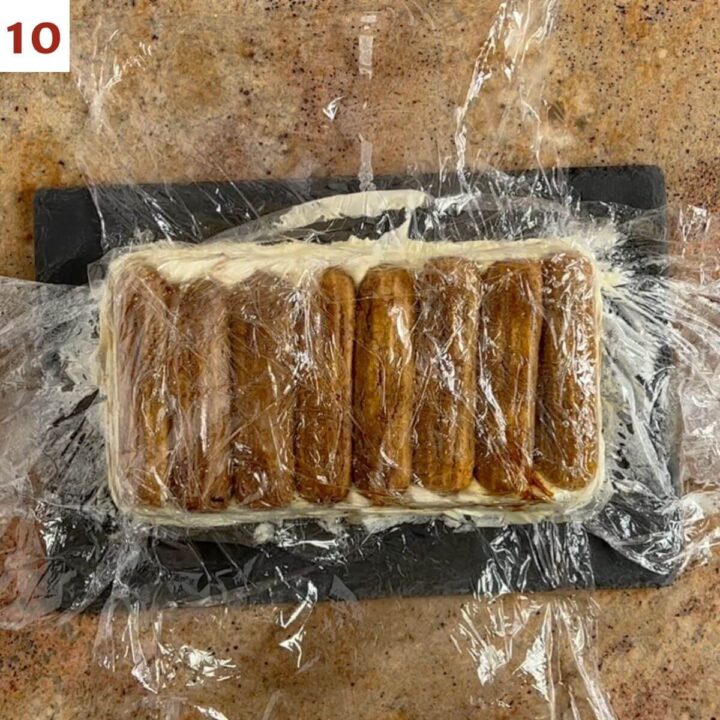
Invert a small platter or large plate over the top of the loaf pan and quickly flip them over. Carefully lift the loaf pan off the tiramisu and remove the plastic wrap (photo 10).
Let the tiramisu chill thoroughly
Make sure you give the tiramisu loaf enough time to fully chill before inverting it. Making it a day ahead will give you the best chance for success.
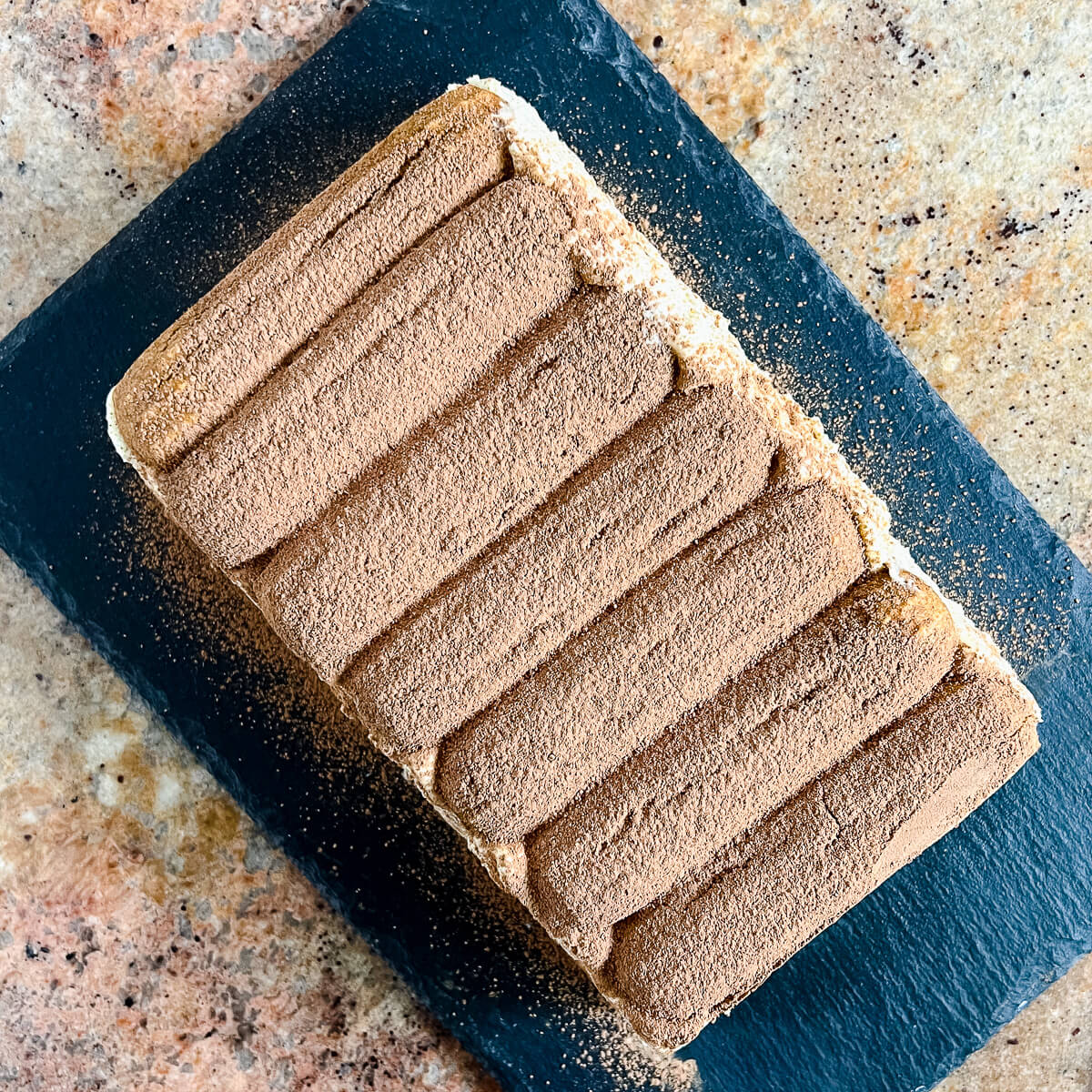
Dust the tiramisu with a generous amount of cocoa powder using a fine mesh strainer. For a pretty presentation, use a pastry brush to wipe off the excess cocoa powder (photo 11).
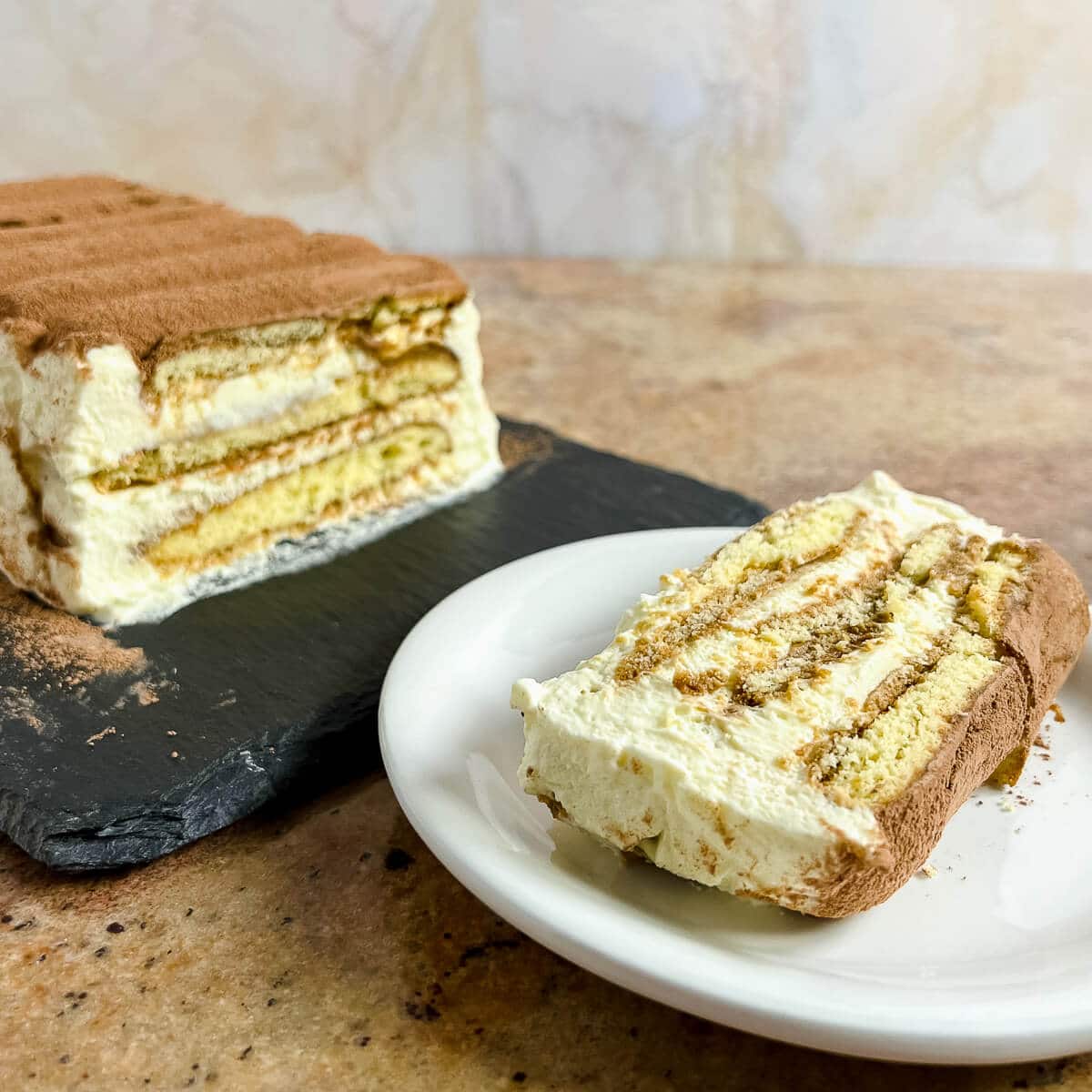
Serve the tiramisu in slices (cutting between the ladyfingers), cleaning the knife between cuts. Dust with more cocoa powder, if desired.

Storage instructions
Tiramisu can be stored in the refrigerator covered for up to 3 days.
For longer storage, tightly cover before dusting with cocoa powder and freeze for up to 3 months. For the cleanest slices after freezing, dust the top with cocoa powder then thaw in the refrigerator for at least 24 hours, covered or uncovered.
Yield Notes
Tiramisu served in a loaf pan makes 8 easy-to-slice servings.
You can also use a 9- × 9-inch baking pan instead of the loaf pan (omit the plastic wrap lining the pan). Fit the ladyfingers into the pan as best you can, making 2 layers. Serve the tiramisu directly from the pan (don't invert it onto a platter). You'll get about 16 2-inch square servings.
Troubleshooting tips
Here are some issues you might encounter when making this tiramisu loaf:
- The ladyfingers became soggy: Dip each cookie only 1 to 2 seconds per side
- The mascarpone filling looks grainy: Let the sabayon cool before mixing with the mascarpone
- The whipped cream deflated: Fold gently instead of stirring when adding to the mascarpone mixture
- The loaf won't unmold cleanly: Chill overnight instead of just 6 hours for the firmest slices
- The cocoa powder disappeared into the surface: Dust just before serving for the prettiest finish
- The layers slide when slicing: Use a sharp knife and wipe it clean between cuts
Questions asked and answered
Here are some questions you might have...
Yes. Just omit the Kahlua (or dark rum or Grand Marnier) in the espresso dip and replace the dark rum in the mascarpone cream with milk.
Chilling allows the mascarpone filling to firm up while the ladyfingers absorb moisture from the espresso. The result is clean slices that hold together beautifully.
Didn't find the answer you're looking for?
Ask AI to answer for this specific recipe:
Disclaimer: I am not responsible for the quality of AI information

I hope you like this recipe! Let me know if you have any questions, and don't forget to leave a comment and rating. Thanks!
Slainté! L'chaim! Cheers!
- Tammy
Recipe
No-Bake Tiramisu Loaf
Equipment
- hand mixer
Ingredients
- 5 tablespoons espresso powder, see Recipe notes
- 1¼ cups hot water, see Recipe notes
- 6 tablespoons Kahlua, Grand Marnier, or dark rum, see Recipe notes
- ⅓ cup granulated sugar
- 3 large egg yolks, at room temperature
- 1 cup mascarpone cheese, cold, see Recipe notes
- 1 tablespoon dark rum, see Recipe notes
- 1 cup heavy cream, chilled
- 24 ladyfingers, crunchy (not soft)
- cocoa powder, for dusting
Instructions
- Lightly spray a standard loaf pan with canola oil spray, then line with plastic wrap, leaving plenty of overhang to wrap around the tiramisu later.
- Prepare the espresso dip: Dissolve 5 tablespoons espresso powder in 1¼ cups hot water, then allow to cool to room temperature. Once cooled, stir in 6 tablespoons Kahlua (or dark rum or Grand Marnier, if preferred), then pour the dipping mixture into a 9-inch pie pan. Set aside.
- Make the mascarpone cream: This consists of 3 elements - sabayon (a cooked egg yolk and sugar mixture), whipped mascarpone cheese, and whipped cream.
- Element 1 - Sabayon: Pour 2-inches of water into a saucepan (or bottom of a double boiler) and bring to a simmer over medium-low heat. Using a heat-proof bowl making sure the bottom of the bowl isn't touching the water (or use the top of the double boiler), beat ⅓ cup granulated sugar and 3 large egg yolks with a hand mixer on medium-high. When the mixture is pale yellow, has tripled in volume, and falls back in thick ribbons when the beaters are lifted, the sabayon is ready, about 5 to 7 minutes.Remove the bowl from the heat and whisk the sabayon for a few minutes off the heat to help it cool down, then set aside to cool further.
- Element 2 - Whipped mascarpone: In a large bowl, beat together 1 cup mascarpone cheese and 1 tablespoon dark rum just until smooth.Add the warm sabayon to the mascarpone mixture and beat until combined. Don't over-whip or the mixture can curdle.
- Element 3 - Whipped cream: In a separate bowl and using clean beaters, beat 1 cup heavy cream (chilled) starting on low speed, then increasing to medium speed, just until stiff peaks form. Beating heavy cream slowly will help it remain more stable without turning watery.Fold the whipped cream into the mascarpone mixture, half at a time. Again, don't over mix.
- Assemble the tiramisu: For the first layer, take 8 ladyfingers and, one at a time, quickly dip each side into the espresso mixture just long enough for it to soften, 1 to 2 seconds per side. Place them in the prepared pan as you go. You want the ladyfingers wet but not soggy, so don't dawdle!
- Lay the 8 dipped ladyfingers face down across the bottom of the prepared pan so that they are parallel to the short side of the pan, crowding them together if necessary. Spread ⅓ of the mascarpone cream over them, smoothing the cream out with a small offset spatula.
- Lay the next layer of 8 dipped ladyfingers on top of the cream, then spread half the remaining cream over them. Repeat for one more layer.
- Cover the pan with the overhanging plastic wrap and chill the tiramisu for at least 6 hours or overnight. You want the layers to be fully set.
- Serve the tiramisu: Remove the tiramisu from the refrigerator and unwrap the plastic wrap from the top. Invert a small platter or large plate over the top of the loaf pan and quickly flip them over. Carefully lift the loaf pan off the tiramisu and remove the plastic wrap.
- Dust the tiramisu with a generous amount of cocoa powder using a fine mesh strainer. For a pretty presentation, use a pastry brush to wipe off the excess cocoa powder.
- Serve the tiramisu in slices (cutting between the ladyfingers), cleaning the knife between cuts. Dust with more cocoa powder, if desired.
- Storage instructions: Tiramisu can be stored in the refrigerator covered for up to 3 days.For longer storage, tightly cover before dusting with cocoa powder and freeze for up to 3 months. For the cleanest slices after freezing, dust the top with cocoa powder then thaw in the refrigerator for at least 24 hours, covered or uncovered.


Ella says
Normally I'm not a fan of tiramisu, but after a recent visit to Italy where I had some amazing tiramisu, I thought I'd give this a try and wow! This did not disappoint! The texture was perfect and the flavour was perfectly balanced. I think we actually enjoyed this version even more than the "original recipe" we had in Italy!!
Tammy Spencer says
I'm so glad you liked it, Ella! Thanks for sharing 🙂