

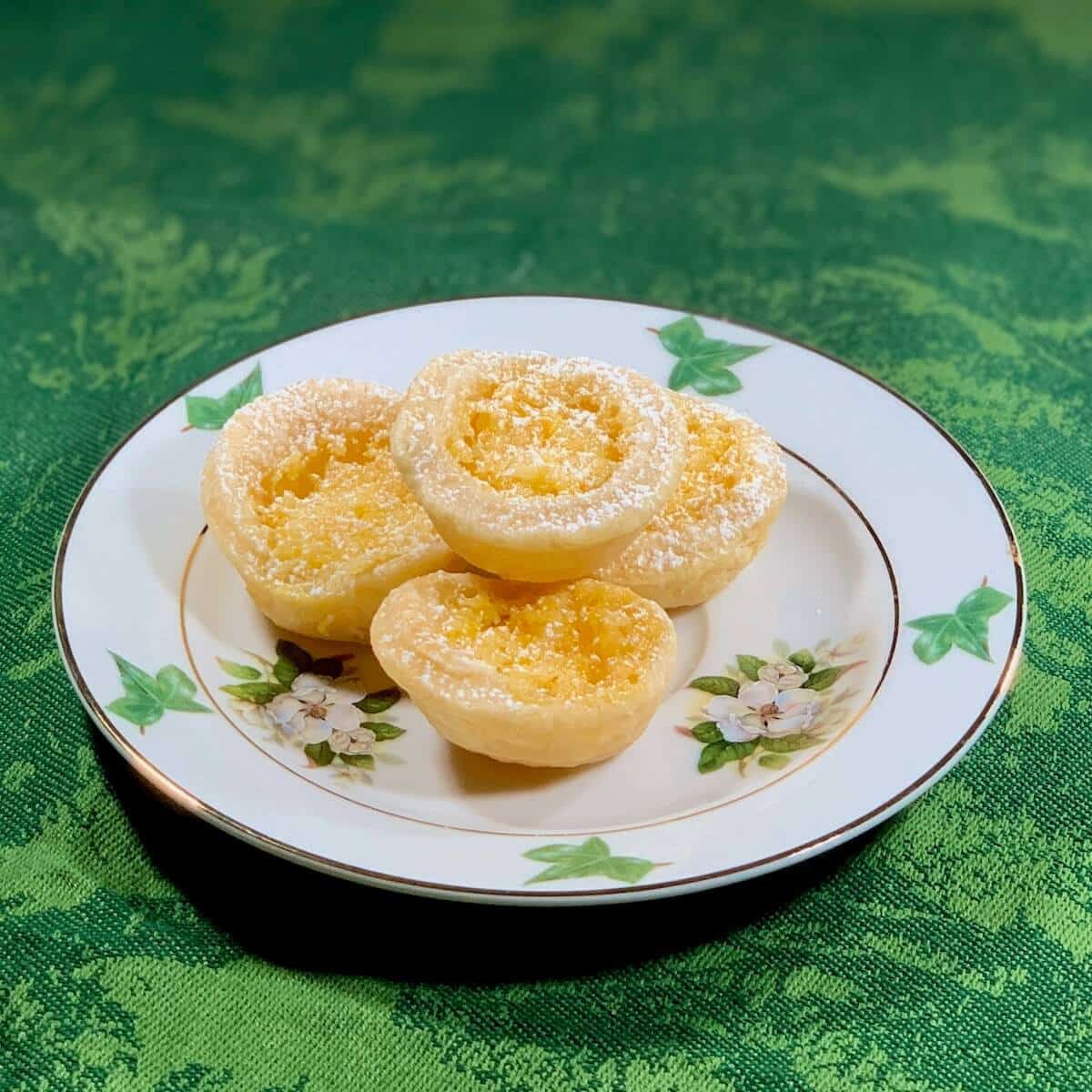
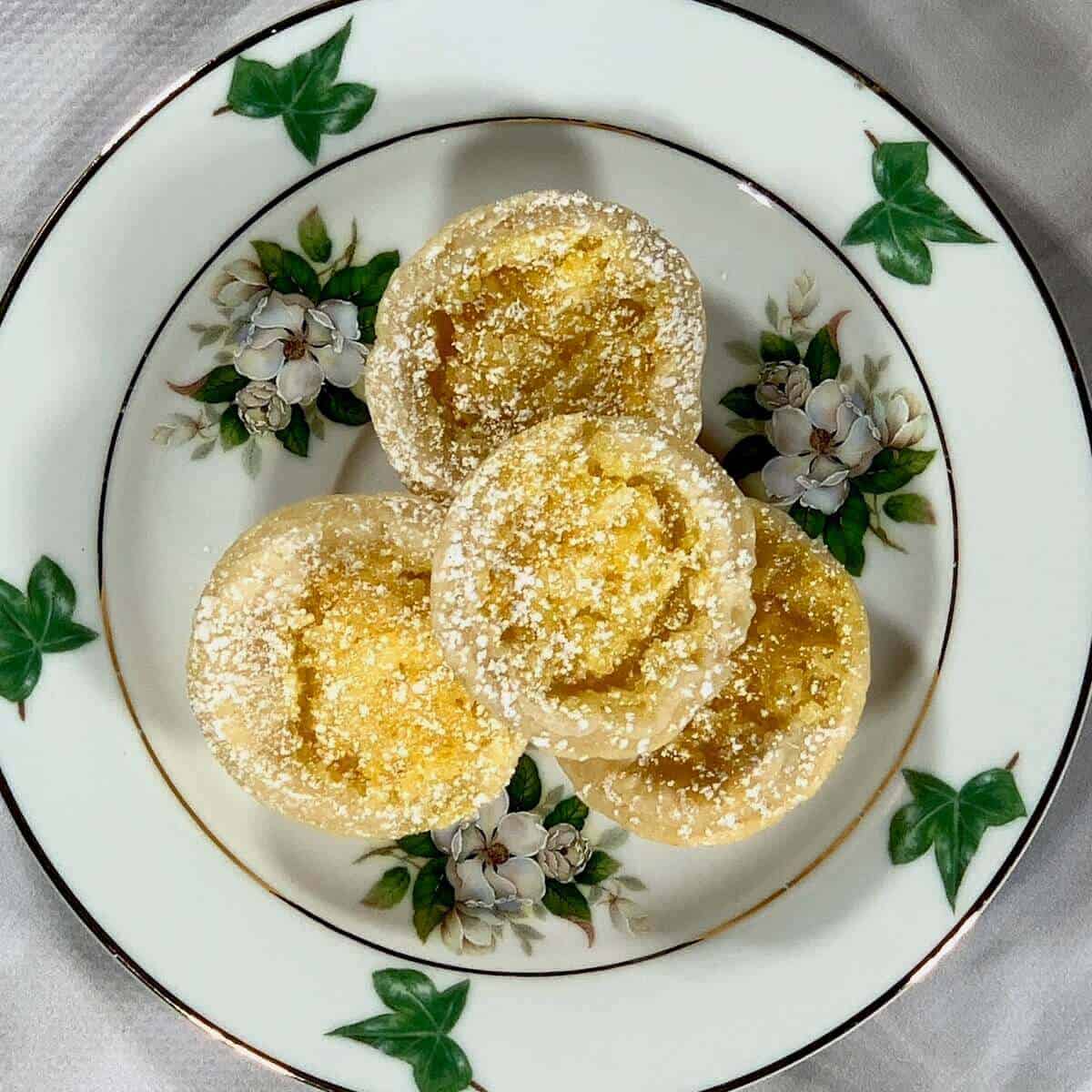
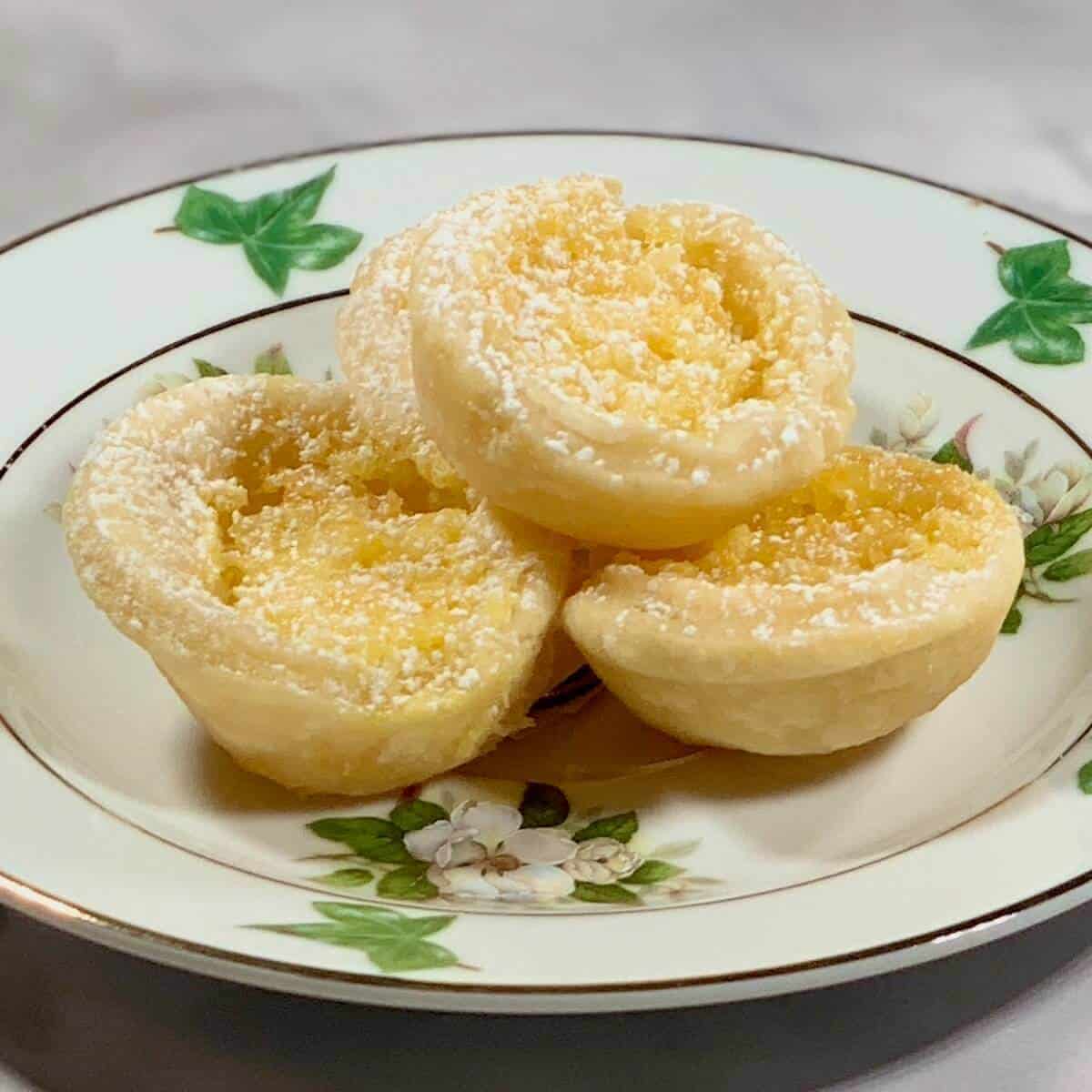
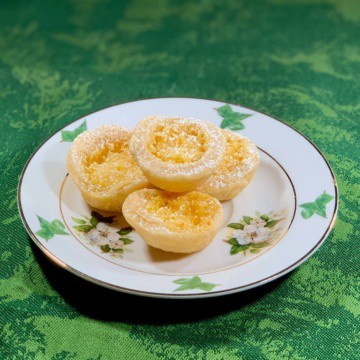
Bright, tangy, and just two bites each, these mini lemon tartlets deliver big lemon flavor in a small mouthful. The silky filling is made by puréeing the whole lemon (yes, peel and all!) for a bold, balanced custard tucked into a buttery shortcrust shell. Whether you're planning a tea party, brunch, or just want a small sweet treat, these easy lemon tartlets are quick to make and disappear even faster!
Jump to:
Quick Recipe Summary ✨
Two-Bite Lemon Tartlets: Bright, tangy baked lemon custard made with the whole lemon, tucked into buttery shortcrust pastry shells. These mini lemon tarts are perfect two-bite treats for tea parties, dessert trays, or anytime you want a little citrusy sweetness. 🍋
Whole-lemon filling: The lemon is puréed with sugar and butter for bold citrus flavor without zesting.
Flaky shortcrust pastry: A sturdy, buttery tart shell holds the custard beautifully. Homemade or store-bought both work well. 🥧
Perfect mini dessert: Bite-sized tartlets make elegant, portion-controlled treats for parties and afternoon tea.
Active Time: About 30 minutes • Bake Time: 25 to 30 minutes • Total Time: About 1 hour ⏱️
Difficulty Level: ⭐⭐ Easy-Medium. Simple pastry and an easy lemon custard filling.
Yield: About 24 tartlets • Freezer-friendly: Up to 2 months • Make-ahead: Dough can be made up to 3 days ahead. 📦
👉 Follow the detailed instructions and tips below for crisp pastry and bright lemon filling every time.
SUMMARIZE & SAVE THIS CONTENT ON
Why this recipe works
- Using the whole lemon gives the filling bold citrus flavor with a natural balance of tart and sweet, and no zesting required.
- Puréeing the lemon with butter and sugar smooths out the texture and distributes the citrus oils evenly through the custard.
- Par-baking the tart shells keeps the pastry crisp so it doesn't get soggy under the lemon filling.
- This mini tartlet size bakes quickly and evenly, giving you softly set lemon custard with lightly golden tops every time.
I love a lemon treat - it's like eating a slice of sunshine. Whether it's lemon scones, lemon bars (like lemon lime bars or cranberry lemon bars), lemon curd cheesecake, limoncello cake, or a lemon shortbread cookie, that tartness just wakes up something bright and sunny in me.
A lemon tart seemed the next logical step. But instead of juicing and zesting lemons, how about using the whole lemon instead?
When the lemon is puréed with sugar and butter, the citrus oils from the peel blend right into the filling, creating a custard that's brighter, fuller, and just a little more complex than your standard lemon tart. The key is keeping an eye on the pith - too much and it can get bitter; just enough and it balances the sweetness beautifully.
And then there's the size. I've always had a soft spot for mini desserts-not just because they're cute (though they are), but because they solve that "just a little something sweet" craving without committing to a full slice.
These mini lemon tartlets offer that same level of portion control. They're the kind of treat you can serve at a party, tuck onto a dessert tray, or sneak from the fridge with your afternoon coffee. And there's no judgment here if one turns into two (or three)!
Love these 2-bite wonders! You're right, you can eat 2 or 3 of these without guilt!!
- Sheeba
Recipe Ingredients
You'll need the following ingredients to make this mini lemon tart recipe:
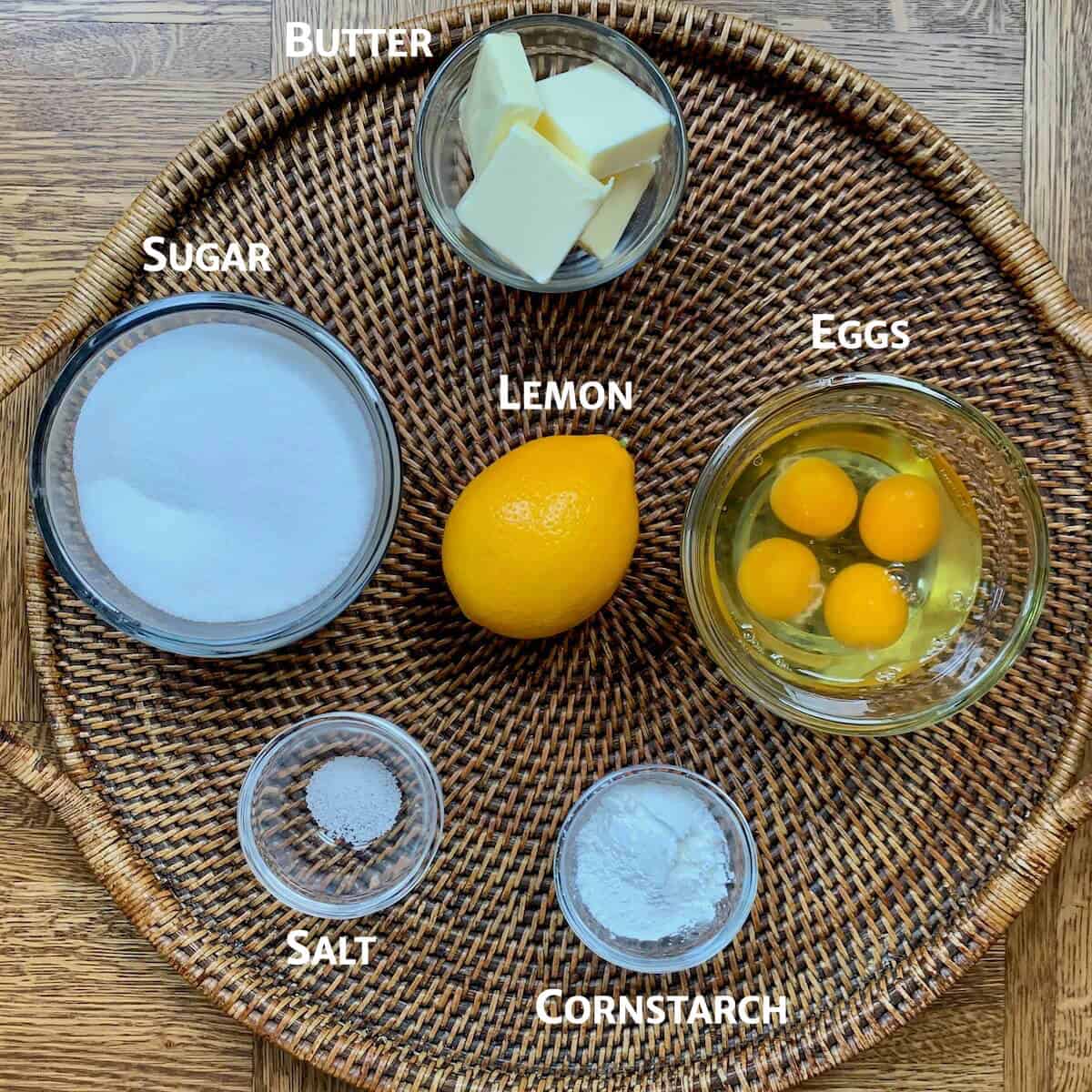
Ingredient Notes
Lemons: Now, you can make lemon tarts with lemon curd, but let's go one step further. This lemon tartlet recipe uses a baked lemon custard filling with a surprise: you use the whole lemon, not just the juice or zest.
Different lemon varieties have differing tartness levels. Meyer lemons are sweeter than standard lemons, so decrease the sugar if you're going to use them. Don't use bottled lemon juice of any kind - it's too acidic and will ruin the flavor. Whichever variety of lemons you choose, look for fruit that feels heavy in your hand for its size - those are juicier.
Pastry: Tarts need a sturdy base, something that will hold it's shape with it's out of the pan. My shortcrust pastry fits the bill perfectly - enriched with egg, it makes a buttery and flaky tart crust that holds up well. If making a homemade shortcrust isn't your thing, use a store-bought pie dough.
See the recipe card for a full list of ingredients and measurements.
How to make lemon tartlets
Step 1: Make your tartlet shells
Spray the cups of a mini muffin pan with baking spray.
Roll out chilled shortcrust pastry to ⅛-inch thick, and cut out rounds using a 2½-inch round cookie cutter.
Using a pastry dough tart tamper, push the rounds into the pan (photo 1).
Freeze the dough-lined baking pan for 15 minutes or chill in the refrigerator for 30 minutes to firm up the dough. You don't want slumped tartlet shells.
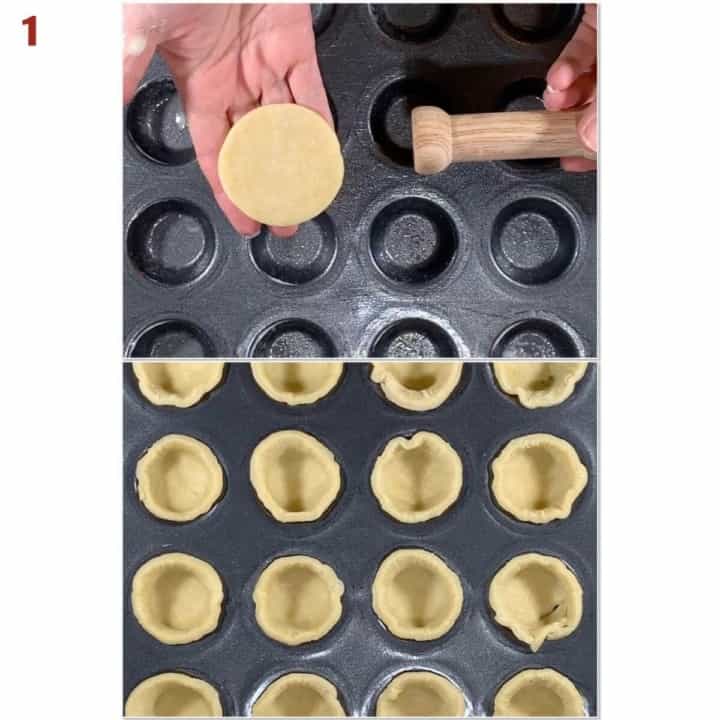
Par-bake the tartlet shells at 400˚F for 10 minutes. Remove them from the oven to cool while you make the filling, and turn oven down to 350°F.
Step 2: Prepare your lemons
Cut the lemon in half. Check if the thickness of the white ring of the skin (the pith) is larger than ¼-inch thick (photo 2). If so, pare the zest from one half of the lemon, cutting away any of the pith before proceeding.
Slice the lemon halves into thin slices, removing the seeds.
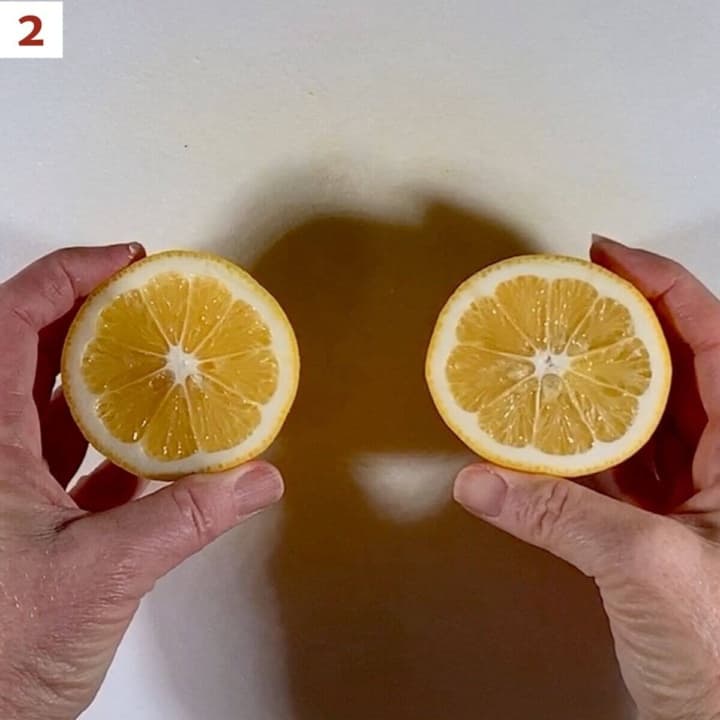
Step 3: Make the filling
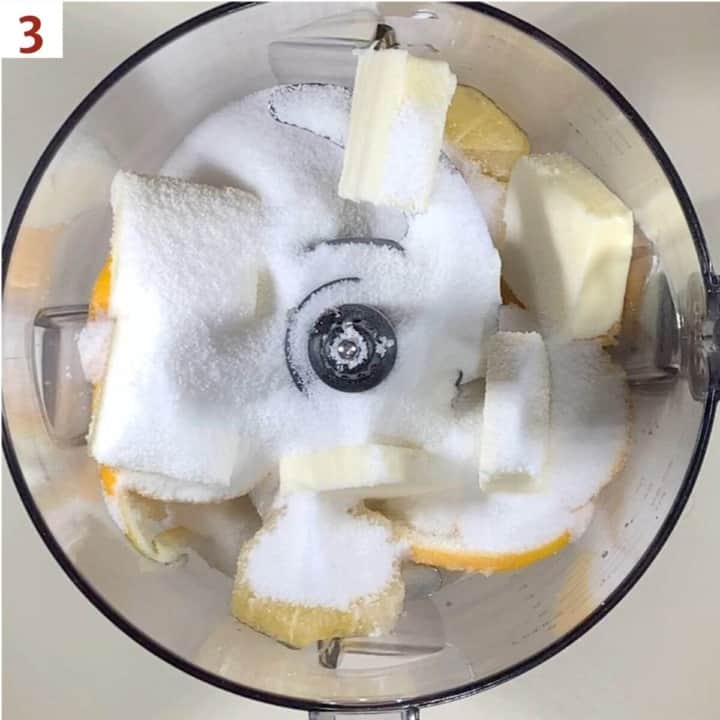
Put all the lemon slices (and any zest pieces), sugar, and unsalted butter into the container of a food processor (photo 3).
Purée the mixture, scraping down the sides of the container as needed, until the lemon is chopped fine.
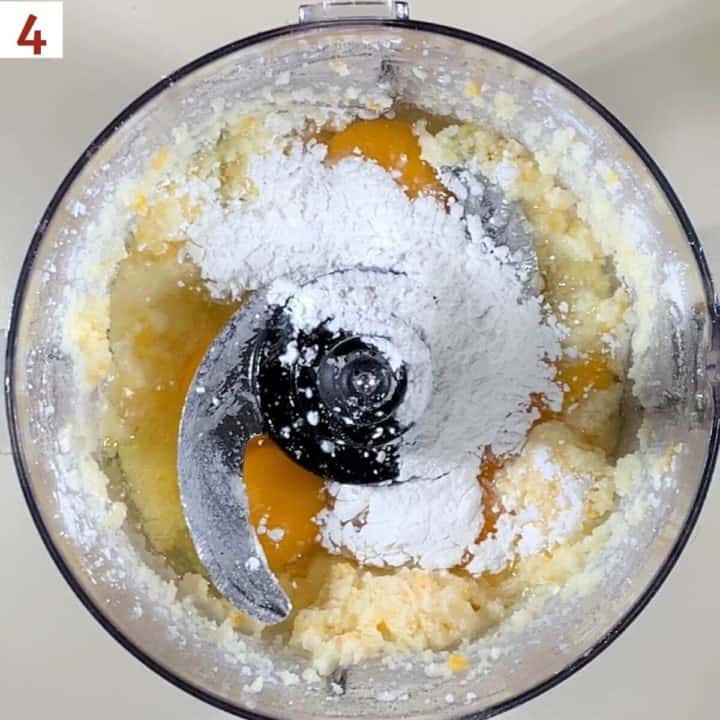
Add the eggs, cornstarch, and salt and pulse until the batter is smooth (photo 4).
Use a small cookie scoop to portion 1 tablespoon of the lemon custard batter into the par-baked tartlet shells.
Filling mini tartlets
Be careful not to overfill the mini tartlets. I learned the hard way that the lemon filling can stick to the pan (even after spraying with baking spray). You don't want to have to dig your tartlets out of the pan!
Step 4: Bake the tartlets
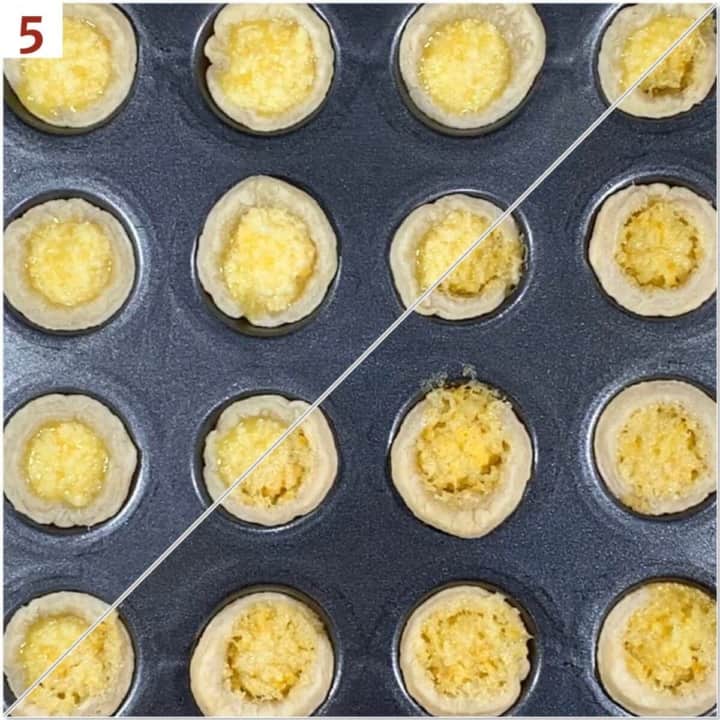
Bake the tartlets at 350˚F for 25 to 30 minutes or until the filling is set. It will jiggle slightly and be very light brown on top (photo 5).
Cool the tartlets in the pan placed on a wire rack for 10 minutes, then take them out of the pan to the wire rack. If necessary, use a tool that won't damage your pan to pry the tarts out.
Let the tartlets cool completely. Chill before serving if desired. Dust with powdered sugar, then serve and enjoy!
Storage and make-ahead instructions
Storage instructions: Cooled lemon tartlets can be kept in the refrigerator in an airtight container for a few days. They can also be frozen, stored in an airtight bag for longer storage. Defrost at room temperature for about 30 minutes before serving
Make-ahead instructions: The shortcrust pastry can be made ahead and kept in the refrigerator, well wrapped in plastic wrap, for up to 3 days. It can also be frozen and stored in an airtight bag for up to a month. Thaw overnight in the refrigerator before using.
Roll your pastry dough to the right thickness
Do you wonder how thick to roll out pastry dough? Mostly, the answer lies with what the dough is for. For instance, rolling out sugar cookie dough to between ⅛ to ¼-inch thick will affect the crispiness of the cookie, especially if you're going to shape it (like with these Hamantaschen cookies).
For a pie or tart, the difference will be if it's for a full-sized item (like with this pecan pie) or a smaller version (such as these mini Bakewell tarts). The smaller the pie or tart, the thinner the crust should be. You don't want a mini tart or tartlet to be overwhelmed by too much crust. But don't too thin or your crust won't be able to support the weight of the filling.
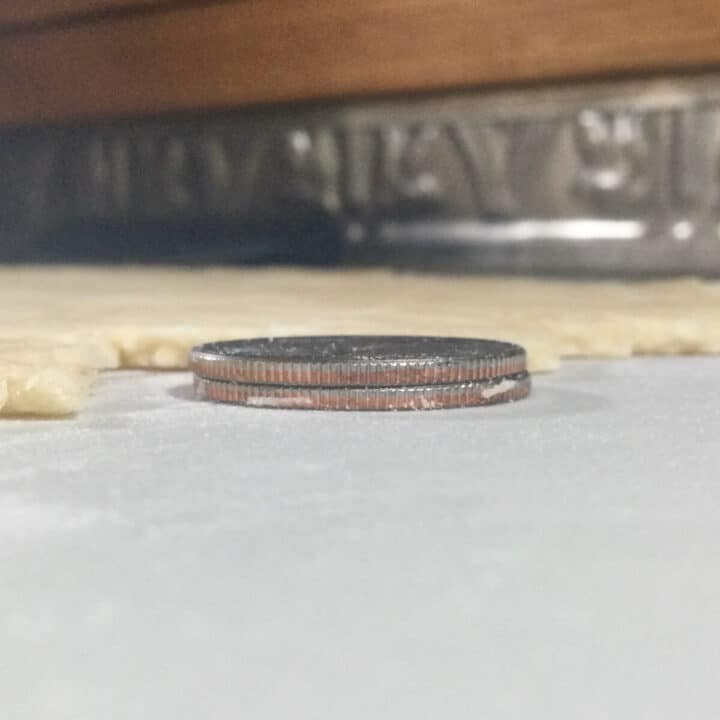
A good rule of thumb is to roll out dough for a full-sized item to ¼-inch thick (about the height of 2 stacked quarters).
For small or mini uses, roll out the dough pastry to between ⅛ to ¼-inch thick.
Tartlet troubleshooting
Here are some issues you might run into when making lemon tartlets.
Why is the filling bitter?
This can happen if the lemon's pith is too thick. You don't want it any larger than ¼-inch thick. If it is, pare the zest from one half of the lemon, cutting away any of the pith before proceeding.
Why did the crust shrink?
Crust shrinkage is a real frustration that pastry bakers face, and it all has to do with the dough's temperature going into the oven. It happens when the butter in the pastry dough becomes too warm, so the pastry doesn't hold it's shape when baked. The best way to deal with this issue is to freeze the baking pan lined with the pastry dough for 15 minutes or chill in the refrigerator for 30 minutes to firm up prior to baking.
If you're making a full-sized tart, I use the frozen-foil method to keep the dough from slumping when blind-baking that doesn't require pie weights or dried beans. Check it out!
Why is the filling runny?
Underbaking is the cause of runny fillings. Like when making egg custard, you should trust your eyes, not the timer. If you see that the tarlets seems to jiggle too much when jostled, bake longer (about 2 to 3 minute increments). You'll know they're are done when they jiggle slightly and be very light brown. To be doubly sure, use a digital thermometer to check that the filling reads between 170 - 175°F (77 to 80˚C), the ideal temperature for set custards.
Party planning guide
What to serve with lemon tartlets
Mini lemon tartlets are great to serve for bridal showers, baby showers, afternoon tea parties, or any other event where you'd like to feature the bright taste of lemon.
They pair beautifully with tea, coffee, or a sparkling wine like Prosecco or Limoncello. They're also lovely alongside fresh berries or a dollop of whipped cream for an elegant plated dessert.
How many tartlets to make
If you're serving these mini lemon tarts at a party, you might be wondering how many tartlets you should make per guest for your event. Here's a rough guide based on the type of event you're having:
| Event | Tartlets per person |
| Tea party | 2 to 3 |
| Dessert buffet | 3 to 4 |
| Plated dessert | 1 to 2 |
Questions asked and answered
Here are some questions that you might have...
Absolutely! Press the shortcrust pastry into a 9 ½-inch tart pan and bake at 350˚F for 35 to 40 minutes until the filling is set. It will jiggle slightly in the middle and will be very light brown.
Cool on a wire rack, then chill before serving. You can dust the tart with powdered sugar for a pretty presentation.
If your lemon tart cracks, it could be that you baked it too long or at too high a temperature. Remember to keep a close eye on the texture of the custard (look for that slight jiggle!) so that it's not over-baked.
Yes. You can use tartlet pans, silicone molds, or even small ramekins. Just adjust the baking time slightly depending on the size of the shells.
To make a gluten-free version, or if you have extra filling, you can pour the filling into buttered ramekins and bake at 350˚F for about 20 minutes. Dust with powdered sugar after chilling. It's quite yummy, like a cross between pudding and soufflé.
Basically, it's the firmness of the filling. Lemon curd has a thick jam-like texture that stays that way since the filling isn't baked. The curd is piped into fully-cooked shells, making lemon curd tarts quick and easy, yet a little messy to bite into. In contrast, a lemon tart is baked, so the filling retains its soft custard-like texture, but it doesn't ooze out when bitten.
Didn't find the answer you're looking for?
Ask AI to answer for this specific recipe:
Disclaimer: I am not responsible for the quality of AI information

I hope you like this recipe! Let me know if you have any questions, and don't forget to leave a comment and rating. Thanks!
Slainté! L'chaim! Cheers!
- Tammy
More recipes with citrus to try

Recipe
Mini Lemon Tartlets (Two-Bite Lemon Tarts)
Equipment
- 2 mini muffin pans see Recipe Notes
Ingredients
- 1 recipe shortcrust pastry, or store bought pie dough
- 1 lemon, rinsed and dried
- 1½ cups sugar
- ½ cup unsalted butter, cut into chunks
- 4 large eggs
- 2 tablespoons cornstarch
- ¼ teaspoon kosher salt
- powdered sugar, for dusting
Instructions
- Prepare 1 recipe shortcrust pastry.
- Preheat the oven 400 °F. Spray the cups of the mini muffin pans with baking spray.
- For the tartlet shells: Roll out the chilled shortcrust pastry to ⅛-inch thick and cut out rounds using a 2½-inch round cookie cutter. Using a pastry dough tart tamper, push the rounds into the muffin pan cups. Freeze the dough for 15 minutes or chill in the refrigerator for 30 minutes to firm up. You don't want slumped tartlet shells.
- Partially bake the tartlet shells for 10 minutes. Remove them from the oven to cool while you make the filling, and turn oven down to 350 °F.
- For the filling: Cut 1 lemon in half. Check if the thickness of the white ring of the skin (the pith) is larger than ¼-inch thick. If so, pare the zest from one half of the lemon, cutting away any of the pith before proceeding. Slice the lemon halves into thin slices, removing the seeds.
- Put all the lemon slices (and any zest pieces), 1½ cups sugar, and ½ cup unsalted butter into the container of a food processor. Purée the mixture, scraping down the sides of the container as needed, until the lemon is chopped fine. Add 4 large eggs, 2 tablespoons cornstarch, and ¼ teaspoon kosher salt and pulse until the batter is smooth.
- Use a small cookie scoop to portion 1 tablespoon of the batter into each of the pastry cups. Try not to pour it past the top of the tart shells or it will become difficult to unmold later.
- Bake the tartlets for 25 to 30 minutes or until the filling is set. It will jiggle slightly and be very light brown on top, and a digital thermometer will read 175 °F.
- Cool the tartlets in the pan placed on a wire rack for 10 minutes, then take them out of the pan to the wire rack. If necessary, use a tool that won't damage your pan to pry the tarts out. Let the tartlets cool completely. Chill before serving if desired.
- Dust with powdered sugar, then serve and enjoy.
- Storage instructions: Cooled lemon tartlets can be kept in the refrigerator in an airtight container for a few days. They can also be frozen, stored in an airtight bag for longer storage. Defrost at room temperature for about 30 minutes before serving
- Make-ahead instructions: The shortcrust pastry can be made ahead and kept in the refrigerator, well wrapped in plastic wrap, for up to 3 days. It can also be frozen and stored in an airtight bag for up to a month. Thaw overnight in the refrigerator before using.




Sheeba says
Love these 2-bite wonders! You're right, you can eat 2 or 3 of these without guilt!!
Tammy Spencer says
So glad you like them! 🙂
Kira Bornemann says
My mouth is actually watering looking at these!! I love lemon desserts so much.
Tammy says
Thanks, Kira! 😉