

Love classic shortbread? These Almond Shortbread Cookies are buttery, crisp, and packed with nutty almond flavor thanks to almond meal and almond extract. Inspired by traditional English Bosworth Jumbles, they're easy to shape, fun to serve with coffee or tea, and a delicious twist on an old-world favorite.

Jump to:
Quick Recipe Summary ✨
Almond Shortbread Cookies: Buttery and crisp cookies flavored with almond meal and almond extract for a rich, nutty twist on classic shortbread.
Perfect for coffee or tea: Shape them into traditional Bosworth Jumbles, tie them into knots, or form mug-hanging cookies for an extra charming presentation.
A taste of British baking history: Inspired by traditional Bosworth Jumble biscuits, a centuries-old English cookie with a fascinating story.
Active Time: About 25 minutes • Bake Time: 12 to 15 minutes • Total Time: About 40 minutes
Difficulty Level: ⭐ Easy. Simple ingredients, straightforward mixing, and fun shaping.
Make-Ahead Friendly: The dough and baked cookies freeze well for up to 3 months.
👉 Follow the shaping tips and troubleshooting guide below for crisp, buttery cookies every time.
SUMMARIZE & SAVE THIS CONTENT ON
Why this recipe works
- Almond meal adds texture and flavor for a pleasantly crispy bite and rich nutty taste.
- Butter and almond extract work together to create an irresistible bakery-style aroma.
- The dough is easy to shape into traditional Bosworth Jumbles, mug hangers, or your own creative designs.
- No special equipment required, just mix, shape, and bake.
- The cookies stay crisp for days, making them ideal for gifting, afternoon tea, and holiday cookie trays.
I'm a big fan of British history and food, and I've written about many UK-based treats for readers both in the US and abroad. From Bakewell Tarts, Sticky Toffee Pudding, and Treacle Tarts to Millionaire's Shortbread (aka Caramel Shortbread), Cream Buns, Scottish Bannocks (oatcakes), and British Flapjacks (chewy oat bars), exploring traditional British baking has become one of my favorite culinary adventures.
When I heard about Bosworth Jumbles on the Three Ravens Podcast, I was immediately intrigued. These traditional English biscuits are said to be in danger of disappearing, and since they're essentially delicious almond shortbread cookies, I knew I had to try them.
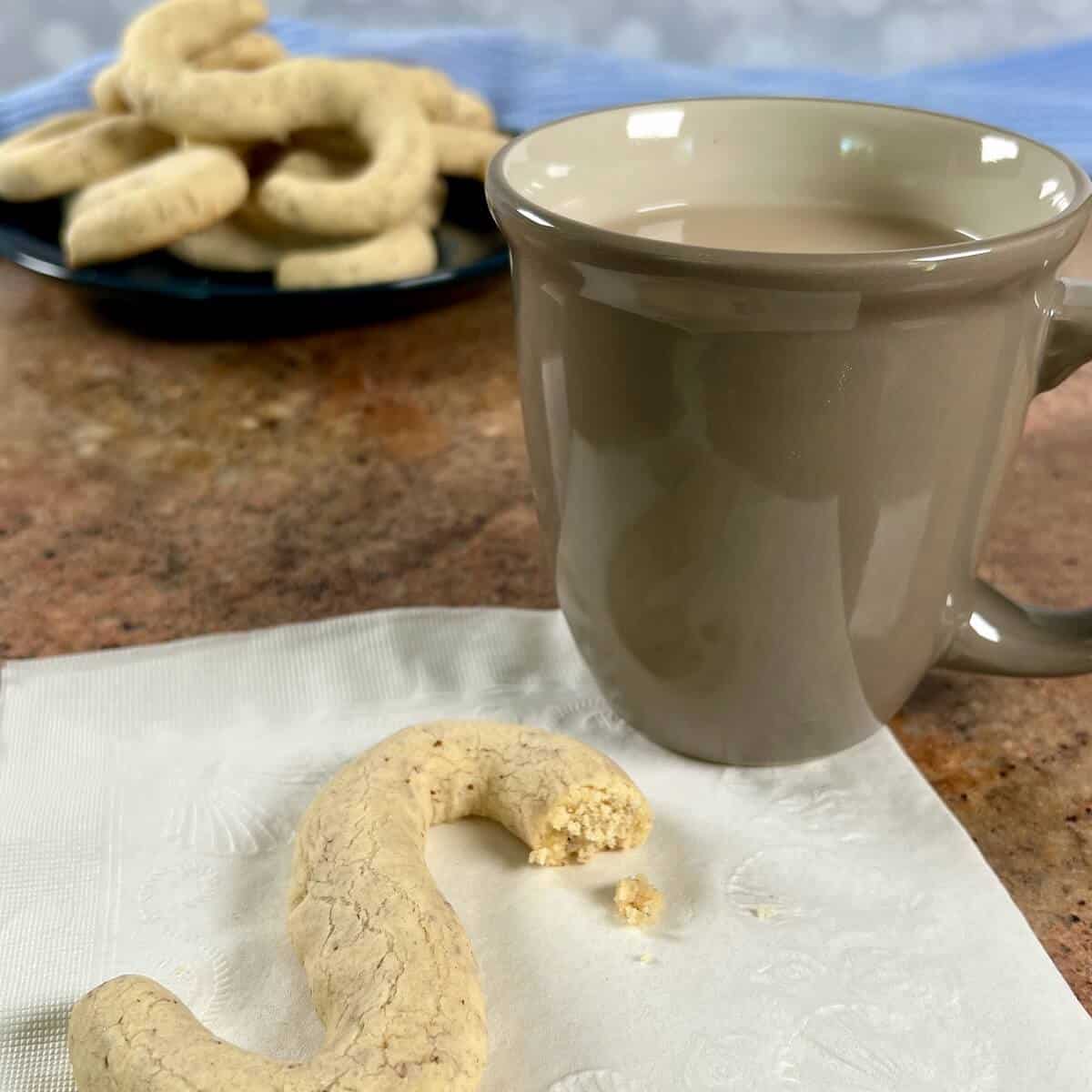
The result is this modernized version: Almond Shortbread Cookies. They're buttery, crisp, and full of nutty almond flavor while still honoring the spirit of the original recipe.
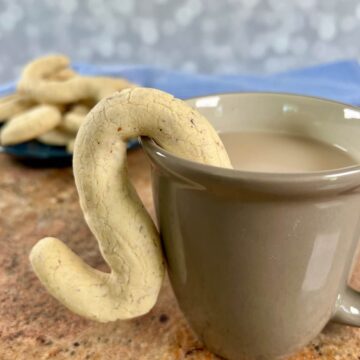
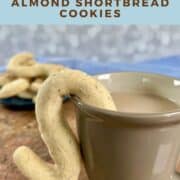
I especially love shaping them to hang from the rim of a mug, making them the perfect companion for an afternoon cup of coffee or tea.
Now put the kettle on - it's time for tea and cookies!
What are Bosworth Jumble Biscuits?
A traditional British biscuit, often shaped in an "S" or knot form, these cookies have origins tracing back to the Battle of Bosworth in 1485. Legend has it that Richard III's cook baked these biscuits for the king before his ill-fated battle against Henry Tudor in the last significant battle of the Wars of the Roses.
The almond shortbread cookies recipe presented here is actually a variation of a cookie that has a much longer history. Brought to Britain in the Middle Ages by traders and crusaders returning from the Middle East, they were made from sugar, flour, butter, and eggs and scented with almond extract or rosewater. Those cookies were boiled before baking, and were dense and sturdy enough to keep for a year or more. They'd be a popular food for traveling in those days!
Over the years, bakers have added their own twist to the recipe - some versions are flavored with lemon zest, caraway seed, aniseed, or mace.
Here's more about the history of Bosworth Jumbles and their evolution over time.
Modern Bosworth Jumbles share many characteristics with shortbread, especially their rich buttery texture.
Why is shortbread called "short"?
In baking, "short" refers to a crumbly texture rather than size. The high proportion of butter coats the flour and limits gluten development, creating the tender, crisp texture we associate with shortbread cookies.
While Bosworth Jumbles differ from traditional Scottish shortbread by including eggs and almond flavoring, they share that same rich, buttery character. If you're curious about the science and history behind shortbread, I've got a whole post explaining why shortbread is called shortbread.
Recipe ingredients
You'll need the following ingredients to make this Almond Shortbread Cookies recipe:

Ingredient Notes
Butter: Since butter features so prominently in shortbread, opt for high-fat, unsalted butter for the best flavor. You can also use your favorite butter substitute to make these shortbread cookies diary-free.
Sugar: I use granulated sugar in this recipe, but caster sugar is traditional. Caster sugar (aka superfine sugar) is more widely used in the UK than in the US - its smaller grains will cream into the butter faster and smoother than granulated sugar. Either type will work well here, so I use them interchangeably.
Almond Extract: Usually used in small amounts, here almond extract helps to up the almond flavor and aroma. Yes, 1 teaspoon of almond extract is correct.
Almond Meal: Coarsely ground up almonds, almond meal gives these shortbread cookies a crisp texture. For a smoother look and texture, you can use almond flour instead.
See the recipe card for a full list of ingredients and measurements.
Almond Meal vs. Almond Flour
Both almond meal and almond flour work well in these cookies, but they'll give you slightly different results:
- Almond meal creates a more rustic cookie with extra crunch and visible flecks of almond.
- Almond flour produces a smoother appearance and a more delicate texture.
- Both add wonderful almond flavor, so choose based on the texture you enjoy most.
How to make Almond Shortbread Cookies
Step 1: Make the cookie dough
Cream the butter and sugar together, then beat in the egg (photo 1)

Mix in the almond extract and salt, then stir in the almond meal (photo 2)

Slowly fold in the flour just until the dough comes together (photo 3). Be careful not to over-mix the dough to prevent tough cookies.

How should the dough feel?
The dough should feel soft and pliable, similar to Play-Doh. If it seems crumbly, squeeze a portion in your hand - if it holds together, it's ready to shape. If it's very dry, add a teaspoon of water or milk.
Step 2: Shape the cookies
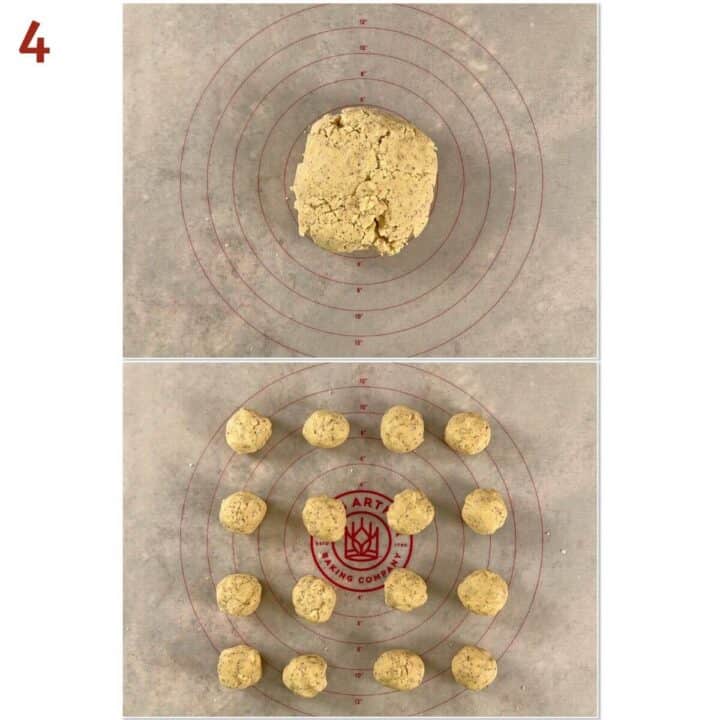
Divide the dough into 16 pieces, and roll them into a ball (photo 4). Each portion will be about 1½ inches in diameter, and will weigh about 40 grams.
Cover the balls with a kitchen towel to avoid them drying out while you shape the cookies.
Shape Your Bosworth Jumbles
Unlike Scottish shortbread cookies, traditional Bosworth Jumbles are often shaped before baking. Here are some ideas for you for these Almond Shortbread Cookies:
- Traditional "S" (the mug-hanger)
- Knot
- Twisted rope
- Circles
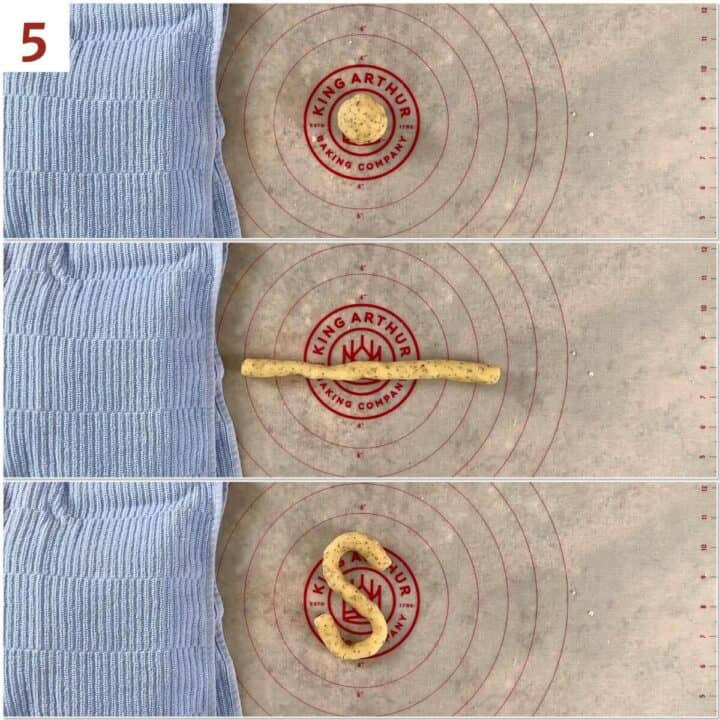
Working one at a time, roll each ball into a smooth rope about 7-inches (16 centimeters) long. The dough can crumble a bit as you roll it out, so you might need to press it together firmly as you go.
Shape the dough into a large "S" or whatever shape you prefer (photo 5).
Dress up your almond meal shortbread cookies
If you want to add shine to the finished cookie, use a pastry brush to top the unbaked dough with a beaten egg before baking.
Step 3: Bake the cookies
Line two half-sheet baking pans with a Silpat silicone mat or parchment paper.
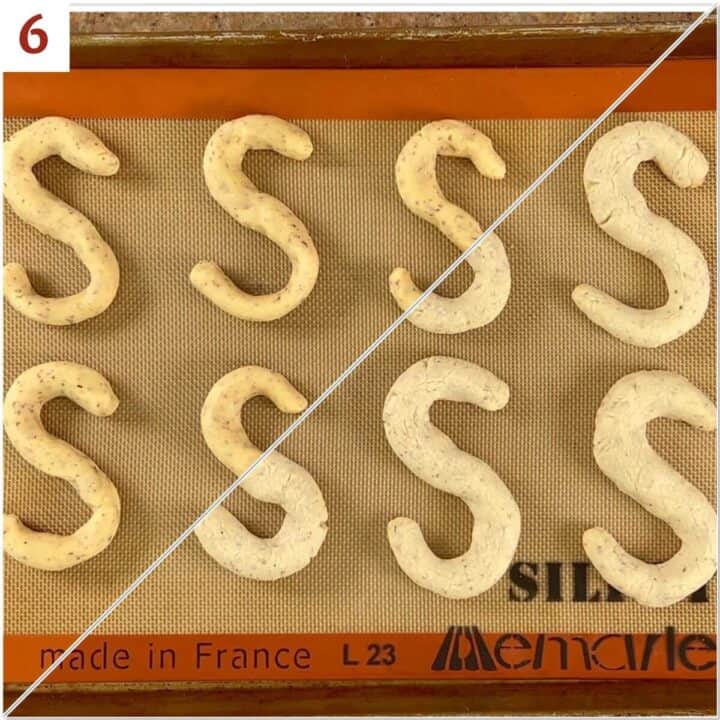
Transfer the shaped dough to the prepared baking pans, 8 cookies per pan.
Bake at 350˚F for 12 to 15 minutes (rotating the baking pans at the halfway point) until the cookies are a light golden brown (photo 6).
Storage and make-ahead instructions
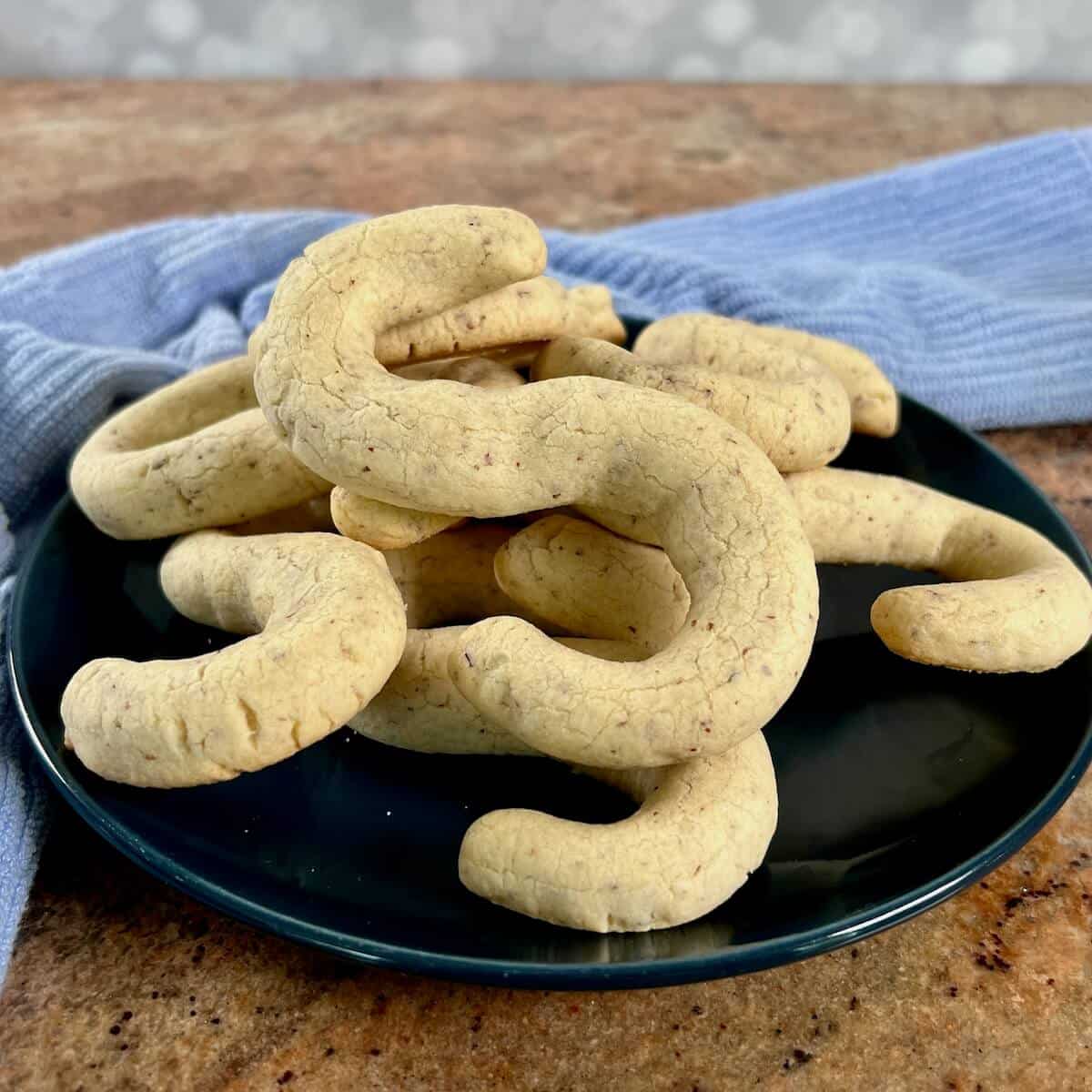
Storage instructions: Almond shortbread cookies can be stored in an airtight container for about 2 weeks. You can also freeze the cookies in a sealed plastic bag for up to 3 months.
Make-ahead instructions: This dough can be frozen before or after shaping, sealed in an airtight container, for up to 3 months. Allow the unshaped dough to defrost overnight in the refrigerator before portioning and shaping.
Unbaked shaped cookies can be baked individually from frozen, allowing 2 to 3 extra minutes of baking time.
Shortbread troubleshooting
My cookies are too hard
Two factors can be at play if your Almond Shortbread Cookies are too hard:
- Over-working the dough: Fold the flour into the almond meal mixture until it is just combined. Any more than that will cause the gluten in the dough to build up, making the dough tough.
- Over-baking the cookies: Check to make sure the oven isn't running hot (an oven thermometer or infrared temperature gun can help), and be sure to rotate the baking pans at the halfway mark. Also, don't bake the cookies for too long - remove the baking pans when the bottoms of the cookies are just starting to brown.
My cookies seem soft
If your Almond Shortbread Cookies are too soft:
- Chill the dough prior to baking to make sure the butter hasn't gotten too soft
- Make sure the oven is up to temperature, and bake the cookies until the tops feel firm and the bottoms are just starting to brown.
Remember, they will crisp as they cool. If they're still soft after cooling, bake them a minute or two longer next time.
My cookies spread too much
The butter may have become too warm while shaping. Chill the shaped cookies for 10 to 15 minutes before baking.
My dough keeps cracking
A little cracking is normal because of the almond meal. Press the dough together gently as you roll.
Questions asked and answered
Here are some questions you might have...
Yes. Almond flour will produce a smoother, more delicate cookie, while almond meal creates a more rustic texture with extra crunch.
A little cracking is normal because almond meal doesn't contain gluten. Simply press the dough together as you roll and shape it.
Yes. Both the dough and baked cookies freeze well for up to 3 months when stored in an airtight container.
Traditional Bosworth Jumbles are often shaped into an "S" or a knot, but you can form circles, twists, hearts, or any shape you like.
Didn't find the answer you're looking for?
Ask AI to answer for this specific recipe:
Disclaimer: I am not responsible for the quality of AI information


I hope you like this recipe! Let me know if you have any questions, and don't forget to leave a comment and rating. Thanks!
Slainté! L'chaim! Cheers!
- Tammy
Recipe
Almond Shortbread Cookies
Equipment
Ingredients
- 11 tablespoons unsalted butter, see Recipe Notes
- ¾ cup granulated sugar, or caster sugar, see Recipe Notes
- 1 large egg
- 1 teaspoon almond extract
- ⅛ teaspoon kosher salt
- ⅔ cup almond meal, see Recipe Notes
- 2½ cups all-purpose flour
- 1 large egg, beaten, optional
Instructions
- Preheat the oven to 350 °F. Line two half sheet baking pans with Silpat silicone mats or parchment paper. Set aside.
- Prepare the dough: In the bowl of a stand mixer fitted with a paddle attachment (or a large bowl if using a hand mixer), cream together 11 tablespoons unsalted butter and ¾ cup granulated sugar on a medium-high speed, scraping down the sides of the bowl, until it's light and fluffy.
- Add in 1 large egg and beat until well blended. Mix in 1 teaspoon almond extract and ⅛ teaspoon kosher salt, then stir in ⅔ cup almond meal. Slowly fold in 2½ cups all-purpose flour on a low speed just until the dough comes together. Be careful not to over-mix to prevent tough cookies.
- Shape the dough: Transfer the dough to a work surface and divide it into 16 pieces using a bench scraper or knife. If you're working with a kitchen scale, each pieces will be about 40 grams.Roll each portion into a ball about 1½-inches (4 centimeters) in size. Cover the balls with a kitchen towel to avoid them drying out while you shape the cookies.
- Working one at a time, roll each ball into a smooth rope about 7-inches (16 centimeters) long. The dough can crumble a bit as you roll it out, so you might need to press it firmly together as you go.Shape the dough into a large "S" (or tie it into a knot, whatever is your preference). Transfer the shaped dough to the prepared baking pans, 8 cookies per pan.
- If you want to add shine to the finished cookie, brush the unbaked dough with a 1 large egg (beaten) before baking.Bake for 12 to 15 minutes (rotating the baking pans at the halfway point) until the cookies are a light golden brown.
- Allow the cookies to cool on the baking pans for 2 minutes, then transfer to a wired cooling rack to cool completely.
- Storage instructions: Almond shortbread cookies can be stored in an airtight container for about 2 weeks. You can also freeze the cookies in a sealed plastic bag for up to 3 months.
- Make-ahead instructions: This dough can be frozen before or after shaping, sealed in an airtight container, for up to 3 months. Allow the unshaped dough to defrost overnight in the refrigerator before portioning and shaping. Unbaked shaped cookies can be baked individually from frozen, allowing 2 to 3 extra minutes of baking time.




Tammy Spencer says
I enjoyed creating this recipe for you, and I hope you like it as much as I do. Please leave your questions or comments with a star rating so that other readers can benefit from your experience. Thanks!