

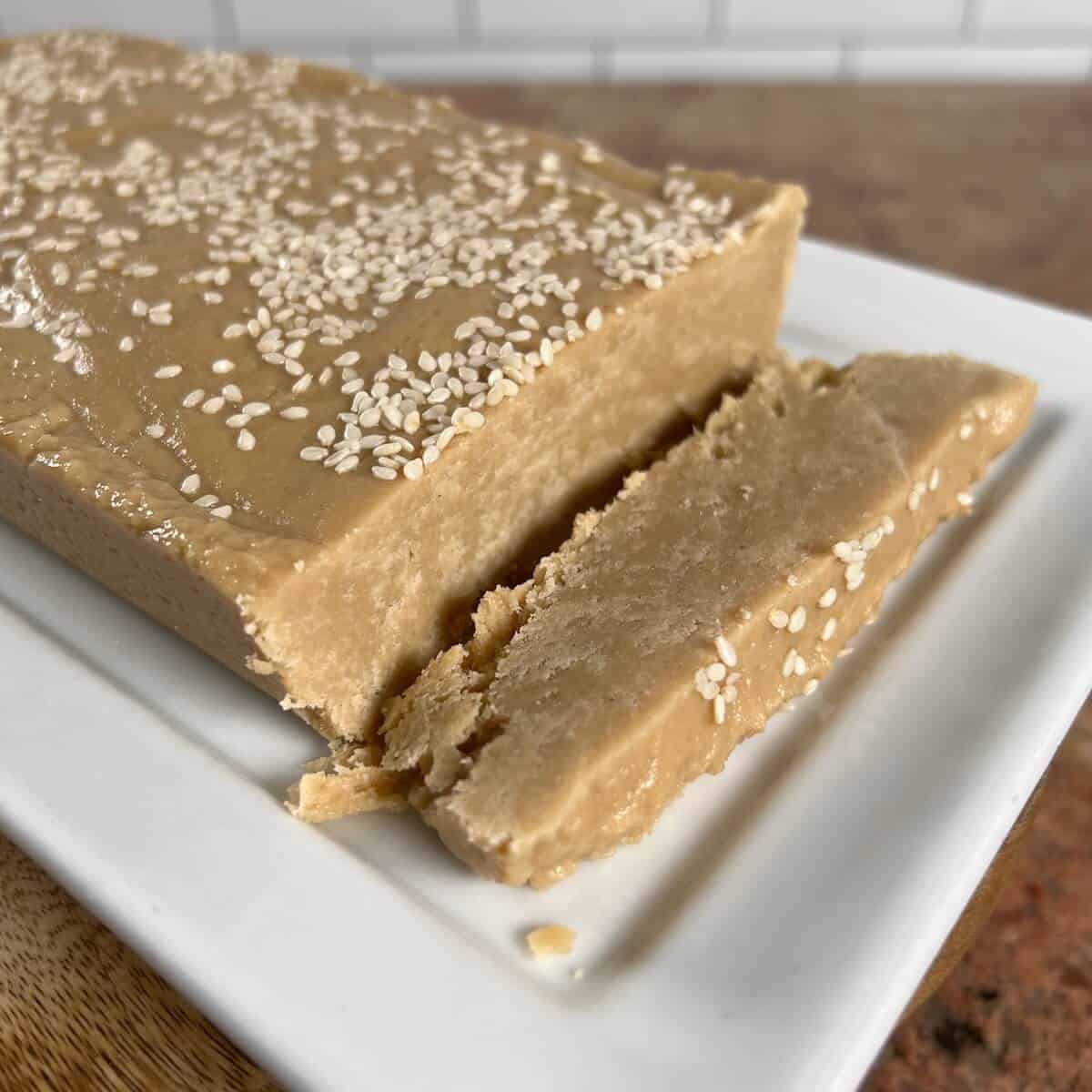
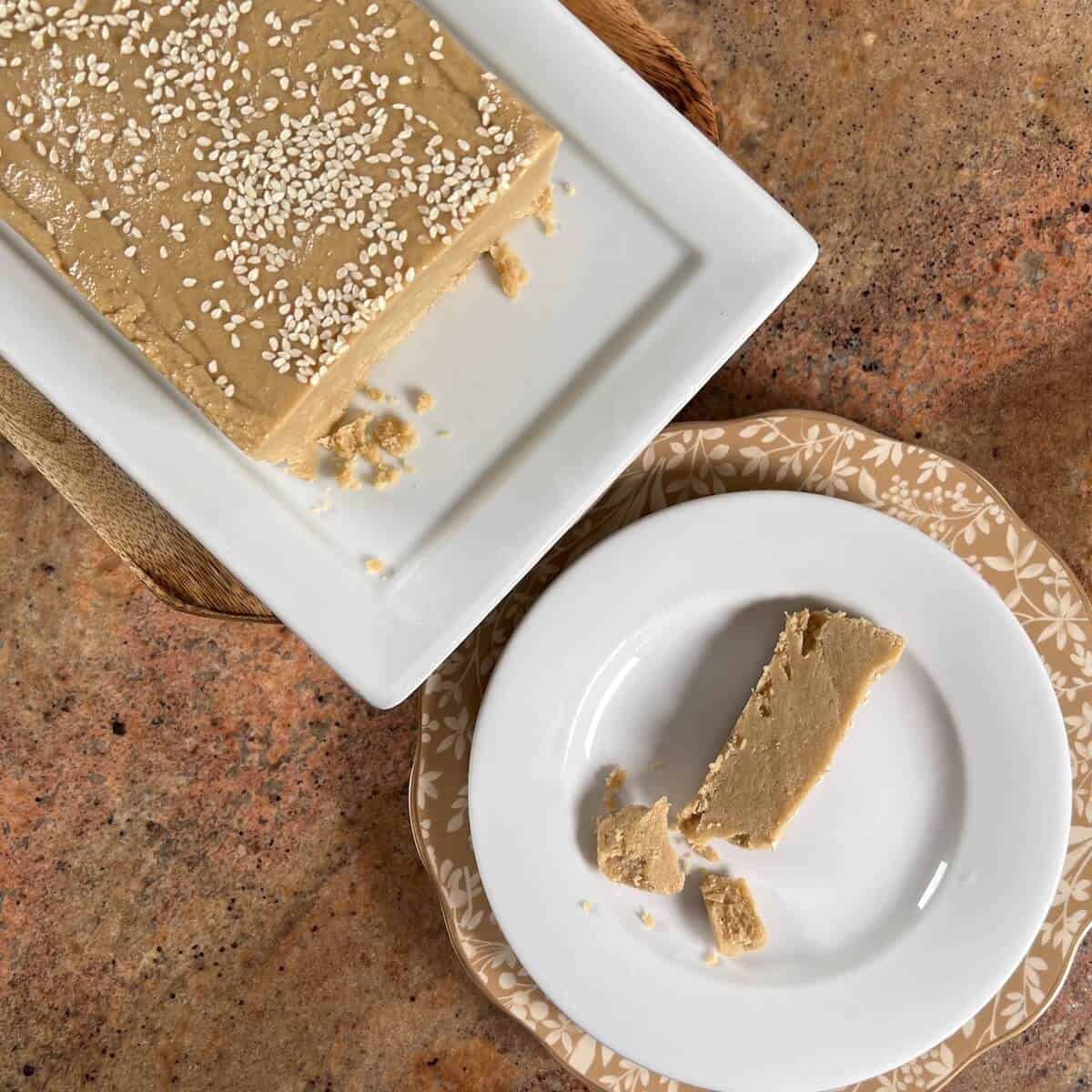
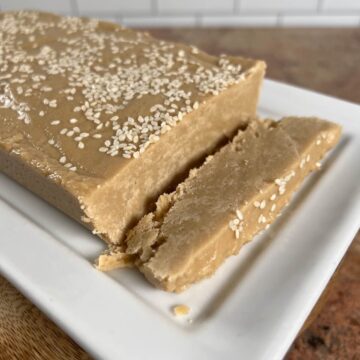
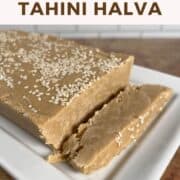
Tahini halva, a classic Middle Eastern confection, combines the rich, nutty flavor of tahini (sesame seed paste) with a delicate, flaky texture that dissolves on your tongue. You'll be amazed at how easy it is to make at home, and how irresistible it is to eat!
Jump to:
- Quick Recipe Summary ✨
- Why this recipe works
- Recipe ingredients
- Halva flavor variations
- How to make Tahini Halva
- Testing the sugar syrup without a candy thermometer
- Storage and make-ahead instructions
- Mixing mishaps
- Sugar science in candymaking
- How to serve tahini halva
- Questions asked and answered
- More fudge and candy recipes to try
- Recipe
- Comments
Quick Recipe Summary ✨
Tahini Halva: A classic Middle Eastern sesame candy made with tahini and hot sugar syrup, creating a firm yet crumbly, melt-in-your-mouth confection with a rich, nutty flavor.
From-scratch candy magic: Just 5 simple ingredients and cooked to the firm-ball stage (250°F) for the perfect halva texture. No special equipment beyond a saucepan and candy thermometer needed!
Active Time: About 20 minutes • Chill Time: At least 2 hours • Total Time: About 2½ hours (mostly hands-off!) ⏱️
Difficulty Level: ⭐⭐⭐ Medium. Simple ingredients, but precise sugar cooking ensures that signature flaky texture (don't worry, step-by-step tips and troubleshooting are included!)
Yield: About 1 pound (16 slices) • Naturally gluten-free • Easily vegan • Make-ahead friendly: Keeps for weeks at room temperature and months refrigerated 📦
👉 Follow the detailed instructions, sugar-stage guidance, and mixing tips below to make homemade tahini halva with the perfect firm, crumbly texture every time.
SUMMARIZE & SAVE THIS CONTENT ON
Why this recipe works
- Cooking the sugar to the firm-ball stage gives halva that magical flaky-meets-fudgy texture that makes it so irresistible
- Clear visual cues tell you exactly when to stop mixing, so you avoid oily or overly crumbly results
- The pure sesame flavor takes center stage, with just enough sweetness to let it shine
- Simple technique, thoughtful tips, and a little candy science mean you can make authentic tahini halva confidently at home
Tahini halva is one of those candy confections that would seem hard to make, but is actually quite easy, like homemade marshmallows or pecan pralines.
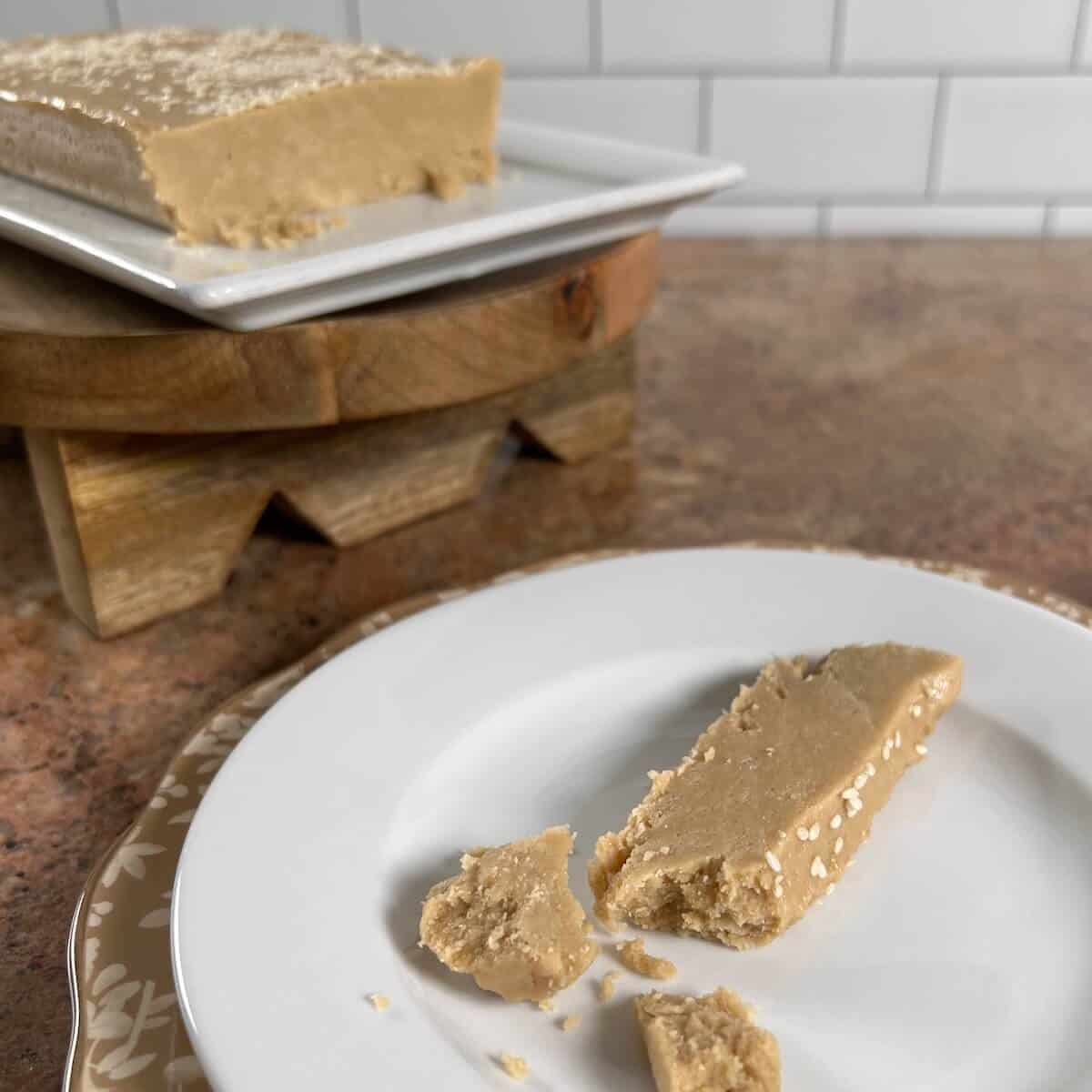
Simply a combination of tahini (ground sesame seeds) plus a hot sugar syrup, the result is a deliciously sweet and nutty confection with a unique texture. Unlike the hardness of peanut brittle or the softness of chocolate fudge, halva stands on its own being firm, yet crumbly. It's like if fudge and cotton candy were to have a nutty sesame baby, that would be halva.
Found all over the Middle East, Turkey, India, the Balkans, and elsewhere around the Mediterranean, the name halva (also spelled halvah and helva, among others) means sweet in Arabic. And boy, is it ever!
While there are many types of flavored halva, I'm a purist. This tahini halva recipe allows the pure nutty flavor of sesame seeds to shine, without a lot of competing flavors or aromas to get in the way.
Homemade tahini halva also lets you control the sweetness and use high-quality tahini, giving you a fresher sesame flavor than many store-bought versions.
It's hard to stop nibbling on it, and I find myself reaching for a quick bite again and again. You'll be amazed at how easy it is to make tahini halva at home, and how irresistible it is to eat!
Recipe ingredients
You'll need the following ingredients to make this tahini halva recipe:

Ingredient Notes
Tahini paste: Also known as sesame paste, tahini paste is just toasted seeds that are ground up into a paste (similar to how peanut butter is made). It can usually be found in the international aisle or nut butter area of many supermarkets.
Be sure to start with a high-quality tahini paste, and bring it to room temperature if it's chilled. If it has separated during storage, stir well to recombine the sesame oil into the paste prior to using. If your jar or can of tahini paste has been opened for a while, double check its freshness - any rancid odors means it has gone bad and you'll want to start with a fresh jar.
Sweetener: Halva recipes can be sweetened with sugar, honey, maple syrup, golden syrup, date syrup, or other sweet syrups. I'm using sugar to make the simple syrup just for ease, but you can use about 1½ to 2 cups of your favorite syrup, heated just like the simple syrup in the recipe.
Vanilla extract: While there are many ways to flavor halva, I prefer the simple flavor of vanilla extract. It adds a rich creamy flavor along with floral aroma undertones that doesn't overpower the nuttiness of the sesame seeds.
Sesame seeds: Used as an optional garnish, sesame seeds add a bit of crunchy texture to the halva.
See the recipe card for a full list of ingredients and measurements.
Halva flavor variations
There are hundreds of ways that halva can be flavored, from Chocolate Halva (where cocoa powder is added to the base along with almonds) to more elaborate combinations of flavoring extracts and nuts. Once you've mastered plain tahini halva, try mixing one of these into the tahini before adding the sugar syrup (from Epicurious):
- Pistachio-Rose Halva: Place a rack in middle of oven; preheat to 300°F. Spread 1 cup unsalted shelled pistachios on a rimmed baking sheet. Toast until fragrant and lightly golden, about 10 minutes. Transfer nuts to a plate. Let cool, then coarsely chop. Prepare halva, adding half of the chopped pistachios and ¼ teaspoon rosewater to the tahini, salt, and vanilla mixture. Stir sugar syrup into tahini mixture and form halva as directed. Sprinkle remaining nuts over, pressing gently to adhere. Cover and chill as directed.
- Cardamom-Chocolate Halva: Prepare halva, adding ½ teaspoon ground cardamom to the tahini, salt, and vanilla mixture. Stir sugar syrup into tahini mixture, then quickly stir in ½ cup coarsely chopped dark chocolate just to combine (you want to see streaks of chocolate). Form halva as directed. Sprinkle ¼ cup coarsely chopped dark chocolate over, pressing gently to adhere. Cover and chill as directed.
- Lemon-Poppy Seed Halva: Prepare halva, adding 1 tablespoon poppy seeds to the tahini, salt, and vanilla mixture. Add 1 tablespoon finely grated lemon zest to water in saucepan before making the sugar syrup, then prepare syrup as directed. Form halva as directed. Sprinkle 1 tablespoon poppy seeds over, pressing very gently just to adhere. Cover and chill as directed.
- Chocolate-Za'atar Halva: Prepare halva, adding ½ teaspoon za'atar to the tahini, salt, and vanilla mixture. Stir sugar syrup into tahini mixture as directed, then quickly stir in ½ cup coarsely chopped dark chocolate just to combine (you want to see streaks of chocolate). Form halva as directed. Sprinkle ¼ cup coarsely chopped dark chocolate over, pressing gently to adhere. Cover and chill as directed.
How to make Tahini Halva
Step 1: Make the halva base
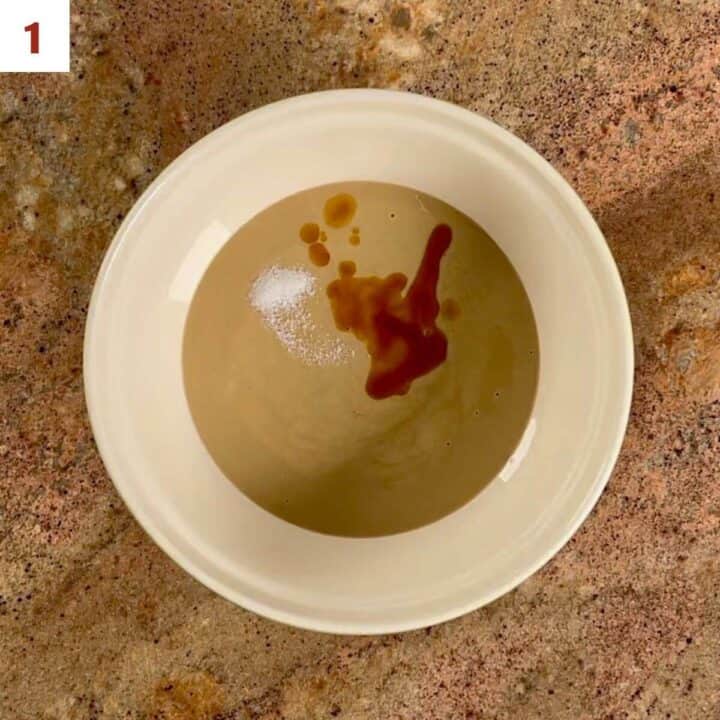
Stir together the tahini, vanilla extract, and salt until the mixture is smooth (photo 1).
Have the bowl nearby as you cook the sugar syrup.
Step 2: Cook the sugar syrup
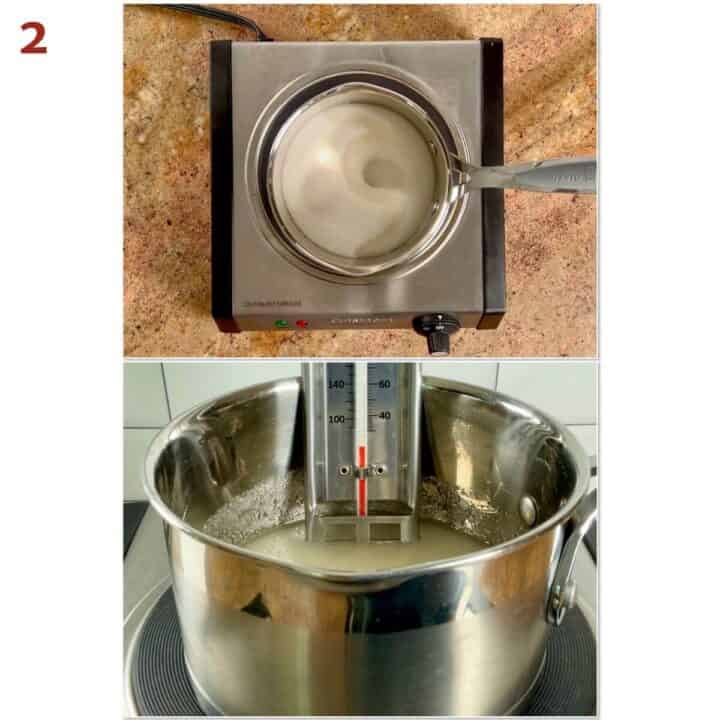
Combine the sugar and water in a small saucepan. For best results attach a candy thermometer to the side of the pan (photo 2).
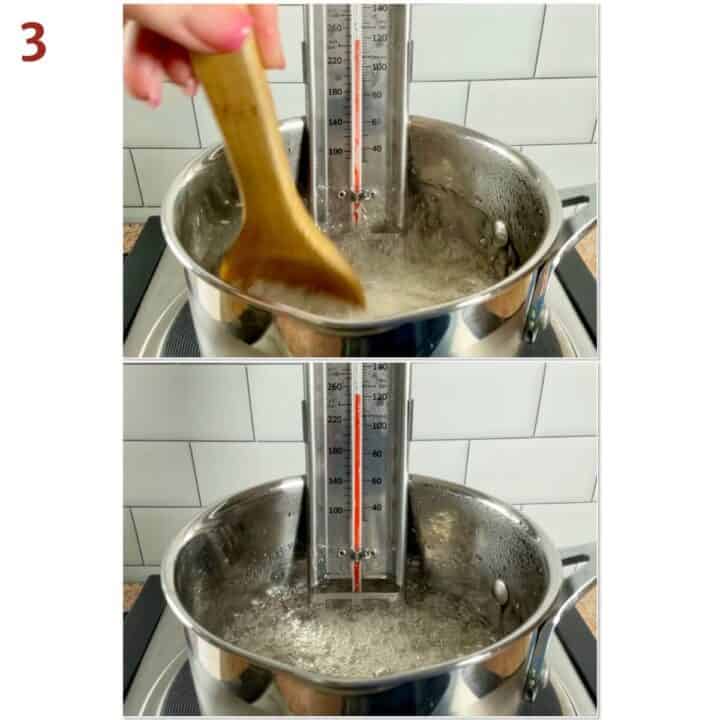
Bring the sugar mixture to a boil over medium-high heat and cook, stirring occasionally, until it reaches 250°F (120˚C), the firm-ball stage. This takes about 5 to 7 minutes (photo 3).
Immediately remove the sugar syrup from the heat.
Testing the sugar syrup without a candy thermometer
If you don't have a candy thermometer, you're going to need to check if the sugar syrup has reached the firm-ball stage (there's more information about the sugar stages below).
To test for doneness, drop a small amount of the syrup into a glass of cold water. You want the syrup to form a firm ball that won't flatten when you take it out of the water, yet remains pliable enough to flatten when it's squeezed.
Step 3: Mix the halva
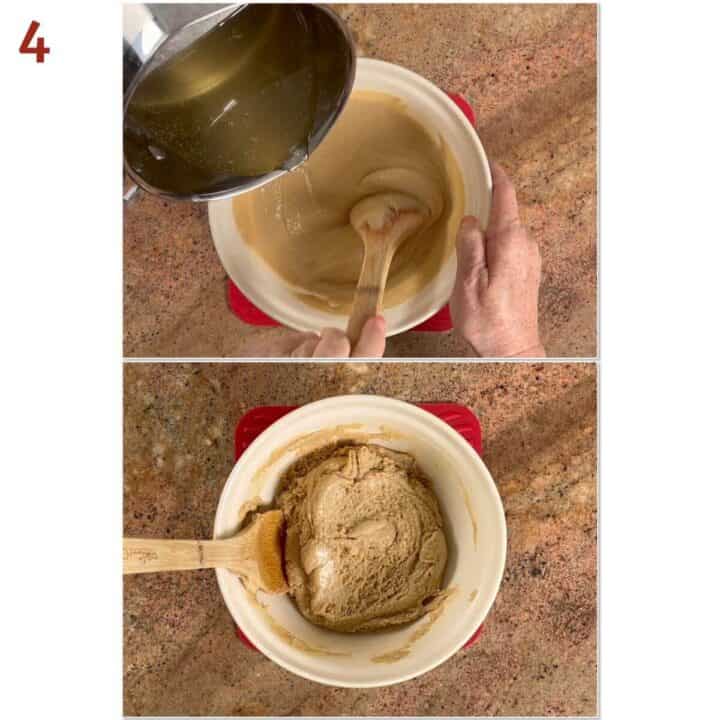
Gradually stream the sugar syrup into the tahini mixture, mixing constantly.
Continue stirring just until the halva comes together in a smooth ball. This will take less than a minute, and the mixture will start to pull away from the sides of the bowl (photo 4).
See below for what happens if the candy isn't mixed properly.
A helper is helpful
The bowl might want to move during this step, so it's useful to have a helper pour in the syrup as you mix and hold the bowl steady.
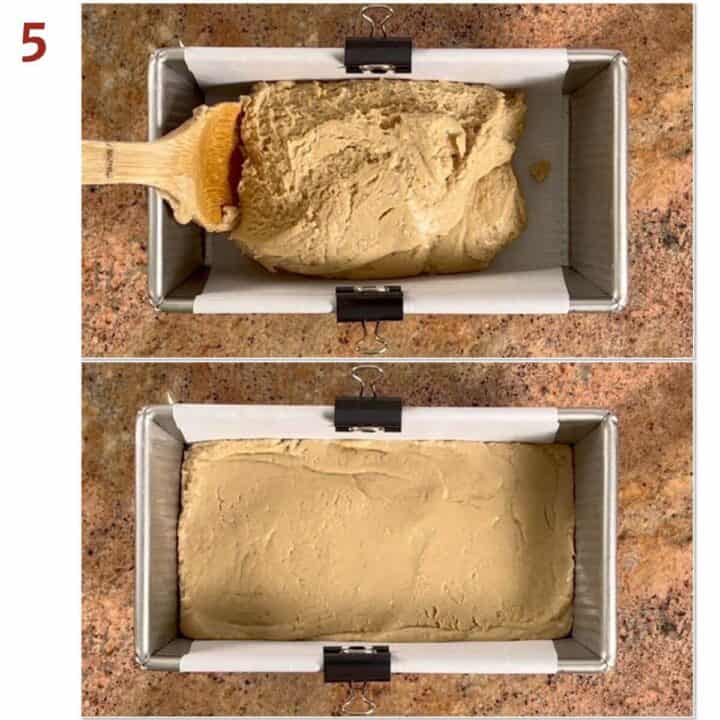
Quickly transfer the halva into a standard loaf pan lined with overhanging parchment paper, pushing the mixture toward the pan edges and smoothing out the top (photo 5).
Step 4: Chill the halva
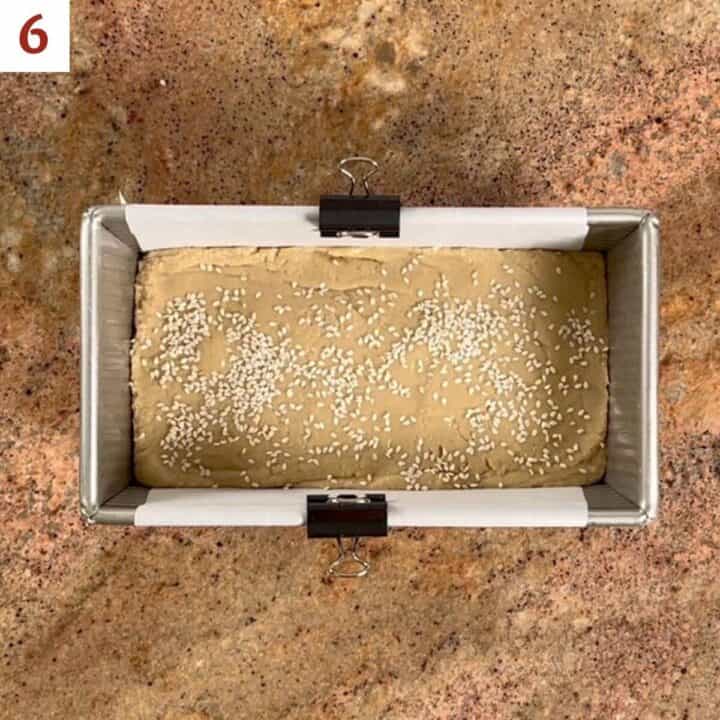
If desired, sprinkle the halva with sesame seeds, pressing them in gently with your fingers (photo 6).
Let the halva cool to room temperature for about 30 minutes, then cover the pan tightly with plastic wrap and chill until the halva is firm, at least 2 hours.
Storage and make-ahead instructions
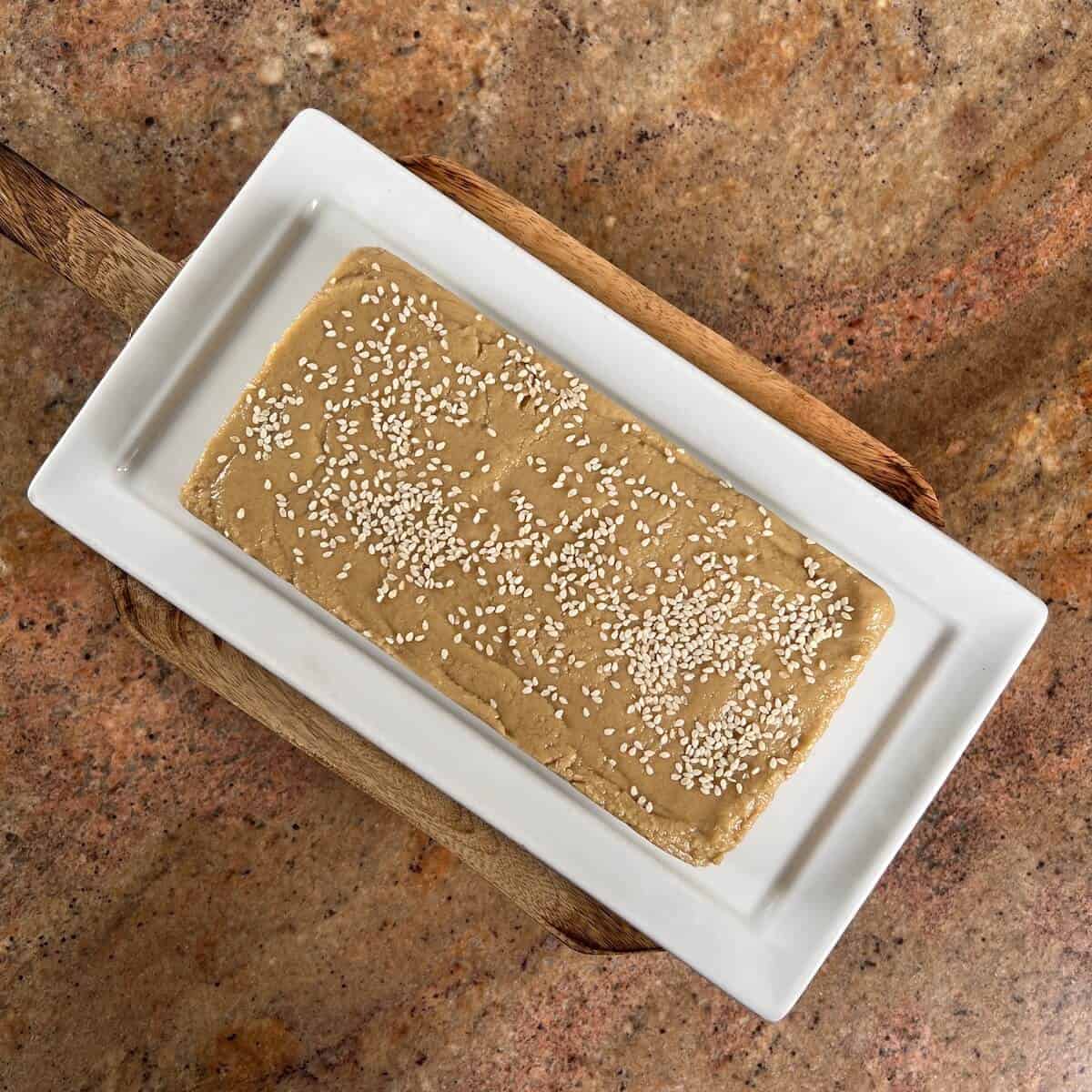
You can store tahini halva in an airtight container - it will keep for several weeks at a cool room temperature, or in the refrigerator for up to several months.
Yield Notes
This halva recipe makes about 1 pound (454 grams) of halva, or about 16 slices.
Saucepan cleaning tip
Making sugar syrup is easy, but cleaning the saucepan afterwards can be a hassle since the sugar hardens quickly. A simple hack is to fill the pan with water and bring it to a rolling boil (you can include your candy thermometer since it'll have the hardened syrup on it as well). Carefully pour off the water - the sugar syrup should be melted off. Neat, huh!
Mixing mishaps
Mixing the sugar syrup into the halva base allows the candy to cool quickly, but it's important for another reason - under-mixing or over-mixing it will affect the finished halva's texture:
- Under-mix: The halva can separate and look oily
- Over-mix: The halva can be too dry and crumbly
It doesn't take long to mix everything together (remember, just until the halva forms a smooth ball and starts to pull away from the bowl), so don't get distracted by anything shiny!
Sugar science in candymaking
Candy making is a study in temperature. Just like when making Pecan Pralines and the caramel for Millionaire's Shortbread, the temperature of the sugar syrup is crucial for making tahini halva successfully. Using a candy thermometer is the best way to insure success.
There are six stages in candy making: thread, soft-ball, firm-ball, hard-ball, soft-crack, and hard-crack. (Boy, there are so many asides I could make about these names!)
I won't bore you with the characteristics of each of these stages (you can go to the Exploratorium's website and bore yourself without me), but I want to highlight the firm-ball stage:
- Range: 245° F-250° F
- Sugar concentration: 87%
- Comments: At this temperature, sugar syrup dropped into cold water will form a firm ball, one that won't flatten when you take it out of the water, but remains malleable and will flatten when squeezed.
So the firm-ball stage is when the sugar syrup will have a good amount of cohesion, but it will keep the candy chewable (like caramel candy). Halva is cooked to the upper range of the firm-ball stage - any higher and you're into the hard-ball stage which would mess with the halva's texture.
How to serve tahini halva
Halva is wonderful on its own served in slices or accompanied with coffee, tea, or your favorite beverage. It's also wonderful:
- Layered into brownies, cookies, or cheesecake for a sweet sesame crunch
- Served with fruit (figs, dates, pomegranate)
- As part of a mezze or dessert platter
Questions asked and answered
Here are some questions you might have...
Most often the reasons you can get separation in your halva is that the sugar syrup was too hot or the tahini wasn't stirred enough while incorporating the syrup. Another factor could be the tahini paste's consistency - if it's too runny or too thick, that can interfere with the sugar syrup incorporation as well.
If you get separation, VoyoEats has suggestions for saving your halva.
Yes! Halva is naturally gluten-free, and can be made vegan using your favorite vegan sweeteners.
Yes, but roasted tahini produces a richer, nuttier flavor that's closer to traditional tahini halva. Raw tahini makes a milder, slightly more bitter candy.
Didn't find the answer you're looking for?
Ask AI to answer for this specific recipe:
Disclaimer: I am not responsible for the quality of AI information

I hope you like this recipe! Let me know if you have any questions, and don't forget to leave a comment and rating. Thanks!
Slainté! L'chaim! Cheers!
- Tammy
Recipe
Tahini Halva
Equipment
- 1-quart saucepan
Ingredients
- 1½ cups tahini paste, well stirred, at room temperature, see Recipe Notes
- ½ teaspoon pure vanilla extract
- ¼ teaspoon kosher salt
- 1¼ cups granulated sugar, see Recipe Notes
- ¼ cup water
- sesame seeds, for garnish, optional
Instructions
- Line a standard loaf pan with parchment paper, leaving a 2-inch overhang on two sides, then set aside.
- Make the halva base: In a medium heatproof bowl, stir together 1½ cups tahini paste, ½ teaspoon pure vanilla extract, and ¼ teaspoon kosher salt until the mixture is smooth. Have the bowl nearby as you cook the sugar syrup.1½ cups tahini paste, ½ teaspoon pure vanilla extract, ¼ teaspoon kosher salt
- Cook the sugar syrup: Combine 1¼ cups granulated sugar and ¼ cup water in a small saucepan. For best results attach a candy thermometer to the side of the pan.1¼ cups granulated sugar, ¼ cup water
- Bring the sugar mixture to a boil over medium-high heat and cook, stirring occasionally, until it reaches 250 °F (known as the firm-ball stage in candymaking), about 5 to 7 minutes. See the Recipe Notes for how to tell when the sugar syrup is ready if you don't have a candy thermometer.Immediately remove the sugar syrup from the heat.
- Mix the halva: Gradually stream the sugar syrup into the tahini mixture, mixing constantly. The bowl might want to move during this step, so it's useful to have a helper pour in the syrup as you mix and hold the bowl steady.
- Continue stirring just until the halva comes together in a smooth ball. This will take less than a minute, and the mixture will start to pull away from sides of bowl. Be careful not to over-mix the halva or the finished product will be too crumbly.
- Quickly transfer the halva into the prepared loaf pan, pushing the mixture toward the pan edges and smoothing out the top. If desired, sprinkle the halva with sesame seeds, pressing them in gently with your fingers.sesame seeds
- Let the halva cool to room temperature for about 30 minutes, then cover the pan tightly with plastic wrap and chill until the halva is firm, at least 2 hours.
- Remove the halva from the pan using the parchment paper overhang as a sling. Serve in slices (¾- to 1-inch wide is a good portion size), and enjoy!
- Yield: This recipe makes about 1 pound of halva, or about 16 slices.
- Storage instructions: You can store tahini halva in an airtight container - it will keep for several weeks at a cool room temperature, or in the refrigerator for several months.


Tammy Spencer says
I enjoyed writing up this recipe for you, and I hope you like it as much as I do. Please leave your questions or comments with a star rating so that other readers can benefit from your experience. Thanks!