

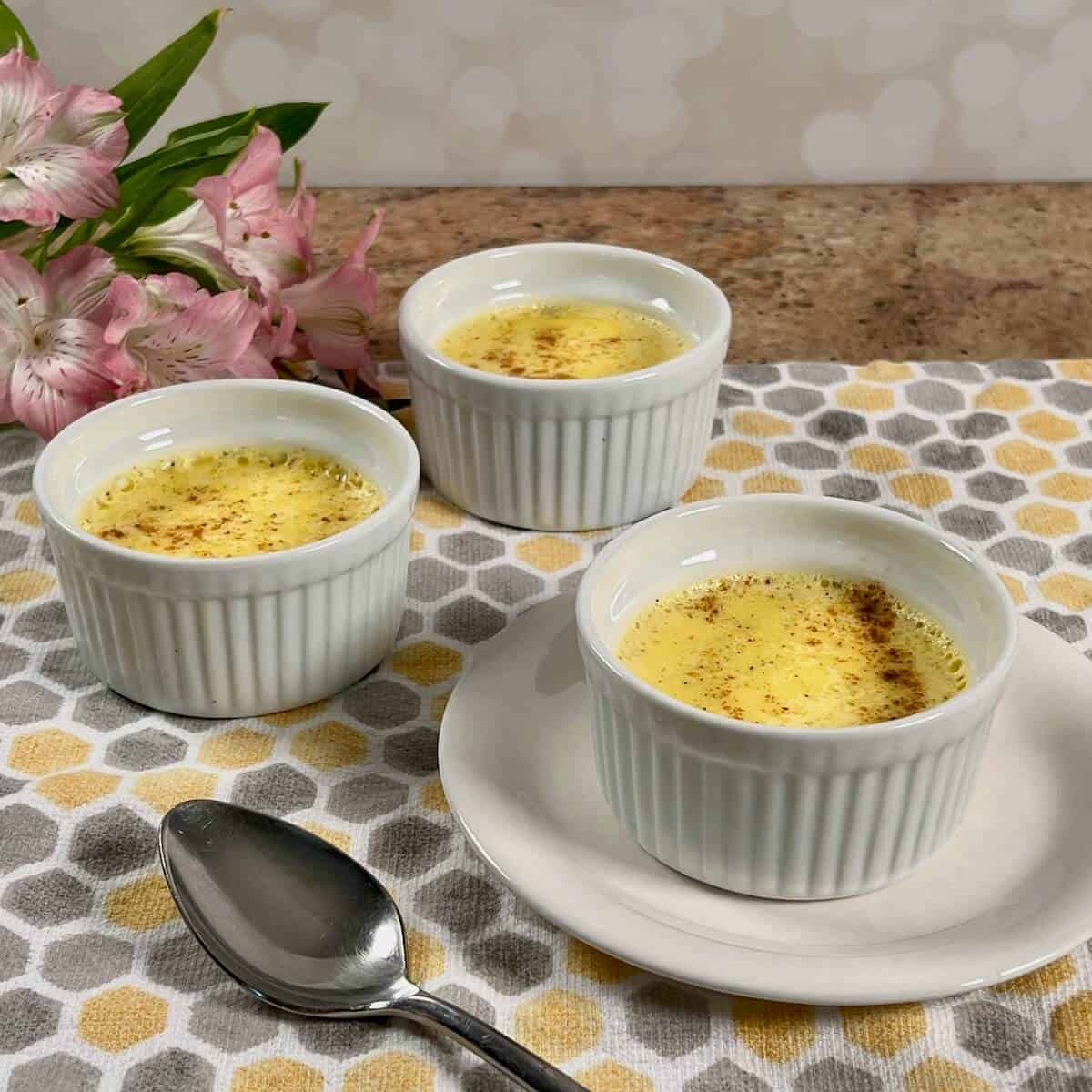
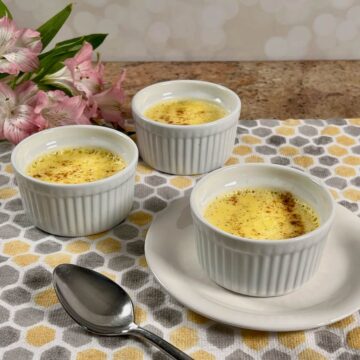
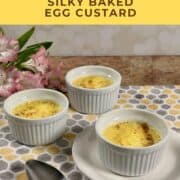
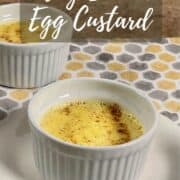
Egg custard is a classic baked dessert made with simple ingredients and gently cooked until silky and softly set. Just mix the base, pour into ramekins, and let the oven and water bath create a smooth custard with a delicate wobble. Creamy and comforting, this old-fashioned egg custard with nutmeg it is as simple for a weeknight dessert as is elegant for company!
Jump to:
Quick Recipe Summary ✨
Silky Baked Egg Custard: A rich, yolk-only custard made with heavy cream and milk, gently baked in a water bath for a smooth, luxurious texture with a soft, spoonable set.
Balanced richness: Heavy cream adds luxurious body while milk keeps it light enough to stay delicate, not dense.
Active Time: About 15 minutes • Bake Time: 25 to 30 minutes • Cooling Time: About 30 minutes • Total Time: About 1 hour 15 minutes ⏱️
Difficulty Level: ⭐⭐ Easy. Simple ingredients, gentle heat, and precise technique prevents curdling.
Yield: 4 (6-ounce) ramekins • Naturally gluten-free • Make-ahead friendly: Store for up to 4 days
👉 Follow the temperature tips below for perfectly creamy egg custard with that signature soft center wobble.
SUMMARIZE & SAVE THIS CONTENT ON
Why this recipe works
- Egg custard is super easy to make - just whisk up the base, pour it into ramekins, and the oven does the rest
- Gentle baking ensures a silky, spoonable texture
- The flavor is a classic and comforting creamy vanilla with a light sprinkle of nutmeg
- Custards chill beautifully, making them perfect for an easy make-ahead dessert
Simple ingredients. Controlled heat. Dreamy results.
With a little patience in the oven, you can turn a handful of ingredients into a classic egg custard, something that's quietly luxurious.
In texture and flavor, egg custard sits right between classic milk custard and crème brûlée, rich from yolks and heavy cream, but simpler and more homey.
Naturally gluten-free, egg custard is a perfect dessert to serve for those following a gluten-free diet, and during the week of Passover (after a dairy meal), when eating foods made with flour are prohibited (except for matzo).
Egg custard is an easy-to-make-ahead dessert that can go from being served on a quiet weeknight to an elegant dinner party. Its creamy comfort is a welcome treat anytime!
Recipe ingredients
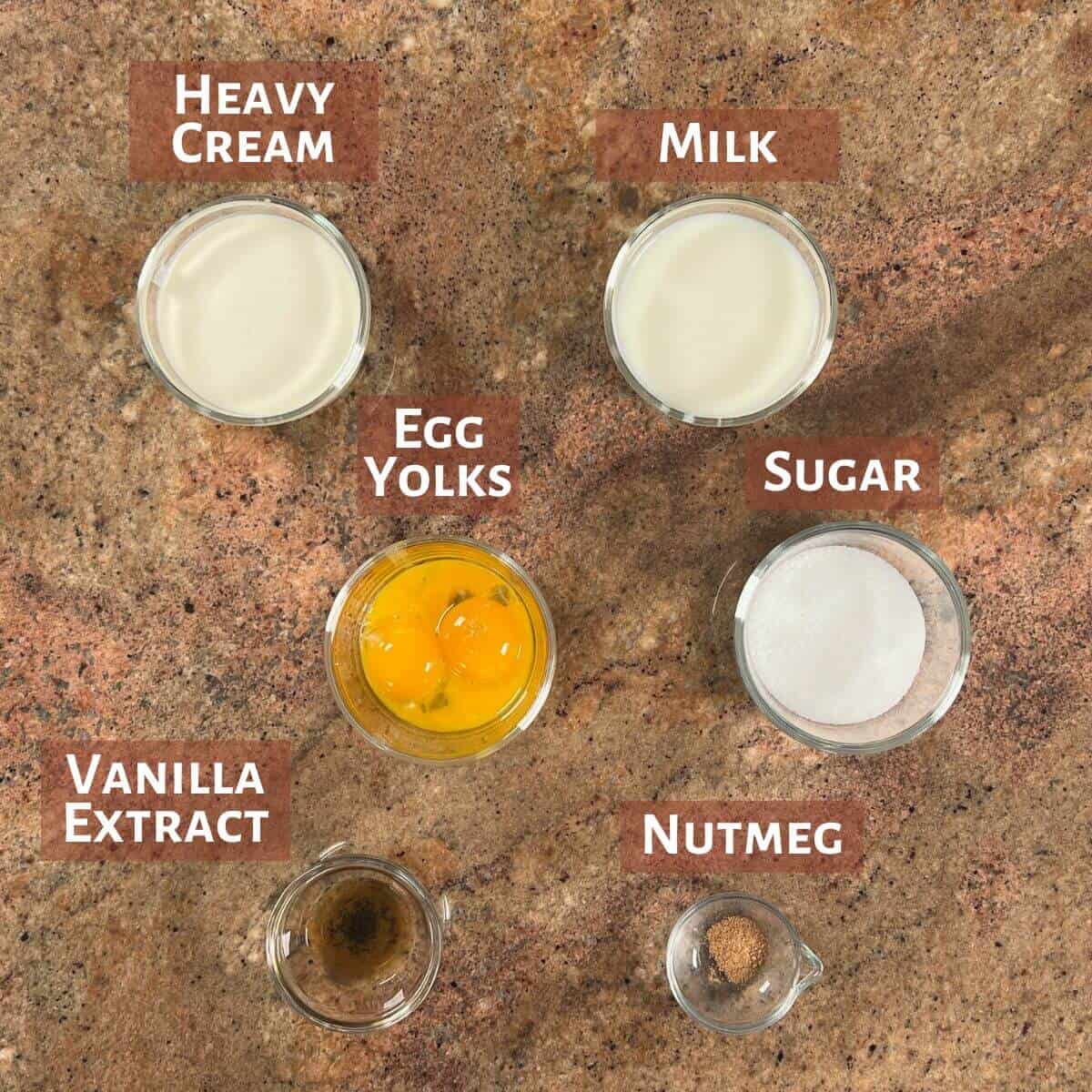
You'll need the following ingredients to make this egg custard recipe:
Ingredient Notes
A simple list of ingredients goes into a recipe for egg custard: milk, heavy cream, egg yolks, sugar, and vanilla extract.
Milk and heavy cream: Recipes for traditional milk custard use just...uhm...milk, creating a custard with a lighter texture on the tongue. Using heavy cream alone gives the custard a richer, heavier mouthfeel that can be a bit too much. When used together, the milk and heavy cream balance the custard to have a luxurious, yet delicate texture.
Egg yolks: Some custard recipes use whole eggs in their preparation. Because the proteins in egg whites set more strongly when heated, these custards tend to be slightly firmer and less creamy.
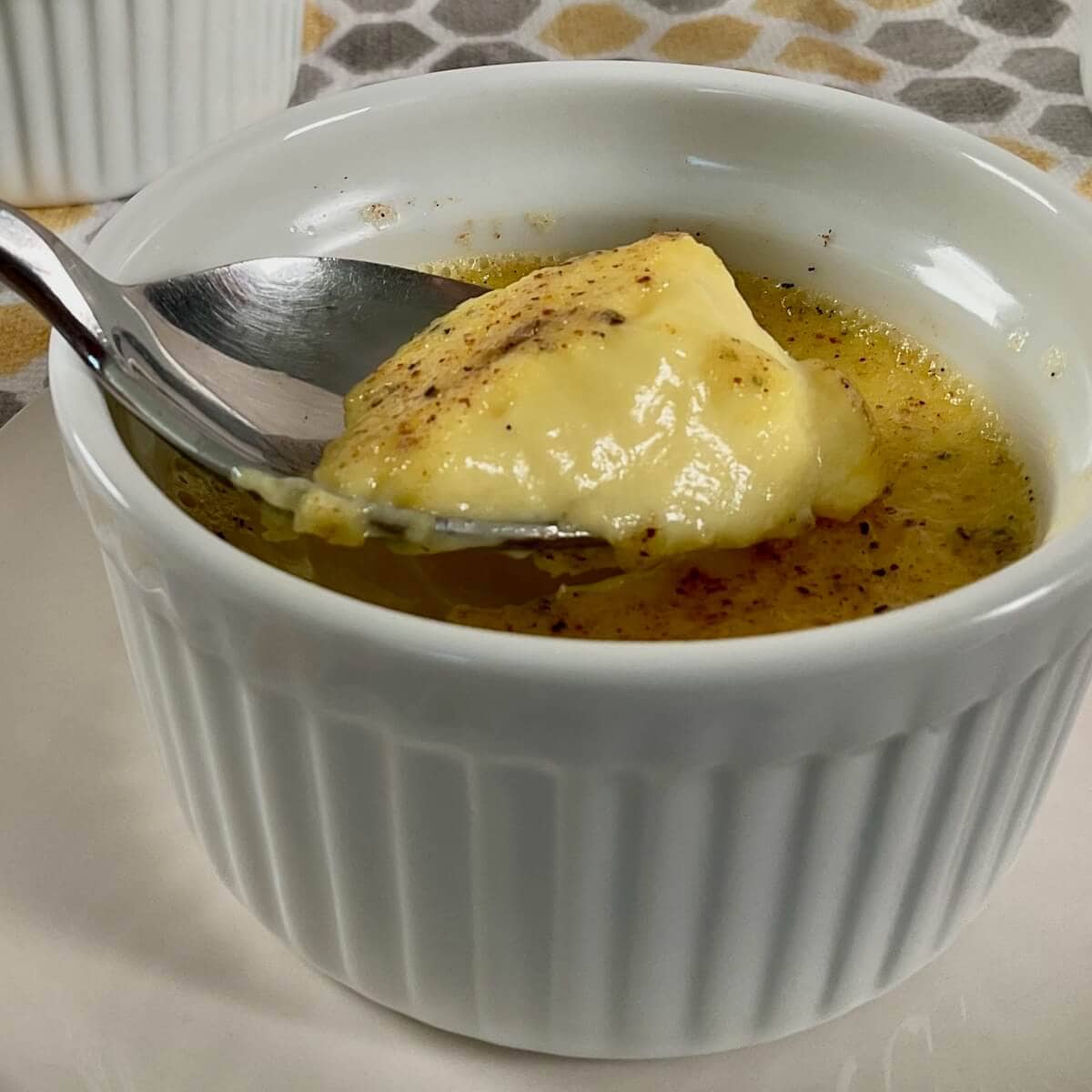
In contrast, just using egg yolks produces a richer, silkier custard because the yolks contain more fat and emulsifiers. The result is a custard that is creamy and delicate, with a soft, spoonable set instead of a firmer sliceable texture.
And if you're wondering what to do with the egg whites, you can use them to make marshmallow creme, Eton mess, or, of course, macarons.
If you want to use whole eggs instead of egg whites, use about 2 whole eggs for every 3 yolks. Just know that the custard will taste less rich and will set a bit firmer.
Nutmeg: Adds a warm, aromatic flavor and subtle spice that complements the creaminess of the custard.
See the recipe card for a full list of ingredients and measurements.
What size ramekins to use
The recipe as written makes a scant 2 cups of custard base, enough to comfortably fill four 6-ounce ramekins. You can use other serving dishes and double the recipe as desired. Use anything from 4-ounce ramekins to 8-ounce ramekins, custard cups, baking pans, or pie pans.
If you do use more or different-sized serving dishes, just be sure to have a large enough baking pan to hold them all in the water bath without crowding, and adjust the baking time accordingly.
How to make egg custard
Step 1: Prepare a water bath
Place an oven rack one-third of the way up from the bottom. Preheat the oven to 300˚F (148˚C)
Choose a baking pan large enough to hold four 6-ounce ramekins (a 9- x 9-inch baking pan works well), and fill it with enough warm water to go halfway up the sides of cups. Place the baking pan without the ramekins in the oven so the water can heat as the oven preheats.
Step 2: Make the custard base
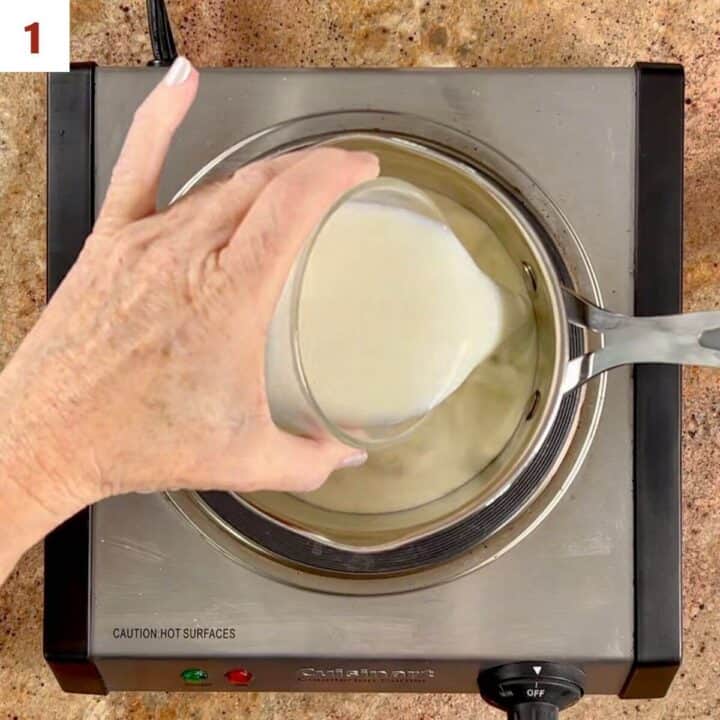
Heat the heavy cream and milk just to a simmer (photo 1).
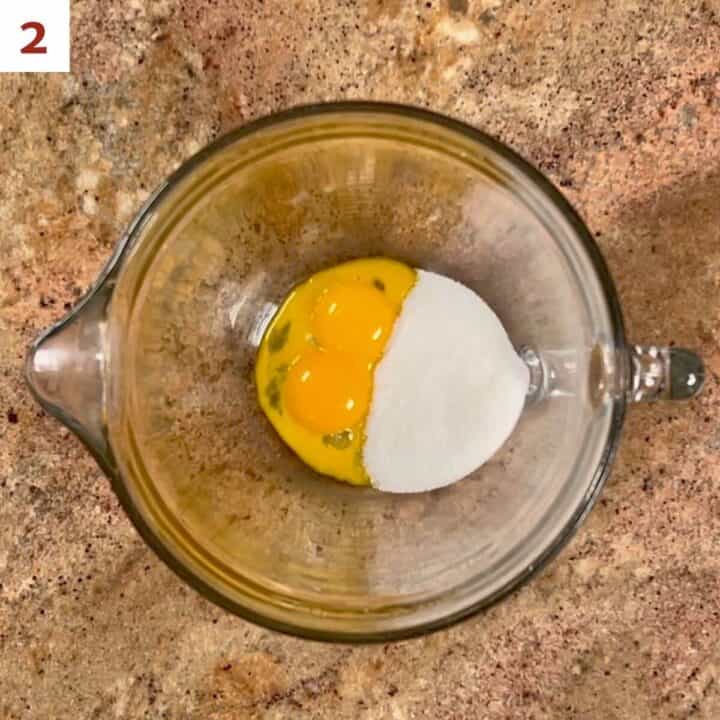
Whisk together the egg yolks and sugar in a bowl, preferably with a pouring spout (photo 2).
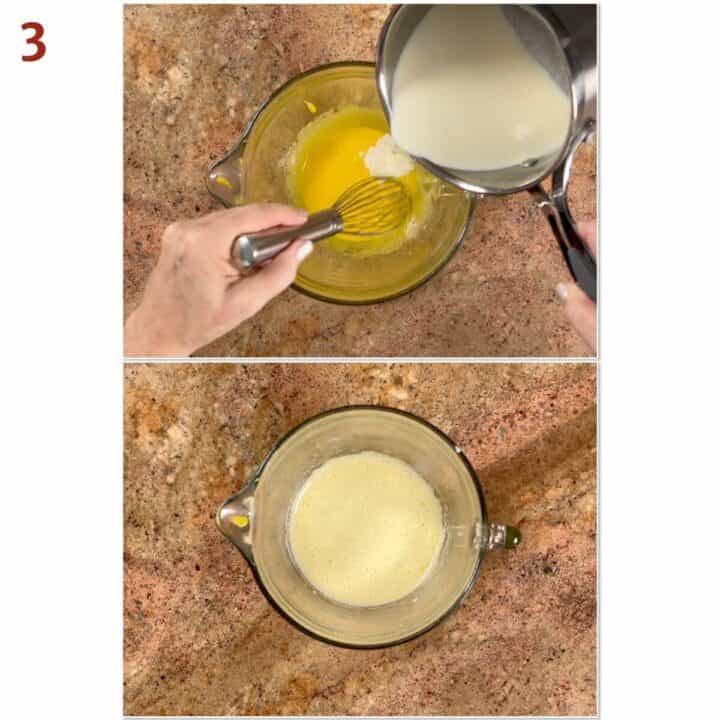
Slowly whisk the hot milk mixture, ½ cup at a time, into the yolk mixture until the custard base is completely combined (photo 3). This process is called tempering the eggs.
Stir in the vanilla extract.
What is egg tempering?
The idea is when you add eggs to a hot liquid, the eggs will immediately curdle, leaving streaks of egg whites in the liquid (which is most unwelcome). What tempering does is it raises the temperature of the eggs slowly by whisking in a little bit of the hot liquid, thereby avoiding the curdling conundrum.
When I first encountered the term "temper the eggs," I had no idea what it meant, but I have since learned it's an important step in making cooked custards and puddings that contain eggs.
Step 3: Bake the custard
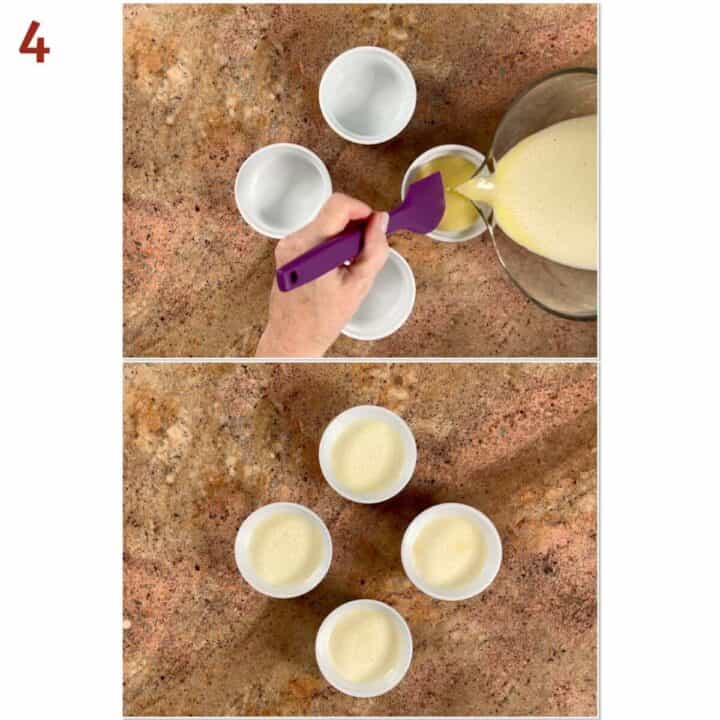
Pour the custard base into each of the ramekins, about ¾ full (photo 4).
Carefully remove the water bath from the oven - remember, the baking pan and water will be hot! The water should be about 200 °F (93˚C) at this point.
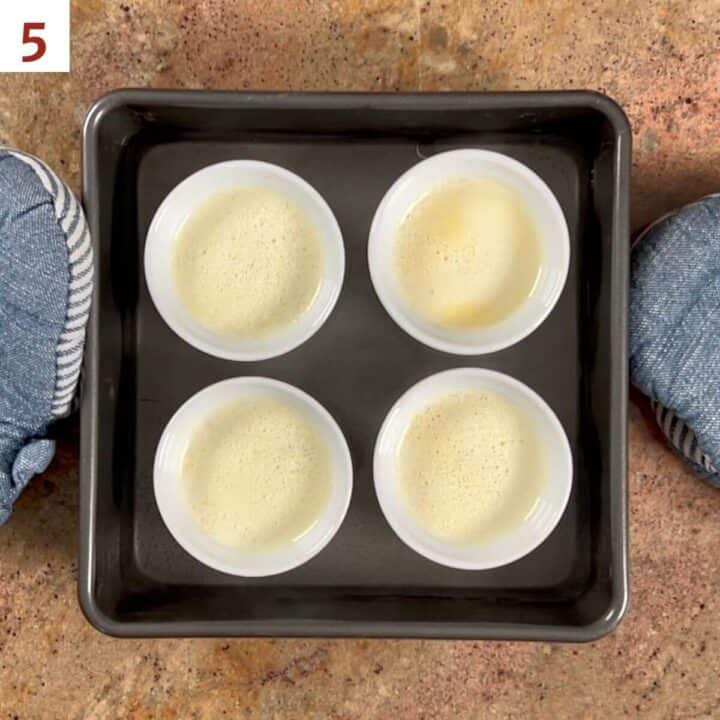
Place the filled ramekins into the water bath (photo 5).
Sprinkle ground nutmeg
in the center of each ramekin, then return the pan to the oven without splashing the water into the custards.
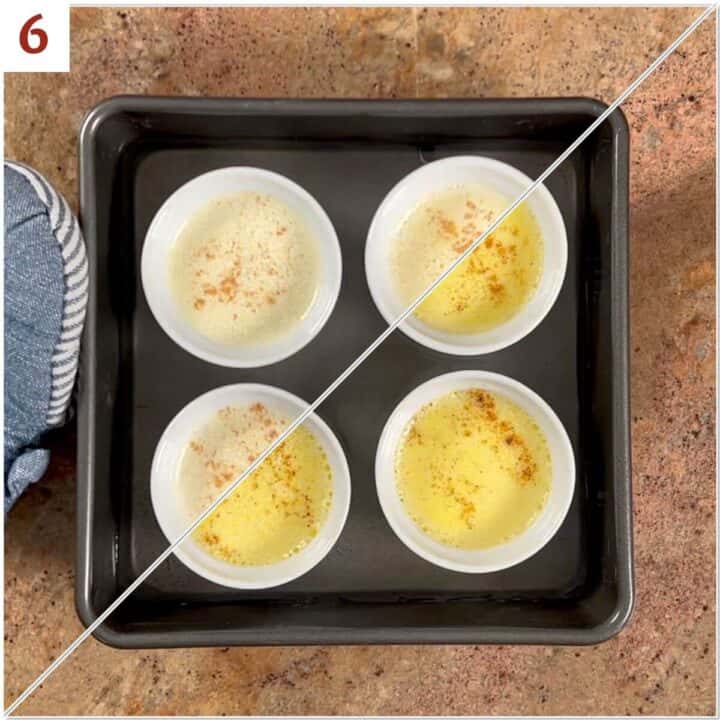
Bake the custards until the centers are just set with a slight jiggle in the middle, about 25 to 30 minutes, or longer if needed (photo 6).
You can also use a digital thermometer to check that the center of the custards have reached between 170 to 175˚F (77 to 80˚C) for the perfect set.
How to tell when egg custard is done
When baking egg custard, trust your eyes rather than the timer. If the center jiggles too much when gently jostled, continue baking in 5-minute increments.
You'll know the custards are done when:
- The centers jiggle like gelatin
- The edges are set
- The surfaces are smooth without cracks
- A thermometer reads between 170 to 175°F (77 to 80˚C)
Step 4: Cool the custards
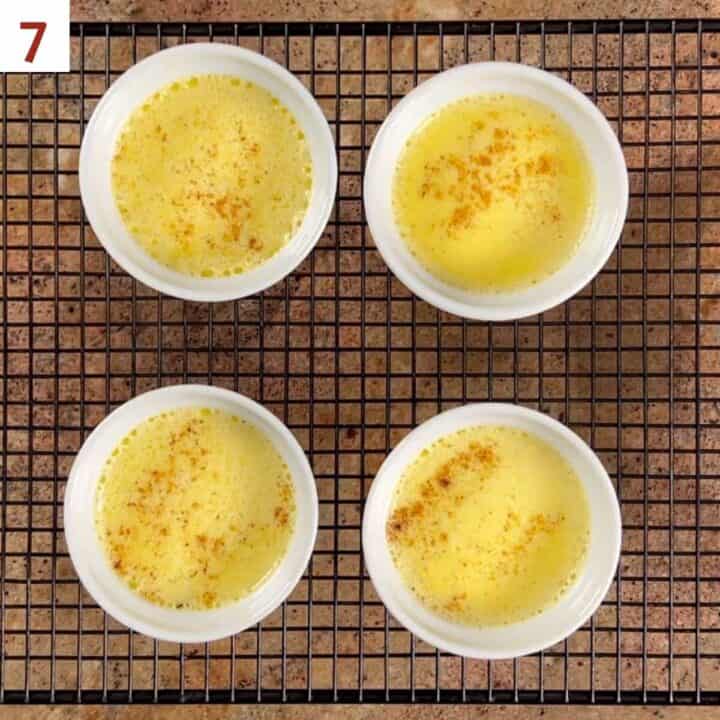
Carefully remove the baking pan from the oven without splashing the water, then remove the ramekins from the water bath and place them on a wire rack to cool (photo 7).
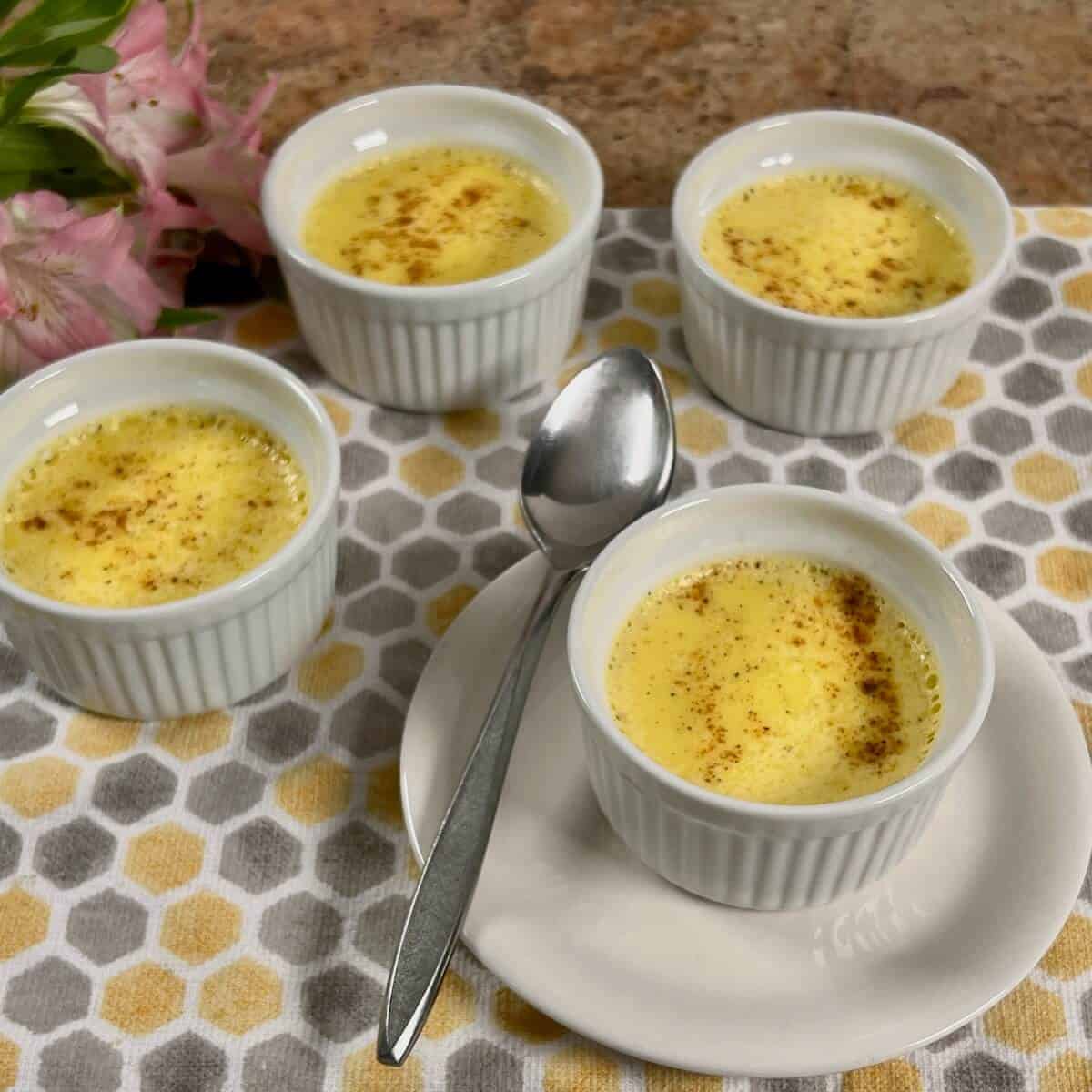
Serve at room temperature or chilled, as desired. Both ways are delicious!
Make-ahead instructions
Store the baked and cooled egg custards, covered tightly, in the refrigerator for up to 4 days.
It's not recommended to freeze egg custards because they can lose that smooth, silky texture and may release some liquid when thawed.
Yield Notes
This recipe makes a scant 2 cups of custard base (for 4 servings in 6-ounce ramekins), and it doubles well.
Egg custard troubleshooting
It's a little more challenging to tell when a baked custard is done then when a stirred custard is made on the stove (like pastry cream).
Why egg custard sets
The proteins in the egg yolks thicken when heated between 160 to 180°F (71 to 82˚C). The sugar slows down that thickening, and the water bath moderates the heat so that it can occur smoothly. Here's a temperature chart for reference:
| Temperature | Texture |
| 160°F | soft sauce |
| 170°F | custard set |
| 175°F | perfect |
| 180°F | firm |
| 185°F | curdled |
For the perfect set, you want to hit that temperature sweet spot of 170 to 175˚F (77 to 80˚C), but things can happen.
Custard has a rubbery texture
If the egg custards turned out more rubbery than creamy, most likely they were baked too hot or too long, so their temperature went above 180°F (82˚C). At that temperature, the egg proteins contract and squeeze out the moisture of the base. To avoid the problem next time:
- Avoid boiling the milk mixture when making the base
- Use a water bath when baking
- Check the centers are just set (use a thermometer for best results)
Paying attention to temperatures helps to ensure perfectly silky egg custard.
Custard is curdled or cracked
Curdling happens when the eggs cook too quickly. This can be caused by:
- Not tempering the eggs properly when making the base
- Skipping the water bath
- Baking at too high a temperature
Gentle, even heat is the key to a smooth egg custard.
Comparing custard desserts
This baked egg custard falls into a family of custardy treats, all using different base ingredients and cooking methods. Once you understand this one, the whole custard family starts making sense.
Baked vs. stirred custards
The two major types of custards differ in how they're made, either on the stove or in the oven.
Baked custards: Generally firmer in texture, so they're set and sliceable, no matter if they're in a pastry shell (like a quiche tart) or free-standing (like, well, crustless quiche).
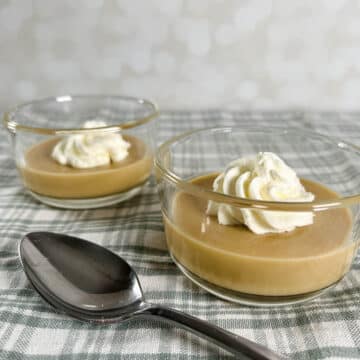
Stirred custards: Cooked on the stove and thickened with eggs and possibly cornstarch, they have a more saucy consistency, like this Maple Pudding.
Here's a comparison of some common custard desserts:
- Egg Custard: Baked in ramekins until softly set. The texture is silky and spoonable with a delicate wobble in the center.
- Pastry Cream: Cooked on the stovetop and thickened with eggs and cornstarch. Much thicker and sturdy enough for filling pastries and cakes.
- Crustless Quiche: A savory custard baked like egg custard but made with cheese, vegetables, or meat instead of sugar.
- Homemade Eggnog: Essentially a drinkable custard. The egg mixture is gently heated but kept pourable instead of fully set.
- Crème Brûlée: A richer baked custard made mostly with cream and finished with a crackly caramelized sugar topping.
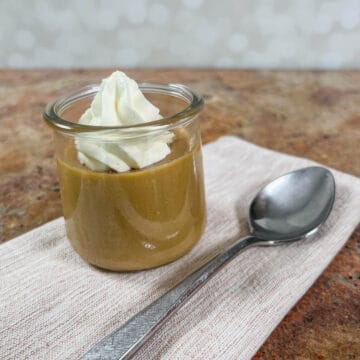
- Butterscotch Pudding: A stovetop custard thickened with eggs and cornstarch, giving it a thicker, pudding-like texture.
- French Vanilla Ice Cream: Starts as a stirred custard base cooked on the stovetop, then chilled and churned into creamy ice cream.
Questions asked and answered
Here are some questions you might have...
For perfectly done egg custard, it should be baked to between 170 to 175˚F (77 to 80˚C). This is the temperature where the egg proteins have thickened enough to set the custard while staying smooth and creamy. Beyond 180°F (82˚C), the proteins tighten too much and can cause the custard to curdle or have a rubbery texture.
Just like with pumpkin pie, the wobble will give it away. Give the baking pan a gentle jiggle. The custard centers should jiggle slightly like set gelatin, not slosh like liquid. The edges should be set, but the middle should still have a soft wiggle (it will continue to firm up as it cools).
Technically, yes, but I wouldn't recommend it. Just like with a cheesecake, without the protection of a water bath, the edges of the custard will cook much faster than the center increasing the risk of cracking or curdling.
If you do proceed without a water bath, bake the custards at a lower temperature for a longer time, and check them early and often.
Didn't find the answer you're looking for?
Ask AI to answer for this specific recipe:

I hope you like this recipe! Let me know if you have any questions, and don't forget to leave a comment and rating. Thanks!
Slainté! L'chaim! Cheers!
- Tammy
Recipe
Silky Baked Egg Custard (Creamy & Classic)
Equipment
- 1-quart saucepan
Ingredients
- ½ cup plus 2 tablespoons heavy cream
- ½ cup plus 2 tablespoons milk
- 3 large egg yolks, at room temperature, see Recipe Notes
- ¼ cup granulated sugar
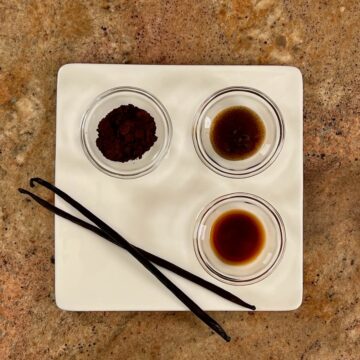
- 2 teaspoons pure vanilla extract
- ground nutmeg, to sprinkle
Instructions
- Prepare the water bath: Place an oven rack one-third of the way up from the bottom. Preheat the oven to 300 °F.
- Choose a baking pan large enough to hold four 6-ounce ramekins (a 9- x 9-inch baking pan works well), and fill it with enough warm water to go halfway up the sides of cups (about 2½ cups, depending on the size of your pan).Place the baking pan without the ramekins on the lower rack of the oven so the water can heat as the oven preheats.
- Make the custard: In a 1-quart saucepan, combine ½ cup plus 2 tablespoons heavy cream and ½ cup plus 2 tablespoons milk Bring the mixture to simmer until it's steaming and small bubbles form around edges, about 4 to 5 minutes.
- In a medium bowl (preferably one with a pouring spout), whisk together 3 large egg yolks and ¼ cup granulated sugar until light and fluffy.
- Slowly whisk the hot milk mixture, ½ cup at a time, into the yolk mixture until the custard base is completely combined. This process is called tempering the eggs, and its purpose is to prevent the eggs from curdling, ruining the silky texture of the base.Stir in the 2 teaspoons pure vanilla extract.
- Pour the custard base into each of the ramekins, about ¾ full
- Bake the custard: Carefully remove the water bath from the oven - remember, the baking pan and water will be hot! The water should be about 200 °F at this point.Pour the custard base into each of the ramekins, about ¾ full.
- Carefully remove the water bath from the oven - remember, the baking pan and water will be hot! The water should be about 200 °F at this point.Place the filled ramekins into the water bath. Sprinkle ground nutmeg in the center of each ramekin, then return the pan to the oven without splashing the water into the custards.
- Bake the custards until the centers are just set with a slight jiggle in the middle, about 25 to 30 minutes or longer if needed (see the Recipe Notes).
- Carefully remove the baking pan from the oven without splashing the water, then remove the ramekins from the water bath and place them on a wire rack to cool.
- Serve at room temperature or chilled, as desired. Both ways are delicious!
- This recipe makes a scant 2 cups of custard base (for 4 servings in 6-ounce ramekins), and it doubles well. If you use more or different-sized serving dishes, just be sure to have a large enough baking pan to hold them all in the water bath without crowding, and adjust the baking time accordingly.
- Make-ahead instructions: Store the baked and cooled egg custards, covered tightly, in the refrigerator for up to 4 days.It's not recommended to freeze egg custards because they can lose that smooth, silky texture and may release some liquid when thawed.


Tammy Spencer says
I enjoyed creating this recipe for you, and I hope you like it as much as I do. Please leave your questions or comments with a star rating so that other readers can benefit from your experience. Thanks!