

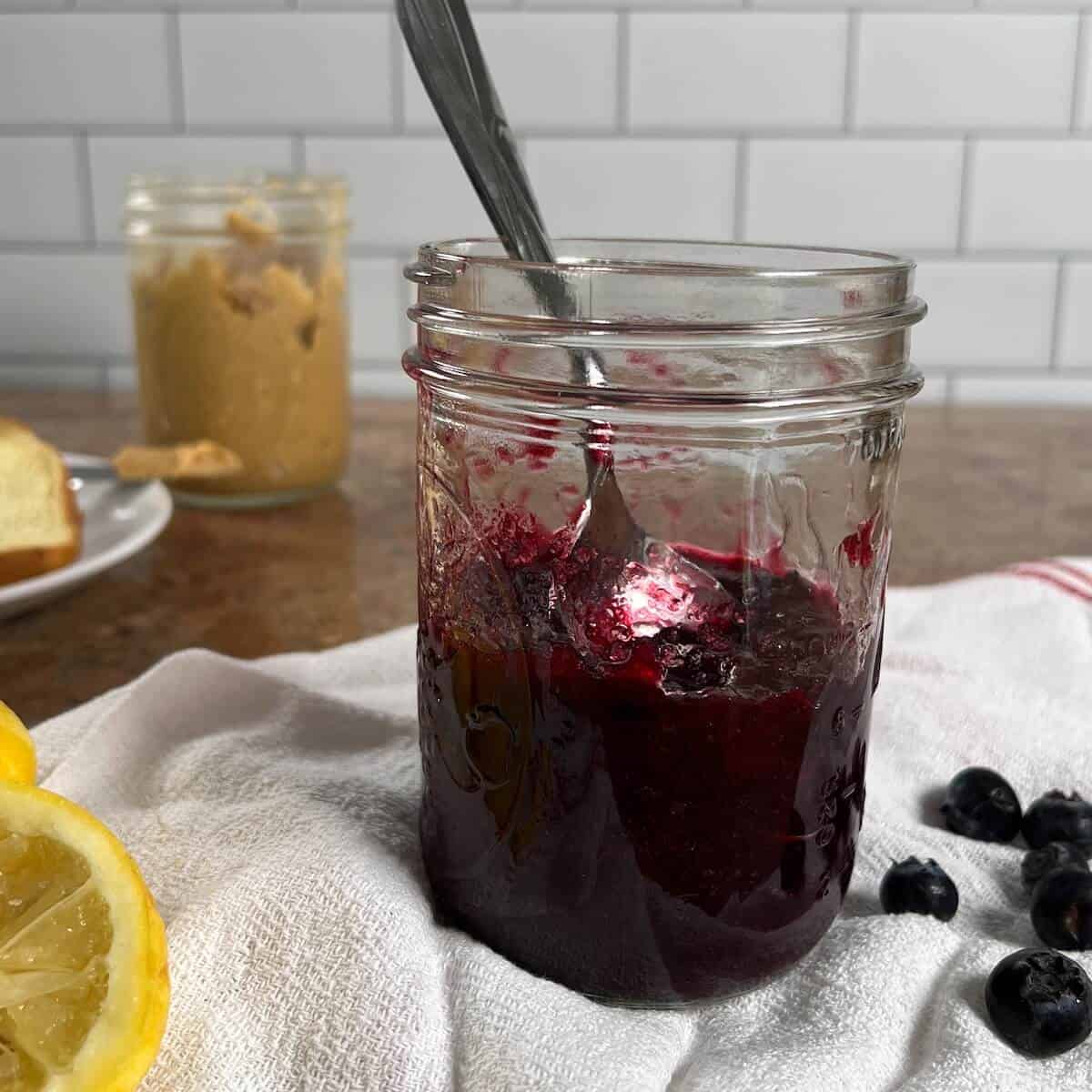
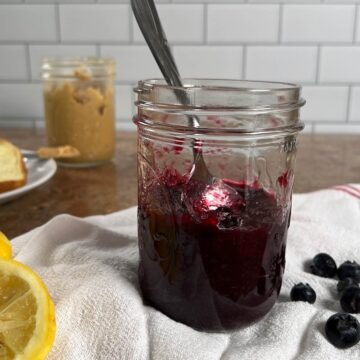
Small Batch Mixed Berry Jam is an easy refrigerator jam made with fresh or frozen berries, sugar, and lemon juice - no pectin or canning required. This simple recipe makes about one cup, making it perfect when you want homemade jam without committing to a pantry full of jars. Bright, fruity, and ready in under an hour, it's delicious on toast, scones, biscuits, yogurt, and more!
Jump to:
Quick Recipe Summary ✨
Small Batch Mixed Berry Jam: A bright, fruit-forward refrigerator jam made with 1 pound of fresh or frozen mixed berries, sugar, and lemon - no added pectin or canning required.
Fresh or frozen berries: Use strawberries, blueberries, raspberries, blackberries, or any combination you like. Frozen berries work well too; thaw and drain them first so the jam thickens properly.
No special equipment needed: A small saucepan, spoon, and either a thermometer or chilled-spoon test are all you need to know when the jam is set.
Active Time: About 25 minutes • Cooling Time: About 30 minutes • Total Time: About 55 minutes
Difficulty Level: ⭐ Easy. The only tricky bit is knowing when the jam has thickened, and the thermometer or spoon test takes out the guesswork.
Yield: about 1 cup / 16 tablespoons • Freezer-friendly: Up to 3 months • Make-ahead: Keeps in the refrigerator for 2 to 3 weeks.
👉 Follow the detailed instructions and troubleshooting tips below to make a small batch of homemade mixed berry jam that's bright, spreadable, and just the right amount for everyday use.
SUMMARIZE & SAVE THIS CONTENT ON
Why this recipe works
- Just the right amount: Makes about one cup, perfect for everyday breakfasts and baking without leftovers lingering in the fridge
- No special equipment: Skip the canning setup and make fresh homemade jam in a single saucepan
- Works with fresh or frozen berries: Enjoy homemade mixed berry jam any time of year
- Easy to customize: Use your favorite berry combination and adjust the texture from chunky to smooth
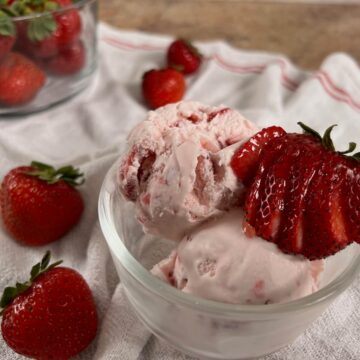
Summertime is when berries are at their sweetest and most abundant. I love using them in recipes like Fresh Strawberry Ice Cream, Fresh Blueberry Pie, and Strawberry Mint Sorbet. Combining them creates something even better, as in my Mixed Berry Crisp and Strawberry Blueberry Shortcake.
Another way to preserve the flavor of ripe summer berries is to make a mixed berry jam. Sweet blueberries, bright raspberries, juicy strawberries, and rich blackberries come together in a jam that's more flavorful than any single berry alone.
Have berries that are getting a little soft? They're perfect for jam. Frozen berries work beautifully too - just thaw and drain them first so excess liquid doesn't keep the jam from thickening.
Making a small batch means you can capture that fresh-picked flavor without buying bushels of fruit or spending the afternoon canning. There's no giant pot bubbling away on the stove, no water-bath canner to haul out, and no pantry shelves to fill with jars. Instead you get just about a cup of bright, homemade jam ready for breakfast, baking, or gifting.
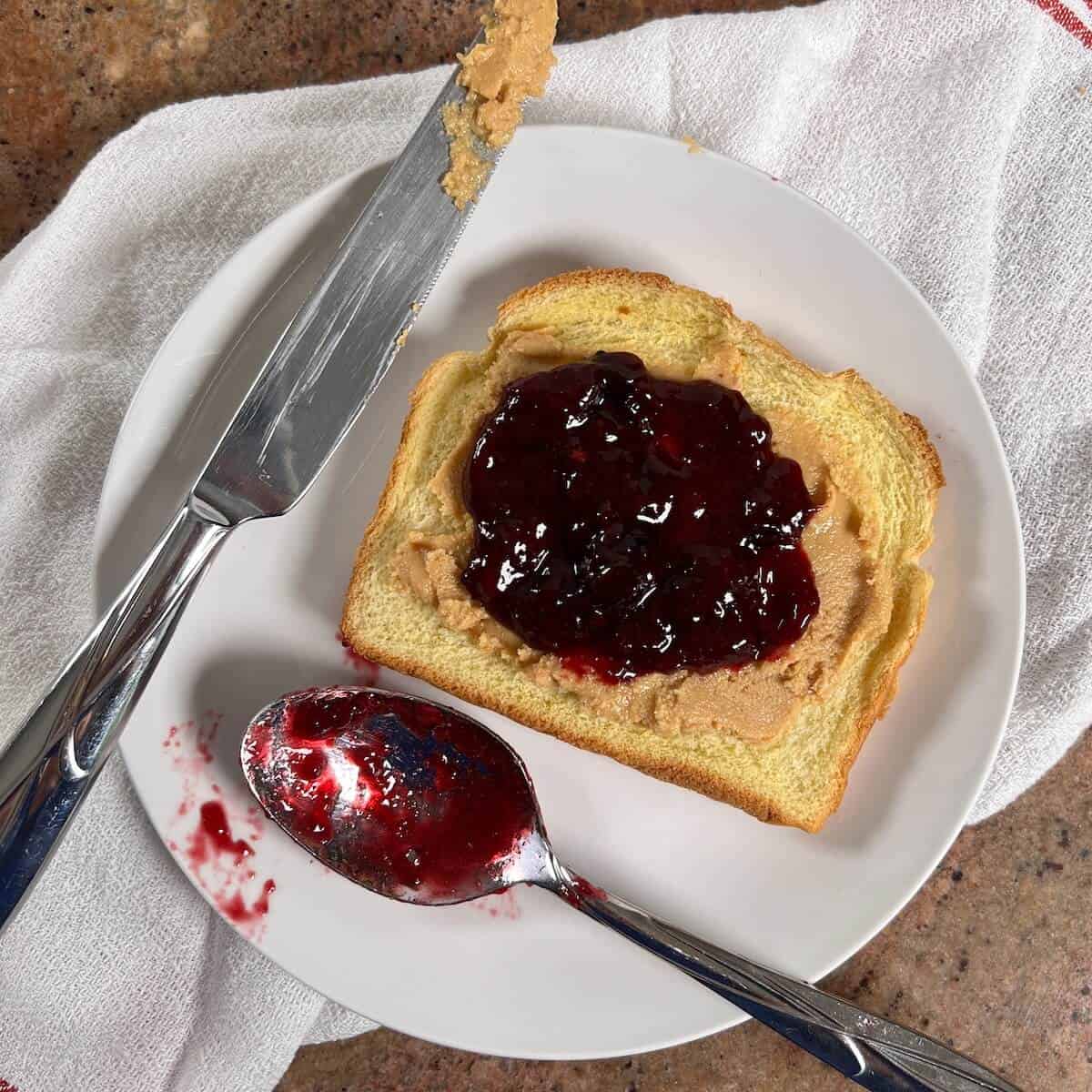
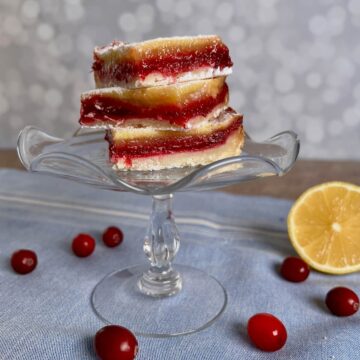
You can use this delicious berry jam on toast, scones, and peanut butter and jelly sandwiches, or use it to make fruit bars (like Cranberry Lemon Bars), tarts (like Bakewell Tarts), trifles, and even babka. You can even package it up as a gift for someone special!
Make homemade mixed berry jam and preserve that fresh taste of summer!
Refrigerator jam vs canned jam
Traditional canned jam is processed in a boiling water bath to create a vacuum seal that makes it shelf stable. Refrigerator jam skips that step, so instead of storing it in the pantry, you'll keep it in the refrigerator or freezer until you're ready to enjoy it.
Here's a quick way to look at it:
| Small Batch Refrigerator Jam | Traditional Canned Jam |
| Makes about 1 cup | Makes several jars |
| No water-bath canning | Requires approved canning process |
| Stores in refrigerator or freezer | Shelf stable when canned |
| Ready in about an hour | Longer preparation |
What's the difference between fruit jam and fruit butter?
While both fruit jam and fruit butter are spreadable mixtures of fruit cooked with sugar, the difference lies with how they are cooked. A homemade fruit jam is cooked to a temperature that allows the fruit to release it's pectin, jelling the mixture. In contrast, homemade fruit butter is cooked so that it's continually stirred as water evaporates, thickening to a spreadable consistency.
Recipe ingredients
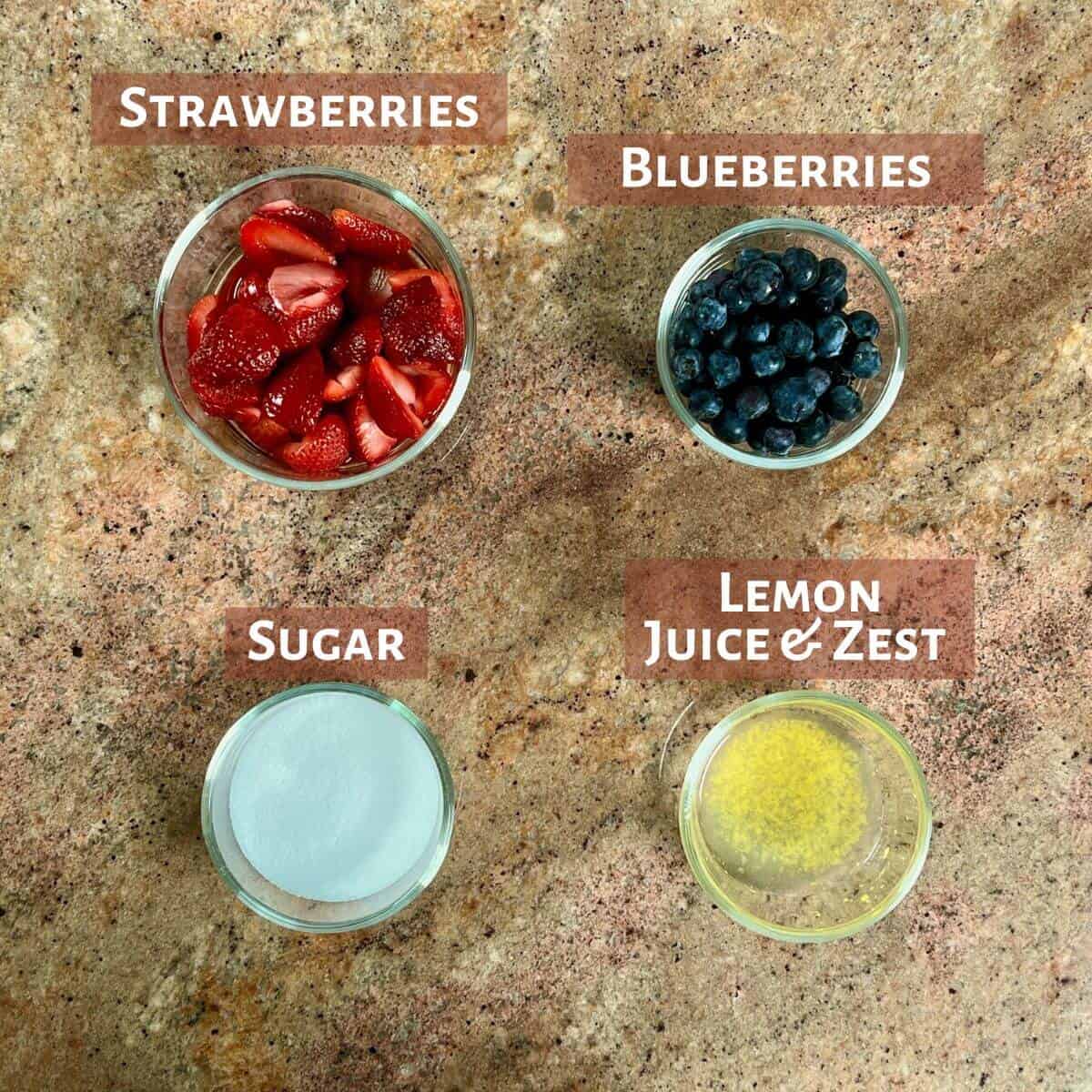
You'll need the following ingredients to make this small batch berry jam recipe:
Ingredient Notes
Homemade jam made without pectin is also called refrigerator jam. It's simply fruit boiled with sugar and a gel catalyst (in this case, lemon juice). It's a similar process to making fresh cranberry sauce.
Mixed Berries: You can use any 1-pound (454-gram) combination of berries you like, such as raspberries, blueberries, strawberries, and blackberries. Fresh is best, but you can also use frozen berries as well - just let them thaw and drain before cooking. If the fruit is too watery, it will take longer for the jam to set.
Berries naturally contain pectin, although some (like blueberries and blackberries) contain more than others. Combined with sugar and lemon juice, that natural pectin helps the jam thicken without needing commercial pectin.
Sugar: While it complements the berries' natural sweetness, sugar also mixes with the liquid released from the fruit to make a simple syrup (like when making homemade chocolate syrup) that helps contribute to firming up the jam.
Lemon Juice & Zest: In addition to adding flavor, the lemon's acidity helps the natural pectin released from the fruit to set. This is what gives the mixture a jammy consistency.
See the recipe card for a full list of ingredients and measurements.
Using stone fruits for small batch jam
Stone fruits (like peaches, nectarines, and apricots) also make terrific refrigerator jam. Starting with 1 pound of fruit will yield about 12 to 14 ounces (about 340 to 400 grams) of chunks after peeling (if desired) and pitting.
Prep the fruit, then cook in the same manner as the berry jam recipe.
- Small Batch Peach Jam: Use about 4 to 5 medium-sized peaches, peeled, pitted, and cut into small chunks (check out how to peel and chop peaches for more info)
- Small Batch Apricot Jam: Use about 10 to 12 apricots, peeled or unpeeled (I don't bother to peel apricots as the peels just melt into the jam). Slice in half, pit, then cut into quarters
How to make small batch berry jam
Step 1: Combine the berries
If you're using strawberries, hull and cut them into chunks (see how to hull and chop strawberries for more info).
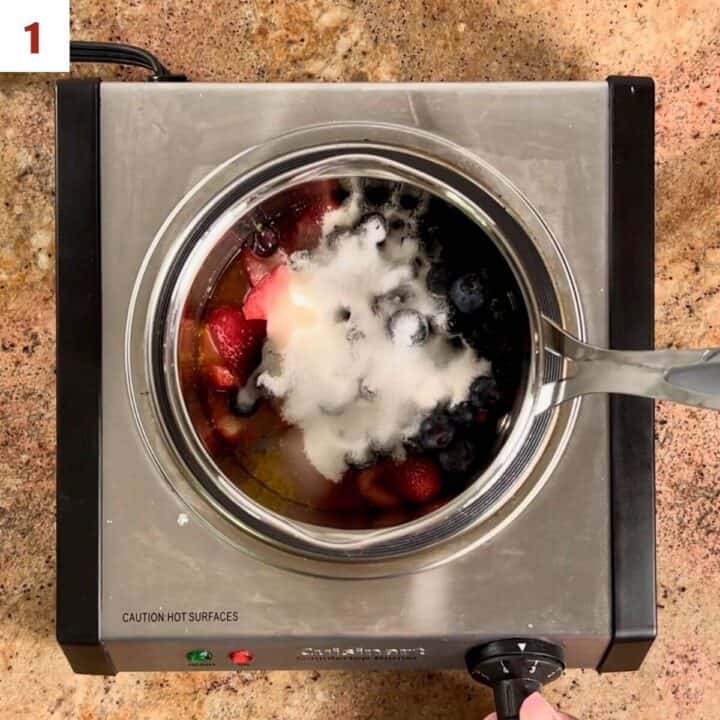
Place all the berries in a small saucepan and stir in the sugar. Stir in the lemon juice and zest to the berry mixture (photo 1).
Step 2: Cook the berry mixture
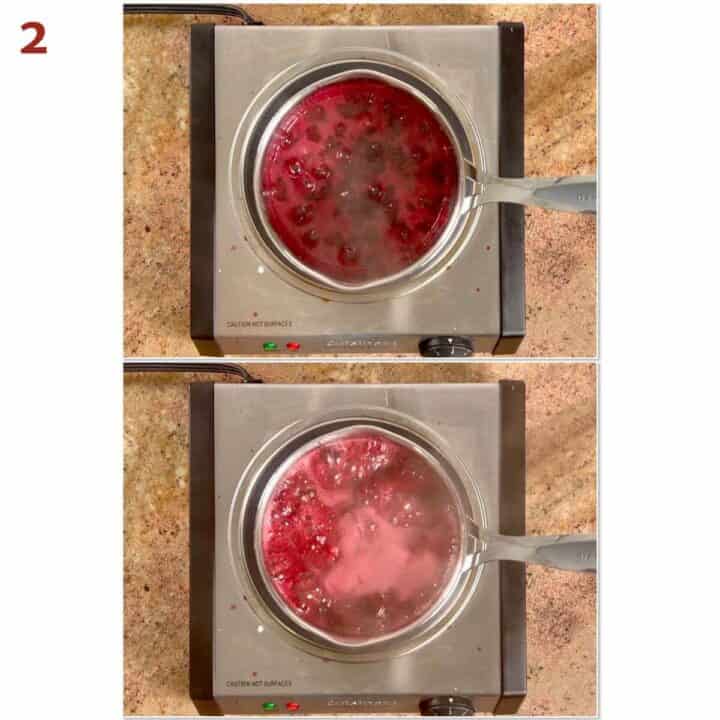
Bring the mixture to a boil over medium-low heat, stirring frequently, until the sugar is dissolved.
Keep the mixture at a rolling boil, stirring occasionally, to keep the mixture from bubbling up (photo 2).
If desired, mash the berries as they cook using a potato masher or a spoon.
Cook the mixture for about 15 to 20 minutes, or until it starts thickening (the amount of time will be based on how juicy the berries are).
How does jam thicken without pectin?
As the berries cook, water evaporates while their natural pectin works with sugar and lemon juice to create a spreadable jam. As the mixture cools, it continues to thicken into its final consistency.
Step 3: Test for doneness
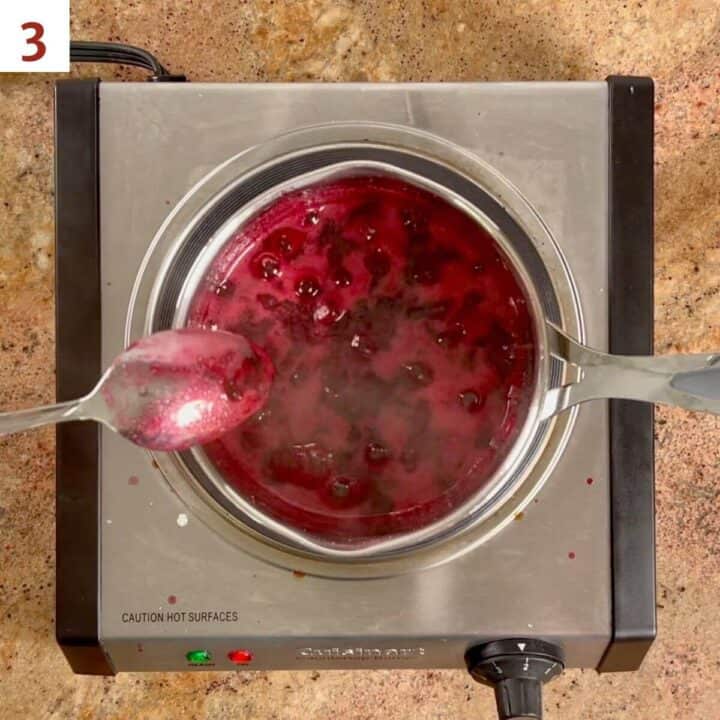
There are two ways you can see if the jam is done (photo 3.
One way is to use a digital thermometer to see if the jam has reached 218 to 221 °F (103 to 105˚C).
The other is to test the jam's thickness by seeing if it forms a gel on the back of a cool metal spoon (see below for more).
How to tell if the jam will set without a thermometer
Perhaps the hardest part about making a homemade fruit jam is how to tell if the jam will gel. Not cooking the jam base long enough gives you a soft, runny mixture. Cook the base too long, and the mixture becomes stiff and gelatinous. Neither scenario is what we're looking for.
Luckily there is a simple spoon test we can use from Epicurious: Dip a cool metal spoon into the hot fruit. Immediately lift it out and away from the steam and turn it horizontally. At the beginning of the cooking process, the liquid will drip off in light, syrupy drops. Trying again a minute or two later, the drops will be heavier. The jam is done when the drops are very thick and two run together before falling off the spoon. No more guesswork needed!
Step 4: Cool the jam
Remove the jam from the heat and adjust the sweetness if desired, keeping in mind that chilling dulls the overall sweetness level. Adjust the texture, if desired.
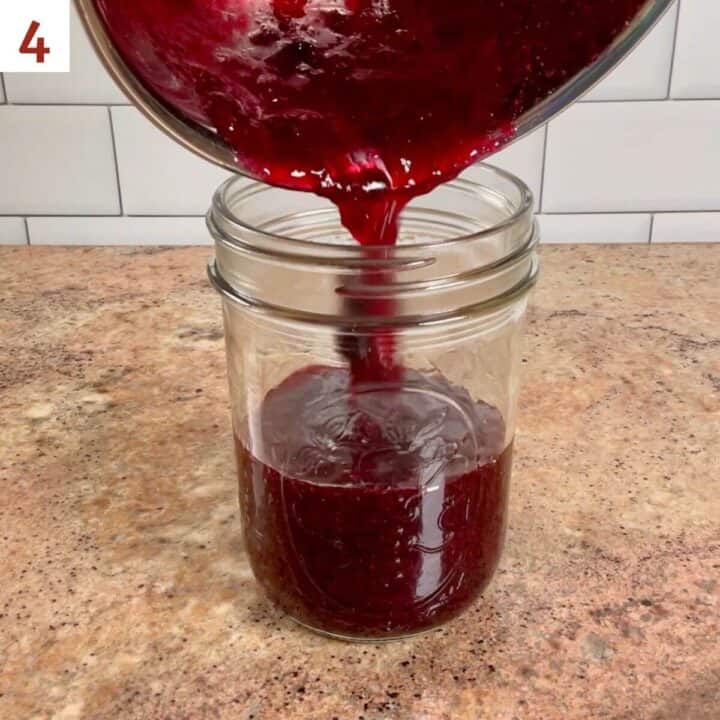
Pour into a clean pint jar with a tight fitting lid (photo 4).
Allow the jam to cool to room temperature, about 30 minutes (and no more than 2 hours for food safety reasons). Transfer the jam to the refrigerator to cool completely.
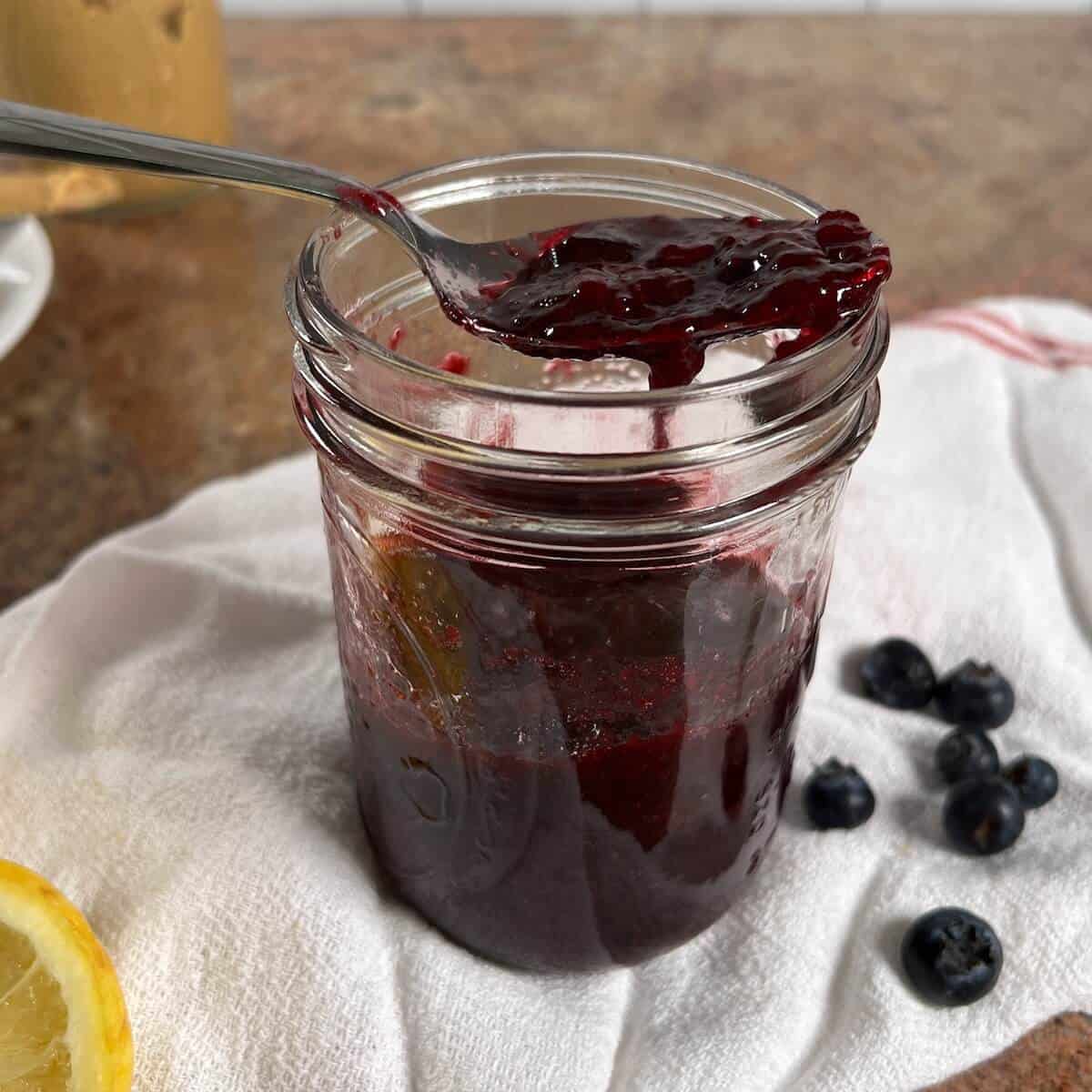
The jam will thicken as it cools.
Berry jam texture variations
This homemade berry jam will be a bit chunky even if you've mashed the fruit during cooking. Here are two ways to alter the jam's texture:
- If you want a smoother texture, use a food mill (using the coarse milling disc) or an immersion blender to smooth out the jam.
- If you want seedless jam, use a food mill (using the fine milling disc) or a fine mesh strainer to strain the hot jam.
Storage instructions
Storage instructions: Small batch berry jam made without pectin will keep in the refrigerator for about 2 to 3 weeks.
To freeze refrigerator jam, make sure to leave enough room at the top of the jar to allow the jam to expand. It will keep in the freezer for up to 3 months. Thaw in the refrigerator for at least 2 hours before using.
Yield Notes
This recipe makes about 1 cup of refrigerator berry jam.
Homemade jam troubleshooting tips
Even with the best of intentions, things can go wrong:
- Jam is too runny: Make sure you test for doneness before removing it from the heat. Cook it a few minutes longer and test again. It should reach 218 to 221°F, or form thick drops that run together on a chilled spoon.
- Jam is too thick: You may have either overcooked it or used a little too much sugar. Either way, you can add water in one tablespoon increments to loosen it up a bit.
- Jam tastes too tart: Add a little more sugar while the jam is still warm, remembering that cold dulls sweetness.
- Jam tastes too sweet: Add a small squeeze of lemon juice to brighten the flavor.
- Frozen berries made the jam watery: Thaw and drain frozen berries before cooking, then simmer a bit longer if needed.
- Jam is too chunky: Mash the berries as they cook, or use an immersion blender before transferring to the jar.
- Seeds are getting in the way: Strain the hot jam through a fine mesh strainer for a smoother, seedless version.
Questions asked and answered
Here are some questions you might have...
Sugar does more than sweeten the jam. It also helps draw moisture from the fruit and works with the berries' natural pectin to create the proper consistency. You can reduce it slightly, but reducing it too much may produce a softer jam with a shorter refrigerator life.
This recipe is written as refrigerator jam, not a tested canning recipe. Store it in the refrigerator for 2 to 3 weeks or freeze it for up to 3 months.
Didn't find the answer you're looking for?
Ask AI to answer for this specific recipe:
Disclaimer: I am not responsible for the quality of AI information

I hope you like this recipe! Let me know if you have any questions, and don't forget to leave a comment and rating. Thanks!
Slainté! L'chaim! Cheers!
- Tammy
More recipes featuring fruit to try
Recipe
Small Batch Mixed Berry Jam (No Pectin)
Equipment
- 1-quart saucepan
- food mill immersion blender, or fine mesh strainer (optional)
Ingredients
- 1 pound mixed berries, fresh or frozen, see Recipe Notes
- ½ cup granulated sugar, plus more as needed
- 1 lemon, zested and juiced
Instructions
- Prep the berries: If you're using strawberries, hull and cut them into chunks. Place 1 pound mixed berries in a small saucepan and stir in ½ cup granulated sugar.
- Zest and juice 1 lemon. Depending on its size, you'll have about 2½ tablespoons of juice and ½ teaspoon of zest. Stir in the lemon juice and zest to the berry mixture.
- Cook the berries: Bring the mixture to a boil over medium-low heat, stirring frequently, until the sugar is dissolved. Keep the mixture at a rolling boil, stirring occasionally, to keep the mixture from bubbling up.If desired, mash the berries as they cook using a potato masher or spoon.
- Cook the mixture for about 15 to 20 minutes, or until it starts thickening (the amount of time will be based on how juicy the berries are).
- Test for doneness: There are two ways you can see if the jam is done. One way is to use a digital thermometer to see if the jam has reached 218 to 221 °F. The other is to test the jam's thickness by seeing if it forms a gel on the back of a cool metal spoon (see the Recipe Notes for more details).
- Remove the jam from the heat and adjust the sweetness if desired, keeping in mind that chilling dulls the overall sweetness level.
- Adjust the jam's texture (optional): This homemade berry jam will be a bit chunky even if you've mashed the fruit during cooking. For a smoother jam texture: Use a food mill (using the coarse milling disc) or an immersion blender to smooth out the jam. For seedless jam: Use a food mill (using the fine milling disc) or a fine mesh strainer to strain the hot jam.
- Pour the jam into a clean pint jar with a tight fitting lid. Allow the jam to cool to room temperature, about 30 minutes (and no more than 2 hours for food safety reasons). Transfer the jam to the refrigerator to cool completely. The jam will thicken as it cools.
- Storage instructions: Small batch berry jam made without pectin will keep in the refrigerator for about 2 to 3 weeks. To freeze, make sure to leave enough room at the top of the jar to allow the jam to expand. It will keep in the freezer for up to 3 months. Thaw in the refrigerator for at least 2 hours before using.
- This recipe makes about 1 cup of homemade berry jam.



Elizabeth says
Have you ever done this in a crockpot?
Tammy Spencer says
Hi Elizabeth, that’s an interesting question. I haven’t tried making the jam in a crockpot, mainly because I’m only using 1 pound of berries (too small an amount for the large crockpot that I own) and it doesn’t take long to cook it down. Also, you want the keep the mixture at a low boil so the water boils away, and I don’t know if a crockpot can do that. If you try it, please let me know how it goes!
Tammy Spencer says
I enjoyed creating this recipe for you, and I hope you like it as much as I do. Please leave your questions or comments with a star rating so that other readers can benefit from your experience. Thanks!