

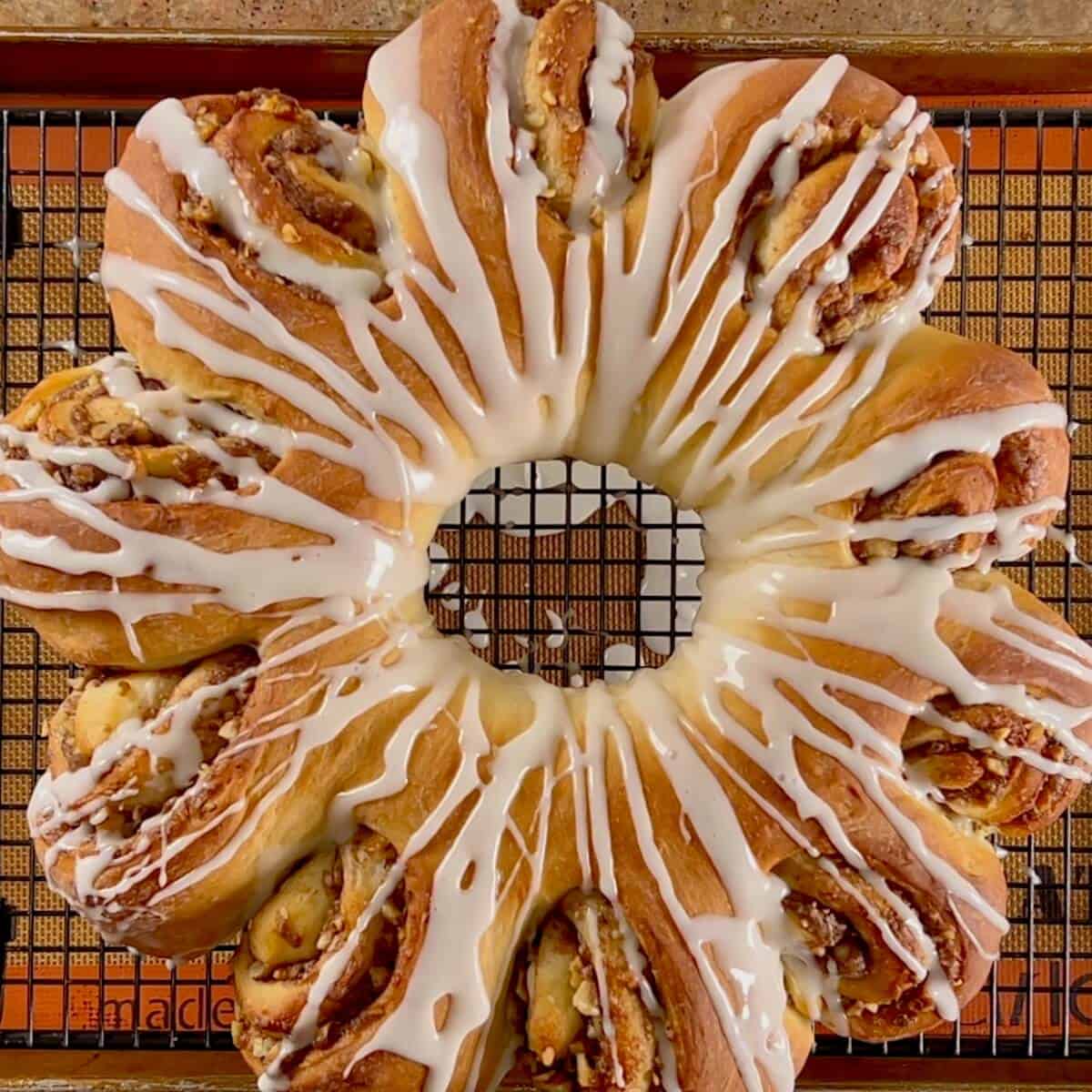
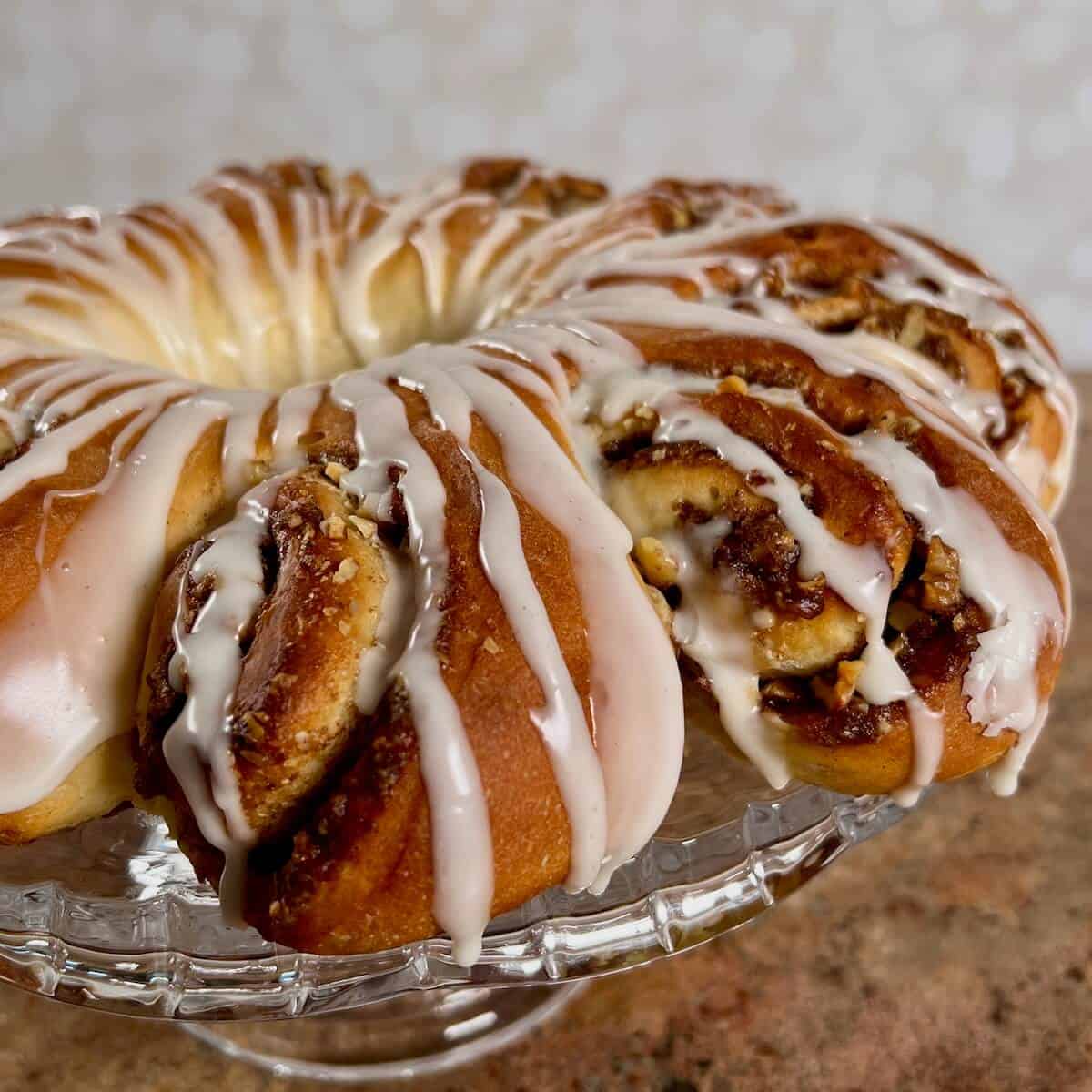
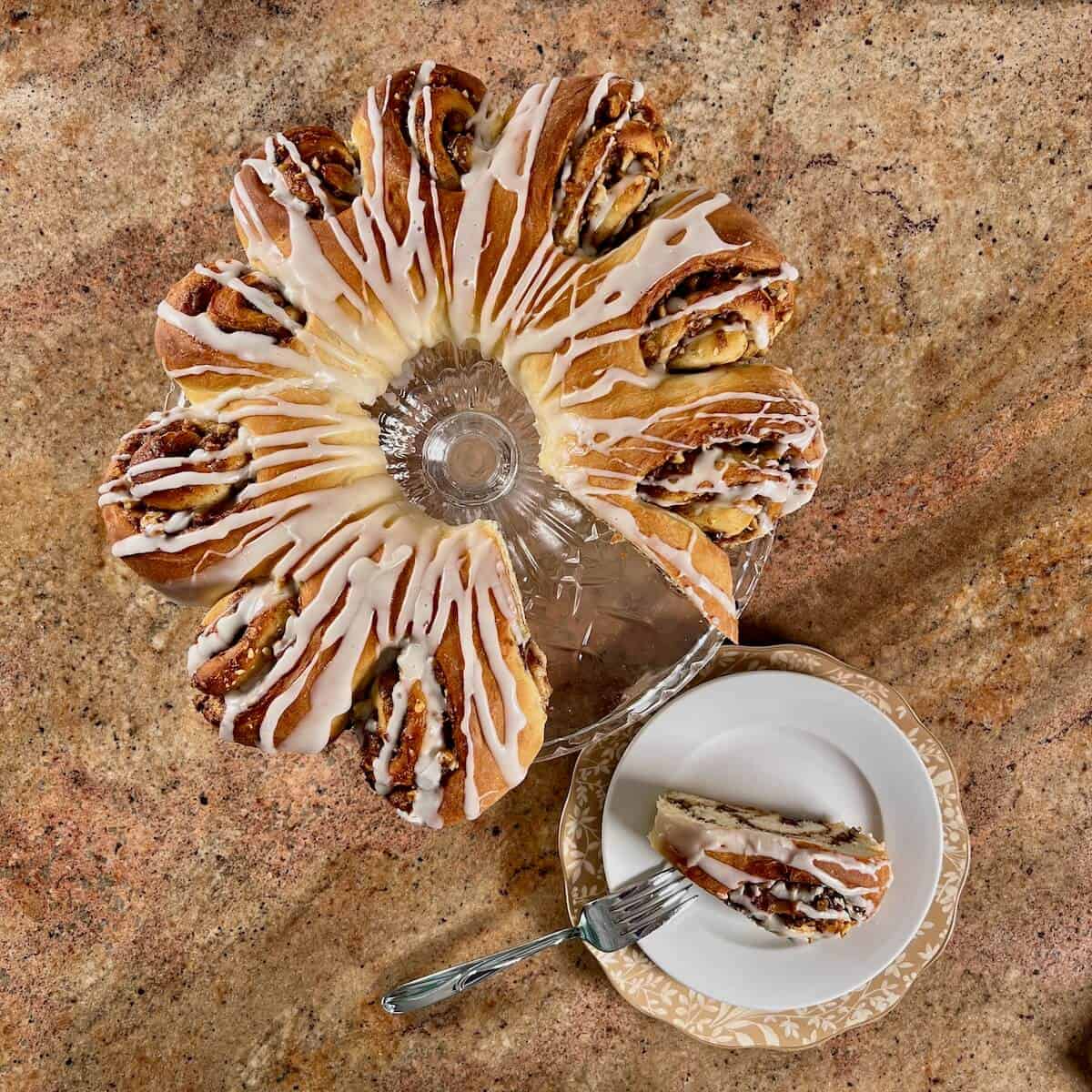
Warm and fragrant, this festive wreath-shaped Swedish Tea Ring (a Scandinavian-style cinnamon tea ring) is a soft coffee bread filled with cinnamon, cardamom, and walnuts. The tangzhong method keeps the dough especially tender and fresh for days. Perfect for brunch or holiday mornings, this elegant and customizable tea ring delivers big flavor using a surprisingly simple technique!
Jump to:
- Quick Recipe Summary ✨
- Why this recipe works
- What is the tangzhong method?
- Recipe ingredients
- Tea Ring flavor variations
- How to make a Swedish Tea Ring
- Storage and make-ahead instructions
- Troubleshooting your tea ring
- What to serve with a Swedish Tea Ring
- Questions asked and answered
- More shaped bread recipes to try
- Recipe
- Comments
Quick Recipe Summary ✨
Swedish Tea Ring (Tangzhong Method): A soft, enriched coffee bread shaped into a festive ring and filled with cinnamon, cardamom, and walnuts. Think cinnamon rolls in a beautiful wreath, perfect for brunch or holiday mornings.
Tangzhong technique: A quick cooked flour-and-milk paste keeps the bread extra soft, fluffy, and fresh for days.
Classic Scandinavian flavor: Warm cinnamon and cardamom with crunchy walnuts, finished with a simple vanilla icing drizzle.
Easy to customize: Swap the nuts, try different spice blends, or flavor the icing with almond or citrus extracts.
Active Time: About 35 minutes • Rise Time: About 2 hours • Bake Time: About 25 minutes • Total Time: About 3 hours ⏱️
Difficulty Level: ⭐⭐⭐ Medium. Enriched yeast dough with simple shaping.
Yield: 1 tea ring (about 10 to 12 servings) • Make-ahead: Shape and refrigerate overnight • Freezer-friendly: Up to 4 months
👉 Follow the detailed steps below to make a soft, bakery-style Swedish Tea Ring with beautiful spirals and cozy spiced flavor every time.
SUMMARIZE & SAVE THIS CONTENT ON
Why this recipe works
- Tangzhong keeps the bread softer longer: The pre-cooked flour paste helps the dough hold more moisture for a tender crumb that stays fresh for days.
- Soft, easy-to-handle dough: The enriched dough is supple and forgiving, making shaping the ring simple.
- Balanced sweetness: The dough isn't overly sweet, so the cinnamon, cardamom, and walnuts shine.
- Impressive but simple: The pretty ring shape looks fancy, but it's just a rolled dough with a few easy snips and twists.
Are you looking for an impressive pastry to serve for brunch? Look no further than this delicious Swedish Tea Ring!
What is a Swedish Tea Ring, you might ask? It's a soft Scandinavian coffee bread filled with cinnamon, cardamom, and nuts, shaped into a wreath (also called a couronne). The dough is filled and rolled like cinnamon rolls, then the log is formed into a circle and sliced so the spiral filling shows, making it a beautiful wreath-shaped bread for brunch or holidays.
It's commonly served for holiday breakfasts or Scandinavian coffee breaks called fika, when sweet breads and coffee are shared with friends.
I've adapted this recipe to use the tangzhong method which helps keep the finished bread softer and fresher longer. It's a simple extra step that makes a big difference.
The bread itself isn't overly sweet, letting the cinnamon and cardamom create that classic Scandinavian cardamom coffee bread flavor. And a drizzle of vanilla icing just adds to the festivities! You can also alter the filling to suit your taste.
For a less-stressful morning, make the Swedish Tea Ring the day before, then bake it in the morning. It's the perfect make-ahead brunch bread.
Like a babka (especially a Chocolate Babka or Cranberry Cinnamon Swirl Bread), this shaped bread ring is perfect for Christmas brunch, Easter brunch, Mother's Day, Father's Day, or whatever day you deem special!
What is the tangzhong method?
This version of a Swedish Tea Ring uses the tangzhong method, the same technique used in tangzhong cinnamon roll dough and Asian milk breads to keep the crumb soft and fluffy.
The tangzhong method is a technique used in yeast bread recipes where a small amount of flour and liquid are cooked into a paste before adding the remaining dough ingredients. This technique was popularized by Yvonne Chen, a Taiwanese cookbook author.
How tangzhong works
Heating the paste mixture causes the starches in the flour to gelatinize, meaning they absorb and hold onto more water than raw flour can.
That extra water retention is the key, allowing the dough to retain more moisture without becoming sticky or difficult to handle. When the dough is baked, the resulting bread turns out softer, fluffier, and stays fresh longer because the moisture is locked into the crumb instead of evaporating quickly.
In short, cooking a small flour paste for the dough produces a tender, bakery-style texture. It's that simple!
Recipe ingredients
You'll need the following ingredients to make this Swedish Tea Ring recipe:
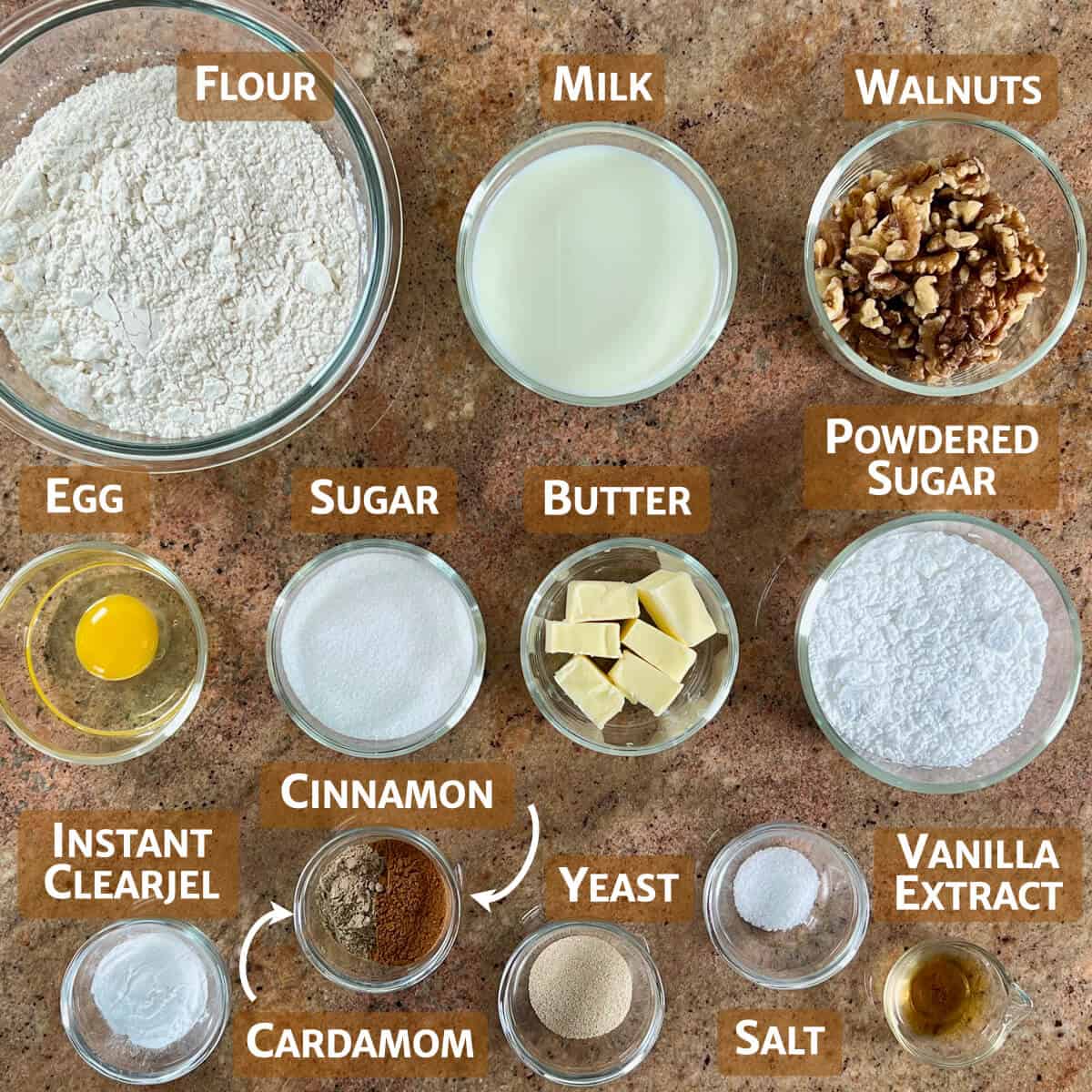
Ingredient Notes
Flour: The best way to ensure success is to weigh your flour using a kitchen scale. This makes sure that you won't have too much or too little flour in your dough,
which affects the texture of the finished bread. If you don't have a kitchen scale available, measure the flour by gently spooning it into a cup, then sweeping off any excess.
Milk: For the dough, you can use any type of milk you want - its purpose is to soften the finished bread (along with the tangzhong paste).
When making the icing, the more fat in the liquid, the thicker the consistency will be. I use half and half (not pictured above) because it makes a nice thick drizzle that hardens well. If you use a lower fat milk, then you might have to add more powdered sugar to get the right consistency.
Walnuts: Measure the walnuts before chopping them, if possible, so that you don't use too much in the filling.
Cardamom: We're using a combination of cinnamon and cardamom to spice this Swedish Tea Ring. Cardamom has an herbal, citrusy, and sweet flavor, and is widely used in Scandinavian and Indian cuisines.
Instant ClearJel: The Instant ClearJel is used to keep the filling from seeping out during baking (it's especially useful to help thicken the filling in fruit pies). It isn't strictly necessary, just helpful.
See the recipe card for a full list of ingredients and measurements.
Tea Ring flavor variations
While this classic Swedish Tea Ring uses cinnamon, cardamom, and walnuts, The flavor possibilities are endless. Here are some examples:
- Fruit combinations: Orange Cranberry or Apple Cinnamon
- Nut and chocolate options: Almonds with almond paste or Chocolate Hazelnut
You can also customize the spices, mix-ins, and icing flavor.
Spices blends: Instead of the cinnamon and cardamom, use your favorite spice blend. Here are some suggestions (the makeup of the various spice blends can vary, of course):
- Pumpkin spice: Cinnamon, ginger, nutmeg, and allspice
- Chai: Cinnamon, nutmeg, ginger, cloves, and black pepper
- Speculaas: Cinnamon, nutmeg, cloves, ginger, and cardamom
Mix-ins: Swap or combine the walnuts with pecans, almonds, mini chocolate chips, or dried fruit.
Icing flavorings: Vanilla extract is classic, but almond extract is lovely and buttery, or Fiori di Sicilia (orange-vanilla extract) adds a lovely citrus note. If you're using another extract, reduce the amount by ¼ to ½ since they're stronger than vanilla.
How to make a Swedish Tea Ring
The timeline to make this coffee bread is similar to most shaped enriched bread doughs (like a challah), with the addition of making the tangzhong paste:
- Make the tangzhong: 3 minutes
- Mix the dough: 10 minutes
- First rise: 1 hour
- Shape the dough: 15 minutes
- Second rise: 45 minutes
- Bake: 25 minutes
- Glaze the ring: 5 minutes
Let's get started!
Step 1: Make the tangzhong paste
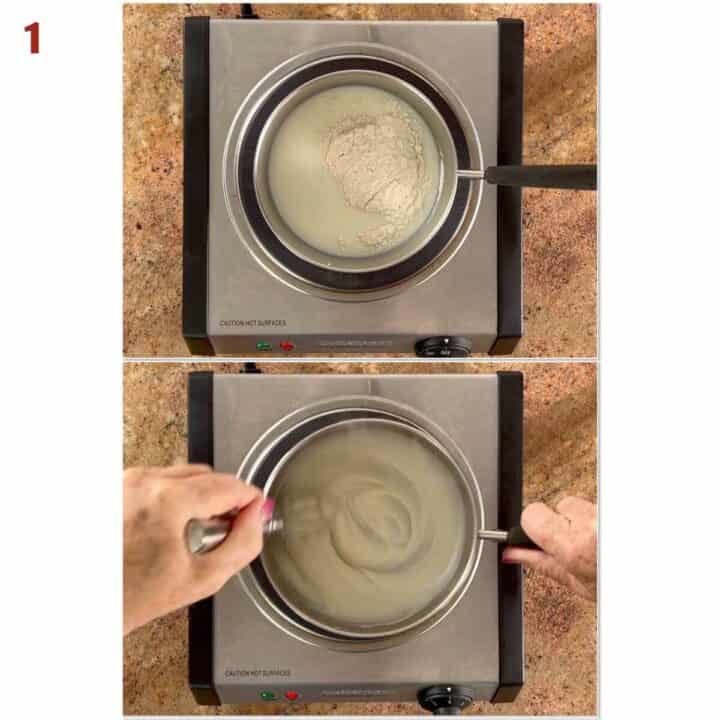
In a small saucepan, whisk together 3 tablespoons (23 grams) of the flour and ½ cup (120 grams) of the milk until smooth.
Cook the paste over medium heat, whisking constantly, until it has thickened (the whisk will leave a trail), about 2 to 3 minutes.
Remove from heat and whisk again to make sure the mixture is smooth (photo 1). Allow the paste to cool for 10 minutes.
Step 2: Make the dough
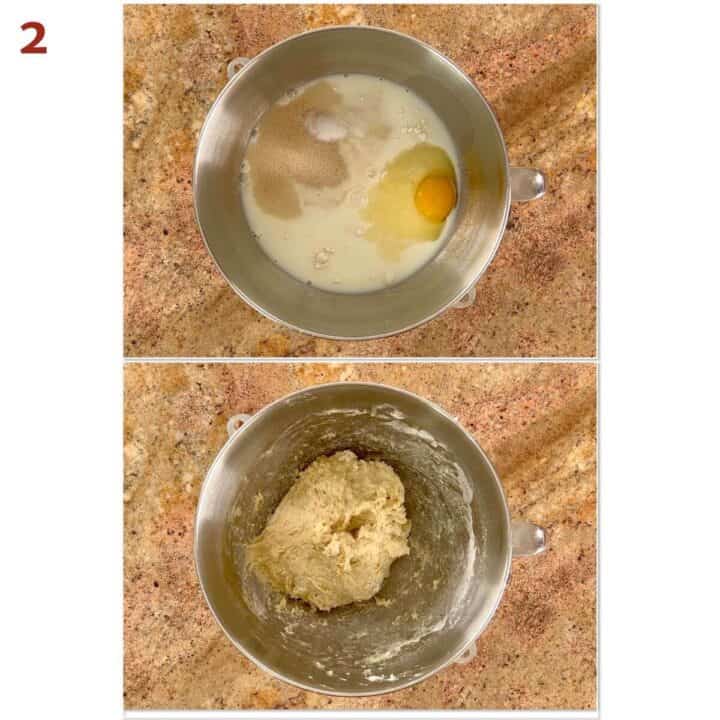
In the bowl of a stand mixer fitted with a dough hook (or in a bread machine or by hand), combine the remaining flour, remaining milk, cooled paste, sugar, egg, yeast, and salt. Mix until a rough dough forms (photo 2).
How the dough should feel
A properly kneaded dough should be soft, slightly tacky, and elastic. When stretched, it should pass the windowpane test, forming a thin translucent sheet without tearing. If the dough feels stiff or dry, it likely needs more kneading rather than more flour.
You might be tempted to add more flour during kneading, but you don't want to over-flour the dough. If you decide to add a little flour while kneading, do so sparingly - adding too much flour will cause the tea ring to have a tough, dry texture.
Let the dough rest, covered, for 20 minutes (this will give the flour a chance to absorb the liquid, making it easier to knead), then knead the dough to form a soft, smooth dough.
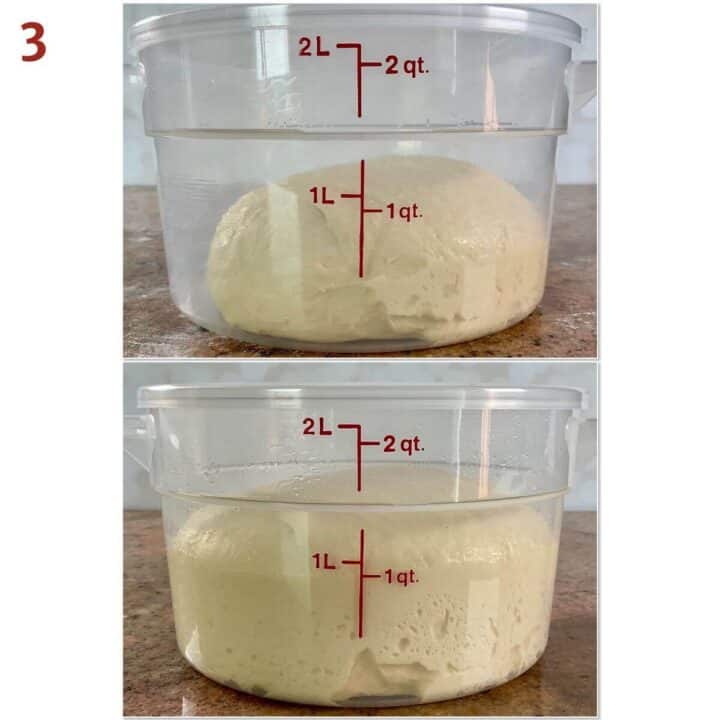
Place the dough in a large bowl sprayed with canola oil spray (you many need a bowl scraper to get the dough out of the bowl). Cover and let the dough rise in a warm place for 1 hour (photo 3). The oven with just the light turned on works well.
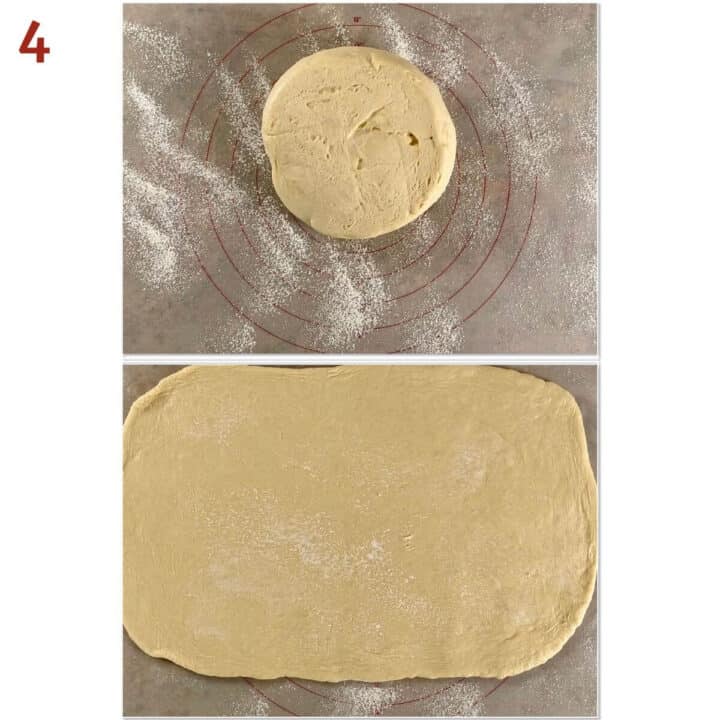
Transfer the dough to a lightly greased work surface, and roll it into a 12- x 18-inch rectangle (photo 4). Since the dough is sticky, you can cover the surface with plastic wrap to keep the rolling pin from sticking during rolling.
Step 3: Make the filling
Chop the walnuts into medium-sized pieces and set aside.
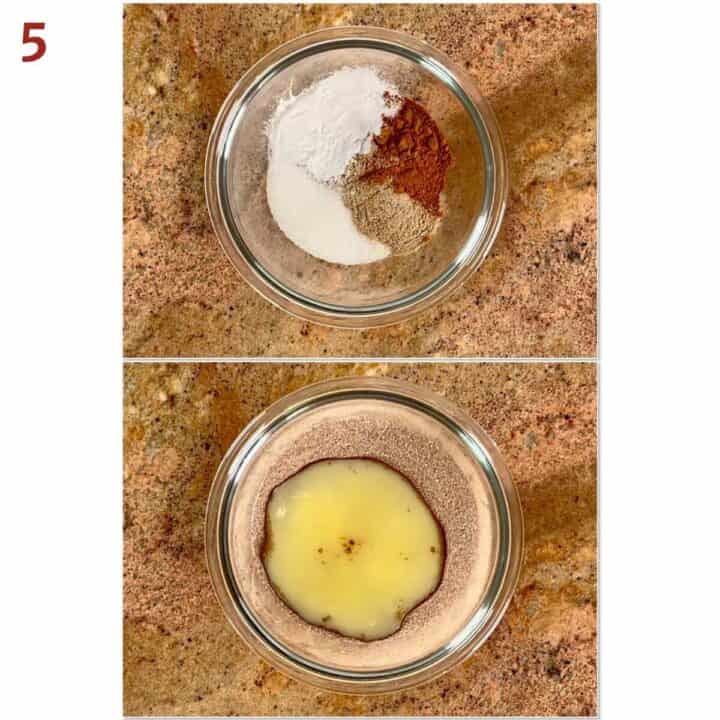
In a medium bowl, whisk together the sugar, cinnamon, cardamom, and Instant ClearJel (if using), then stir in the melted butter (photo 5).
Step 4: Assemble the tea ring
This wreath-shaped bread looks fancy, but the shaping is surprisingly simple.
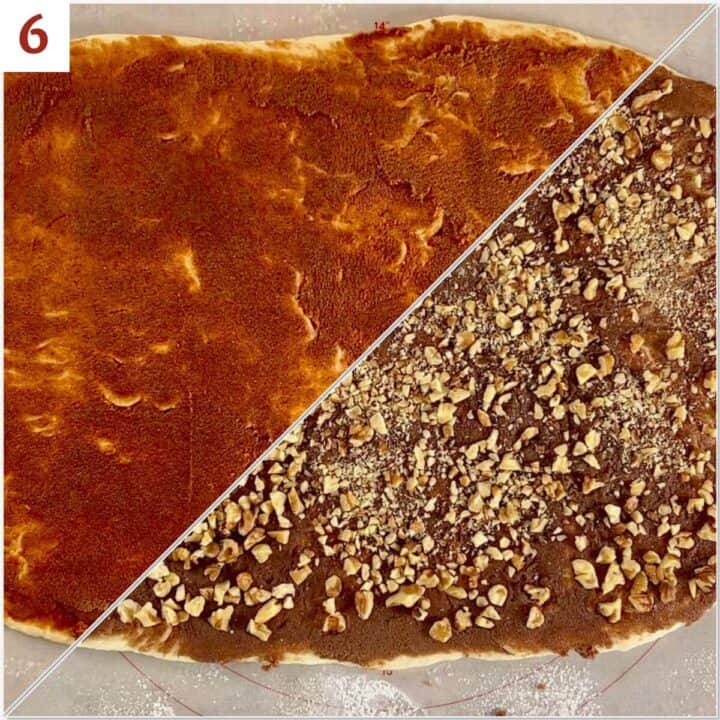
Using a small offset spatula, spread the filling evenly over the dough, then top with the walnuts (photo 6).
Line a half sheet baking pan with a Silpat silicone mat or parchment paper.
Starting with one long side, roll the dough into a log. Pinch the edges together to form it into a ring,
pinching the ends together firmly (photo 7).
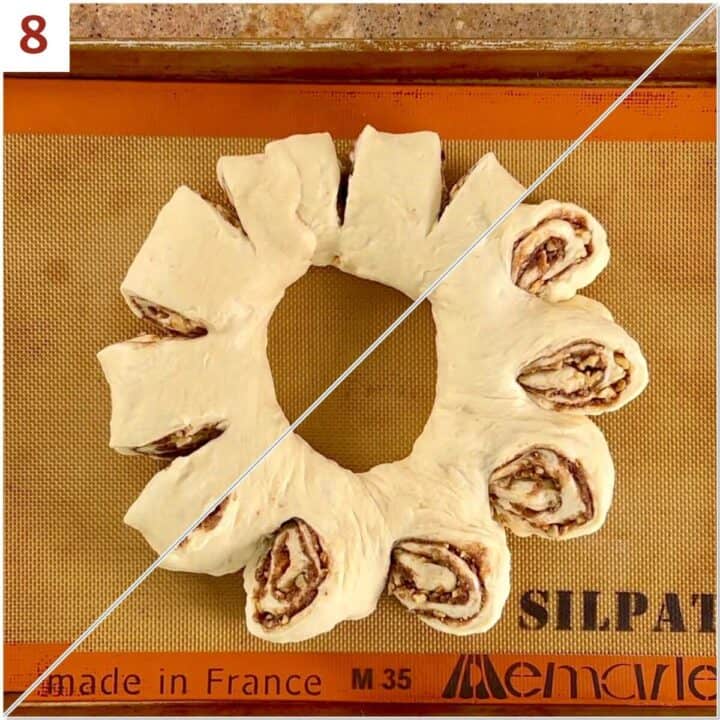
Transfer the ring onto the prepared baking pan, reshaping it into a circle.
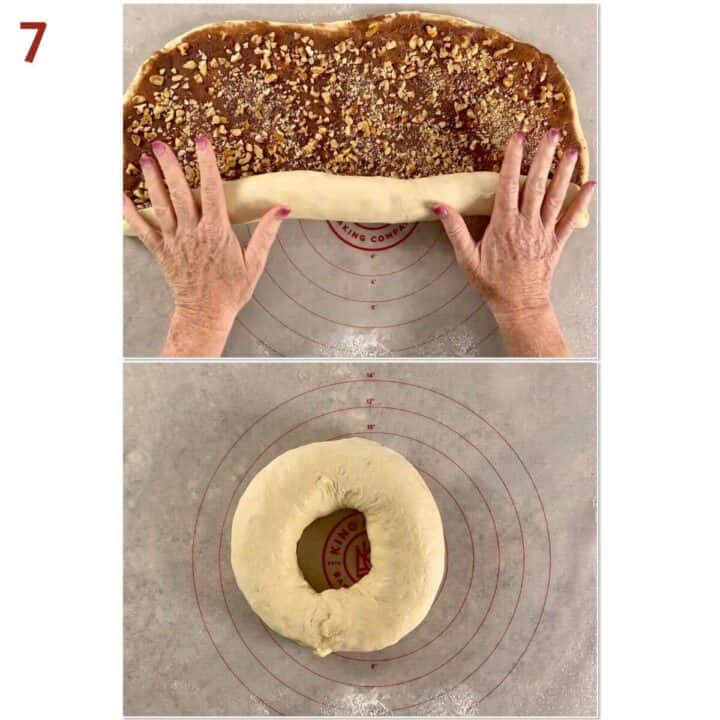
Using a pair of kitchen shears, make cuts two-thirds of the way into the edge of the ring at 2-inch intervals (you should get 11 cuts total). Twist each cut section onto its side to expose the spiral (photo 8).
Make-ahead break
You can make and shape the ring (stopping after Step 4), then cover and let it rise in the refrigerator overnight. Just make sure to spray the plastic wrap well so it doesn't stick to your risen tea ring in the morning. The next morning, allow the dough to come to room temperature while you preheat the oven, then bake normally.
Step 5: Bake the tea ring
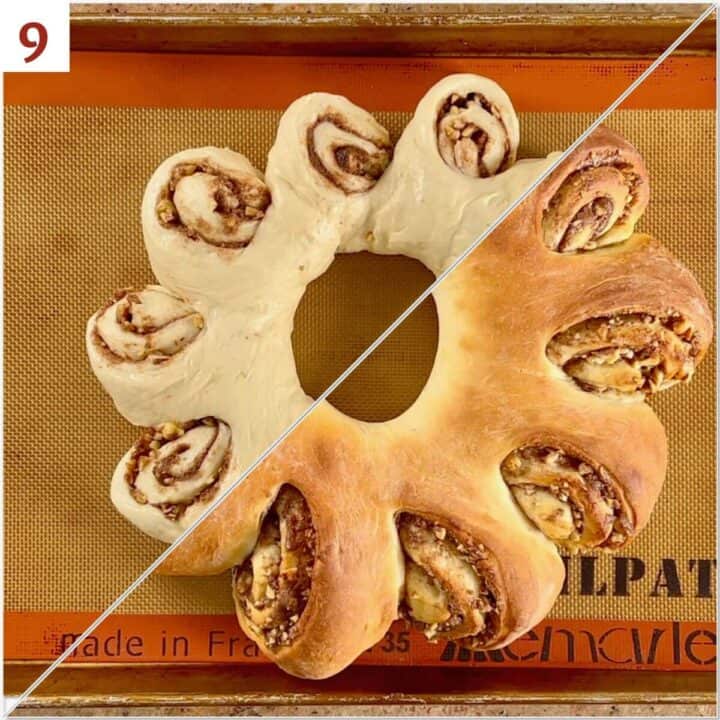
Cover the dough with plastic wrap (sprayed with canola oil spray to keep it from sticking) and let it rise for 30 to 45 minutes, or until the ring is puffy. Meanwhile, preheat the oven to 350°F.
Bake the ring for about 25 minutes, until golden (photo 9). Check after 15 minutes to see if it's browning too quickly - if so, cover the ring with aluminum foil.
How to tell when the tea ring is fully baked
You'll know the bread is done when it's golden brown and sounds slightly hollow when tapped. If you use a digital thermometer, the center should read about 190 to 195°F (88 to 90°C).
Step 6: Make the icing
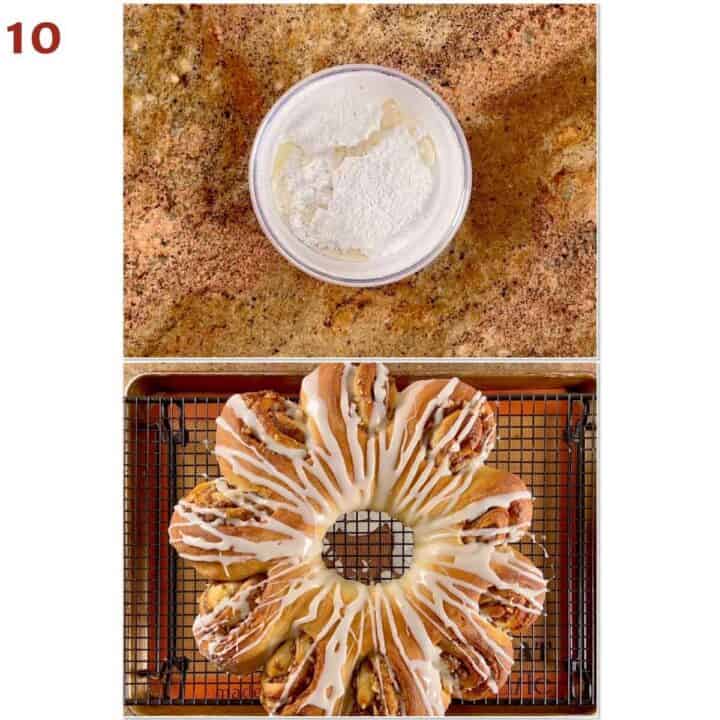
Mix together all of the icing ingredients, adding more powdered sugar or liquid in 1 teaspoon increments, if necessary. You want the mixture to have a smooth and thick texture that leaves a trail when drizzled back in to the bowl.
Drizzle the icing over the warm tea ring and allow to dry before serving (photo 10). Serve slightly warm with coffee or tea.
Storage and make-ahead instructions
Storage instructions: This Swedish Tea Ring can be stored in an airtight container for up to 5 to 7 days.
Make-ahead instructions: An unglazed ring can be frozen for up to 4 months, tightly wrapped in plastic wrap and stored in an airtight bag. Defrost at room temperature before topping with the icing.
Troubleshooting your tea ring
Here are some tips to help if you run into trouble when making your ring:
- Ring opens while baking: Make sure the ends of the dough log are pinched together firmly when forming the ring. If needed, moisten the seam with a little water so it seals well.
- Uneven twisting: Try to keep the cuts spaced evenly around the ring. After cutting, gently rotate each slice onto its side so the spiral filling faces up.
- Filling leaking out: Spread the filling evenly and leave a small border at the edge of the dough before rolling. This helps keep the filling inside while the bread bakes.
- Cuts too deep: Cut only about two-thirds of the way through the ring. Cutting all the way through can cause the sections to separate during baking.
What to serve with a Swedish Tea Ring
This tea ring pairs beautifully with:
- coffee or cardamom latte
- fresh fruit salad
- yogurt and granola
- smoked salmon brunch spread
Great for Christmas breakfast, Easter brunch, or Mother's Day.
Questions asked and answered
Here are some questions you might have...
While all three use enriched dough, they differ in shape and presentation. Cinnamon rolls are cut and baked as individual spirals, while babka is twisted before baking in a loaf pan.
In contrast, a tea ring is rolled into a log and shaped into a circle, then sliced to reveal the spiral filling. The tea ring's presentation makes it especially popular for brunch tables and holiday breakfasts.
If you want to skip making the tangzhong paste, decrease the milk to 1 cup (240 grams). Combine all the dough ingredients and knead until a soft, smooth dough forms, then proceed with the rest of the recipe.
If you want to adapt a yeast bread recipe to use this technique (like I did for this Swedish Tea Ring), you'll have to do a little math. Have your kitchen scale handy, since it's easiest to use weight rather than volume measurements in this case.
First, you'll need to calculate the dough's hydration level, the percentage of liquid compared to flour, by weight. A dough's hydration determines how stiff or soft the finished bread will be - the higher the hydration, the softer and loftier the bread.
For the tangzhong method to work, the dough needs to have at least a 75% hydration level. This is because some of the liquid will be used in the pre-cooked paste (the tangzhong) and not available to assist the dough's texture.
If the dough's hydration is less than 75%, you'll need to increase the amount of liquid in the dough. Multiply the weight of the dough by 0.75 to get the weight of liquid required. The difference between the required weight and the recipe's original weight is how much more liquid you'll need.
For a more detailed look at the conversion process, check out this blog post from King Arthur Baking.
Didn't find the answer you're looking for?
Ask AI to answer for this specific recipe:
Disclaimer: I am not responsible for the quality of AI information


I hope you like this recipe! Let me know if you have any questions, and don't forget to leave a comment and rating. Thanks!
Slainté! L'chaim! Cheers!
- Tammy
More shaped bread recipes to try


Recipe

Swedish Tea Ring Recipe (Soft Tangzhong Coffee Bread)
Equipment
Ingredients
For the dough
- 3½ cups all-purpose flour, divided, see Recipe Notes
- 1⅓ cup milk, divided, see Recipe Notes
- ¼ cup granulated sugar
- 1 large egg
- 2 teaspoons instant yeast
- ¾ teaspoon kosher salt
For the filling
- 1 cup walnuts, measured before chopping
- ½ cup granulated sugar
- 2 tablespoons ground cinnamon
- 2 teaspoons ground cardamom
- 1 tablespoon Instant ClearJel, optional, see Recipe Notes
- 6 tablespoons unsalted butter, melted
For the icing
- 1 cup powdered sugar, sifted
- 1 teaspoon pure vanilla extract
- 1 to 2 tablespoons half & half, or milk, see Recipe Notes
Instructions
- Line a half sheet baking pan with a Silpat silicone mat or parchment paper. Set aside.
- Make the tangzhong paste: In a small saucepan, whisk together 3 tablespoons (23 grams) of the 3½ cups all-purpose flour and ½ cup (120 grams) of the 1⅓ cup milk until smooth. Cook the paste over medium heat, whisking constantly, until it has thickened (the whisk will leave a trail), about 2 to 3 minutes.Remove from heat and whisk again to make sure the mixture is smooth. Allow the paste to cool for 10 minutes.
- Make the dough: In the bowl of a stand mixer fitted with a dough hook (or in a bread machine or by hand), combine the remaining flour, remaining milk, cooled paste, ¼ cup granulated sugar, 1 large egg, 2 teaspoons instant yeast, and ¾ teaspoon kosher salt. Mix until a rough dough forms.
- Let the dough rest, covered, for 20 minutes (this will give the flour a chance to absorb the liquid, making it easier to knead), then knead the dough to form a soft, smooth dough.The dough will be soft and sticky. If you decide to add a little flour while kneading, do so sparingly - adding too much flour will cause the tea ring to have a tough, dry texture.
- Place the dough in a large bowl sprayed with canola oil spray (you many need a bowl scraper to get the dough out of the bowl). Cover and let the dough rise in a warm place for 1 hour. The oven with just the light turned on works well.
- Transfer the dough to a lightly greased work surface, and roll it into a 12- x 18-inch rectangle. Since the dough is sticky, you can cover the surface with plastic wrap to keep the rolling pin from sticking during rolling.
- Make the filling: Chop 1 cup walnuts into medium-sized pieces and set aside.In a medium bowl, whisk together ½ cup granulated sugar, 2 tablespoons ground cinnamon, 2 teaspoons ground cardamom, and 1 tablespoon Instant ClearJel (if using), then stir in 6 tablespoons unsalted butter (melted).
- Assemble the tea ring: Using a small offset spatula, spread the filling evenly over the dough, then top with the walnuts.
- Starting with one long side, roll the dough into a log. Pinch the edges together to form it into a ring, pinching the ends together firmly.Transfer the ring onto the prepared baking pan, reshaping it into a circle.
- Using a pair of kitchen shears, make cuts two-thirds of the way into the edge of the ring at 2-inch intervals (you should get 11 cuts total). Twist each cut section onto its side to expose the spiral.
- Cover the dough with plastic wrap (sprayed with canola oil spray to keep it from sticking) and let it rise for 30 to 45 minutes, or until the ring is puffy. Meanwhile, preheat the oven to 350 °F.
- Bake the ring for about 25 minutes, until golden. Check after 15 minutes to see if it's browning too quickly - if so, cover the ring with aluminum foil.You'll know the bread is done when it's golden brown and sounds slightly hollow when tapped. If you use a digital thermometer, the center should read about 190 °F.
- Remove the tea ring from the oven, and carefully transfer it to a rack.
- Make the icing: Mix together 1 cup powdered sugar, 1 teaspoon pure vanilla extract, and 1 to 2 tablespoons half & half or milk (starting with the lesser amount). Add more powdered sugar or liquid in 1 teaspoon increments, if necessary. You want the mixture to have a smooth and thick texture that leaves a trail when drizzled back in to the bowl.
- Drizzle the icing over the warm tea ring and allow to dry before serving. Serve slightly warm with coffee or tea.
- Storage instructions: This tea ring can be stored in an airtight container for up to 5 to 7 days.
- Make ahead instructions: You can make and shape the ring, then cover and let it rise in the refrigerator overnight. Just make sure to spray the plastic wrap well so it doesn't stick to your risen tea ring in the morning. The next morning, allow the dough to come to room temperature while you preheat the oven, then bake normally.An unglazed ring can be frozen for up to 4 months, tightly wrapped in plastic wrap and stored in an airtight bag. Defrost at room temperature before topping with the icing.






Annette Libby says
Is the butter missing on purpose or does it not contain any?
I baked it yesterday.
Tammy Spencer says
Hi Annette, melted butter is added to the filling’s dry ingredients to make it spreadable onto the rolled out dough. Hope that helps, and happy baking! 😉
Tammy Spencer says
I enjoyed creating this recipe for you, and I hope you like it as much as I do. Please leave your questions or comments with a star rating so that other readers can benefit from your experience. Thanks!
snoCook says
This looks delicious and I have bookmarked it for later.
You recommend weighing ingredients, which I usually do, but I don't see weights for most ingredients, such as the flour. Oversight?
Tammy Spencer says
Hi, weighing ingredients is definitely more precise than volume measuring. You can find all the weight measurements when you toggle the Metric tab (next to US Customary under the Ingredients header). Good luck and happy baking! 🙂
snoCook says
Thanks. This is great. The few times I’ve tried that option with other sites it just changed to litres and millilitres.